Is Being Busy the Same as Being Alive? George Santayana’s Challenge
The Boy Who Dreamed in Church
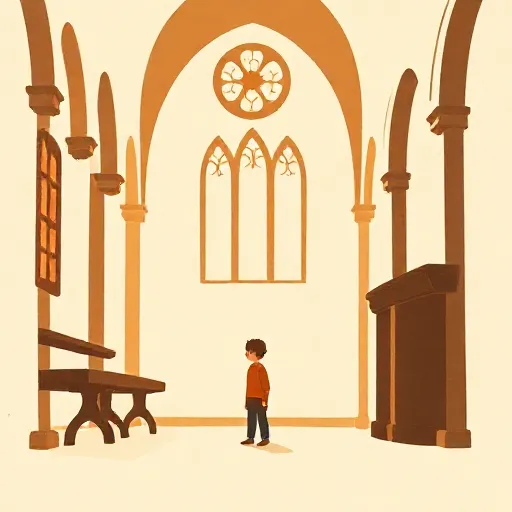
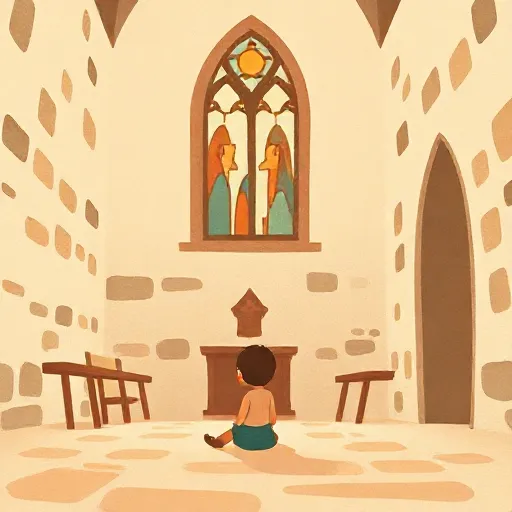
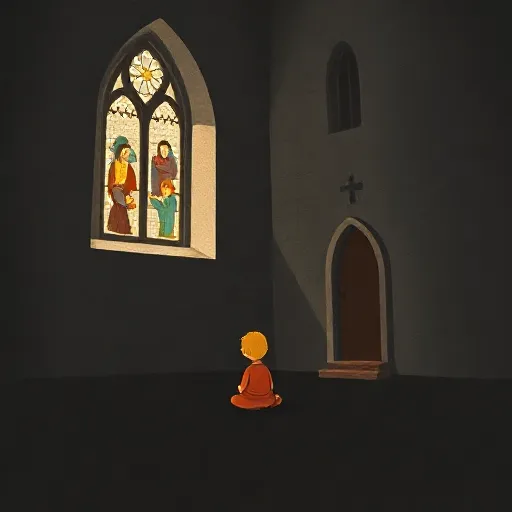
In the late 1800s a Spanish boy named George Santayana (1863–1952) often sat in the Church of the Immaculate Conception in Ávila. During long services his mind wandered far from the prayers. He later called himself a “boy dreaming awake in the church.” The real world seemed drab and disappointing. Only the imaginary felt rich and full. Yet even then young Santayana knew he was dreaming. He never once mistook his daydreams for facts. That double vision — loving the imaginary while staying anchored in the real — never left him.
When George was eight, his parents brought him to Boston to get a better education. His father hated the city and soon returned to Spain, leaving the boy with his mother and half-siblings. At home they spoke only Spanish. At school the young outsider learned English from kindergarteners. He went on to Boston Latin School and then Harvard College, where he earned a PhD and became a popular philosophy professor. But part of him always remained the boy in the Spanish church — more at home in imagination than in the world of duty. After a series of painful events in his early thirties, including his father’s death, Santayana made a quiet decision: he would cultivate imagination, travel, and enjoy the world, but never let it trap him. He started planning an early escape from university life.
Animal Faith: Why Proof Is Overrated

Most philosophers want to build knowledge on a firm foundation. Santayana thought the whole project was doomed. In his book Scepticism and Animal Faith (1923) he imagined pushing doubt as far as it can go. Try to be absolutely certain of something — anything. You quickly strip away your trust in your senses, your memory, even the belief that you exist. What is left? A single, frozen instant of pure awareness with no past, no objects, and no words. You can’t even think “I am here,” because that requires a concept of “I.” The search for bedrock ends in a blank stare.
That empty moment shows that knowledge can’t start from proof. Instead, it begins with what Santayana called animal faith — an irrational, instinctive trust that we share with every living creature. A squirrel leaps for a branch without first checking the laws of physics. You reach for an apple without proving it’s food. “That there is a world, that there is a future, that things sought can be found, and things seen can be eaten” — these are animal beliefs, not logical conclusions. Philosophy must begin in medias res, in the middle of things, already living and acting.
Santayana’s pragmatism emerges here. We cannot prove our most basic assumptions, but we can test them by how well they guide action over a lifetime. If a belief keeps working, we treat it as true until something better comes along. Science itself rests on threads of animal faith.
The Realms of Being: A Map of What Is

Santayana sorted everything that exists into four “realms.” Matter is the physical world — the raw, ever-changing stuff that makes things happen. It isn’t good or evil; it just is. Essence is the realm of meanings and concepts. When you think of redness, the idea itself is an essence. Essences do not cause anything; they are what we think about. Spirit is pure consciousness — the fleeting feeling of being aware. Santayana insisted that spirit doesn’t make you do things. It is more like a celebration that lights up when your body and the world fall into harmony for a moment.
The fourth realm is truth. If an all-seeing observer could write down exactly which essences describe every event in the universe, that record would be the truth. Humans never grasp truth fully because we are stuck inside our own perspectives. So we fall back on the pragmatic test: does a belief keep paying off in practice? If so, we call it true enough to live by.
For Santayana, spirit is the high point of existence. It appears when you are so absorbed in a sunset or a piece of music that you forget your to-do list. Those moments are fragile and temporary, but they are what make life worth celebrating.
America’s Last Puritan

In 1912, at age 48, Santayana left his Harvard professorship and sailed for Europe. He never returned to the United States. From across the Atlantic he wrote sharp criticisms of American culture. In a famous lecture he claimed that America had two mismatched halves: a restless, skyscraper-building will and a dusty European intellect still dressed in colonial clothes. Americans were all energy and no wisdom — running hard but confused about where they wanted to go.
That critique became a novel. The Last Puritan (1935) follows Oliver Alden, a serious, hardworking American boy who does everything right. He studies, plays football, fulfills every duty. Yet he cannot simply enjoy a conversation or a beautiful afternoon. He feels guilty about feeling guilty. His European friend Mario lives differently. Mario drifts through art, travel, and love affairs without a constant sense of mission. For Oliver, life is an endless ladder of tasks; for Mario, life is meant to be tasted.
Santayana thought America was full of Olivers. The Puritan tradition of duty had outlasted the religious beliefs that once gave it meaning, leaving only a hollow busyness. He once wrote, “Only the dead have seen the end of war.” The endless push for achievement, he suspected, was its own kind of war — unwinnable and exhausting.
Stop Working and Start Celebrating
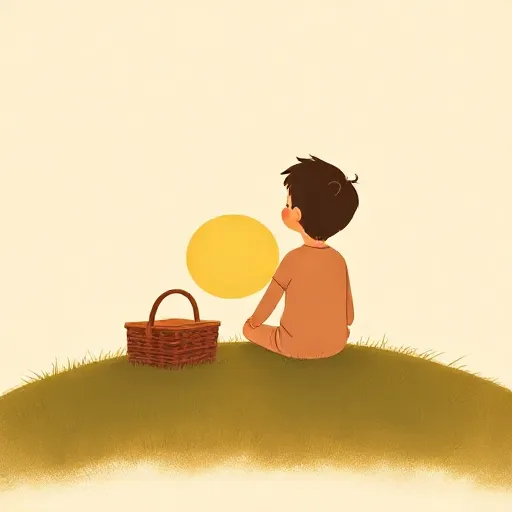
So what is the good life? Santayana answered: there is no single recipe. Your good depends on your own psyche — your inherited physical nature — and the environment you live in. Self-knowledge is therefore the first moral task. You need to understand what genuinely makes you feel alive, not what others tell you should matter. Then you can shape your days so that those goods can bloom.
For Santayana himself, the highest good was the life of the spirit — those instants of pure awareness that arise when you stop striving and simply attend to what is in front of you. He was no enemy of science or hard work. But he warned that they turn toxic when they elbow out celebration. Religion and poetry, in his view, were not competitors to science; they were festive expressions of human values. They offer imaginings that enrich life without tricking you into thinking they are literal facts. The boy dreaming in church had already learned this: you can love a story without believing the story happened.
Santayana lived his advice. He retired early, wrote constantly, traveled, and made his home in a simple Roman clinic run by nuns. He gave away money quietly and died without asking to be buried in holy ground.
Why This Matters Now

You don’t need to be a character in a 1935 novel to feel Oliver Alden’s trap. Many of us measure our days by how many boxes we check. Homework, practice, messages, plans for the next big step — the current never stops. Santayana’s challenge is simple and uncomfortable: are you living, or are you just preparing to live someday?
He would urge you to notice that the best moments rarely come from finishing a task. They arrive when you are fully present — tasting your lunch, listening to rain on the window, laughing at a friend’s joke. He wasn’t telling anyone to abandon their responsibilities. But he was asking people to see that happiness is not a future prize you earn by running faster. It is a quality of attention you bring to ordinary seconds. The boy who dreamed in church never stopped believing that to possess a thing in your imagination — to really see it and savor it — is the purest good you can get from the world.
Think about it
- Santayana thought the happiest moments happen when we stop striving and just pay attention. Do you agree? Can you think of a time you felt truly happy while doing nothing “useful”?
- He believed that every person’s idea of a good life is different because our bodies and backgrounds differ. Does that mean we should never judge someone else’s choices, or are some ways of living really better than others?
- Santayana said, “Only the dead have seen the end of war.” What might this saying mean for everyday conflicts, like arguments with friends? Does it suggest we should never stop fighting for what we believe, or that endless conflict is pointless?