
Can a Gryphon Scare You? A 16th-Century Mind Trick
The Boy Who Wasn’t Good Enough
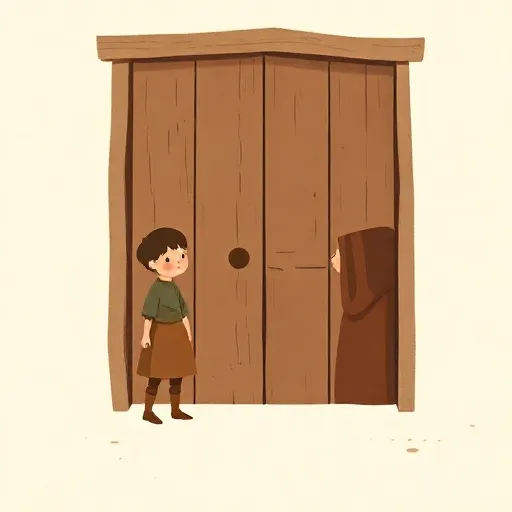
In 1564 a sixteen-year-old named Francisco Suárez (1548–1617) tried to join the Jesuit order. He was the only one out of fifty applicants to be rejected. His health was weak, and the teachers thought his mind was just as unpromising. He was allowed in eventually, but only as a low‑ranked indiferente, someone whose future role would be decided later. For a while, it looked like a dead end.
Then something clicked. Suárez became a razor‑sharp thinker and a relentless writer. Over his lifetime he produced about 21 million words — more than twice the output of Thomas Aquinas. His masterpiece, the Metaphysical Disputations, is a fifty‑four‑chapter investigation of reality itself. It has never been fully translated into English. Yet it tackles a question that any curious twelve‑year‑old can appreciate: Can something that doesn’t exist really do anything at all?
Suárez lived at a time when philosophers were dusting off old Aristotelian ideas and testing them with new arguments. He wasn’t afraid to take a fresh look at a problem — he liked to get at “the very root” of things. That habit led him to a position called nominalism, and it planted him right in the middle of a puzzle about thoughts, goals, and imaginary creatures.
Only Individuals Exist: Suárez’s Nominalism

Suppose you point at your dog and say, “This is a dog.” If your friend points at her dog and says the same thing, you might think there is a single thing — dogness — that both animals share. Many philosophers before Suárez believed in exactly that: universals, mind‑independent things that can be wholly present in many places at once. The universal “dogness” would be a real ingredient in every dog.
Suárez disagreed. He insisted that everything that exists outside a mind is singular and individual. Only Peter the dog exists; Paula the dog exists; there is no third “dogness” floating around. In his words, in the real world “nature and essence are multiplied as many times as there are individuals.” This view is called nominalism: the claim that universals are just names ( nomina ) we use, not extra items in the world.
But if there’s no universal “human being,” how can Peter and Paula both be human? Suárez’s answer is that the two individuals are objectively similar. Their bodies and powers are alike in a way that isn’t invented by us — it’s really there. When your mind notices that similarity, it forms a concept that applies to both. The concept isn’t a copy of some invisible universal; it’s a mental label grounded in a real, mind‑independent resemblance. Suárez calls this an extrinsic denomination — a feature that a thing gets because a mind is thinking about it in a certain way, not because it possesses a separate universal part.
This move let him keep science and demonstrations. You can reason about “all triangles” even though no universal “triangleness” exists; you’re just thinking about many individual triangles that genuinely resemble one another.
The Goal That Wasn’t There

Now shift to a different puzzle. Imagine you walk to the corner shop to buy milk. You arrive, and the fridge is empty. The milk you intended to buy never existed there. Yet the goal of buying milk is why you took the trip. How can a non‑existent thing — the future milk in your shopping bag — act as a cause?
Suárez wrestled with this because he was committed to the idea that a cause must be a real source that “imparts being” to its effect. A final cause is a goal or purpose — the reason why an agent does something. But if the final cause hasn’t happened yet (or never happens), where does its causal power come from? He considered the Fountain of Youth. Explorers sailed across oceans in order to find it, even though the fountain didn’t exist and could not have pushed them in any physical way. If final causes are real causes, they need some kind of real being. The fountain lacks that entirely.
Suárez’s solution was bold: a final cause can only do its work if it is known in advance by an intentional agent — a being with a mind. Your desire to buy milk isn’t just a blind shove; it’s a desire for milk, and that “for” comes from your mind grasping a state of affairs that isn’t yet real. So the goal, as a cause, exists only “under the aspect” of being thought. In the non‑mental world — for rocks, rivers, and maybe even brute animals — there are no final causes. Purposes belong to the sphere of minds.
This was a huge concession. Many later philosophers would reject final causes altogether. Suárez kept them, but only by tying them tightly to thinking.
Gryphons, Voids, and Missed Punches

The final‑cause puzzle was really a piece of a larger mystery. Suárez noticed that we constantly talk about things that don’t exist: gryphons, voids, privations (like blindness), even logical abstractions like “being a consequent.” He called these beings of reason ( entia rationis ). And he made a startling claim: they do not exist. Not “a little bit.” Not “in the mind only” as a kind of secondary existence. They simply are not.
Yet sentences like “The gryphon frightened the children” seem true and useful. How can we speak truthfully about nothing? Even more worrying, if the gryphon doesn’t exist, how can it enter into any causal relationship? Suárez himself had insisted that a cause must have actual existence. “The first requisite for formal causation is the actual existence of a form itself,” he wrote. A non‑existent cause sounds like a contradiction.
His answer is disarmingly simple. When you think about a gryphon, there is a real, formal structure happening in your mind. That mental act is a genuine event — it can make your heart race, just like thinking about a real tiger. But the causation stops inside your head. As Suárez put it, “all that efficient causation is terminated — as to a terminus of real production — at the formal concept of the mind itself, and it stops there.” The gryphon receives no “property” of being thought about because there is no gryphon there to have properties.
He offered the analogy of a missed punch. A missed punch is a fully real motion — your arm moves, your muscles contract — but it makes contact with nothing. A missed punch aimed at a chin and a missed punch aimed at a stomach are different real motions, yet neither has an object that is struck. In the same way, thinking about a gryphon and thinking about Socrates are different real thoughts, even though only Socrates exists to be related to.
Thoughts Without Objects: A Quiet Revolution
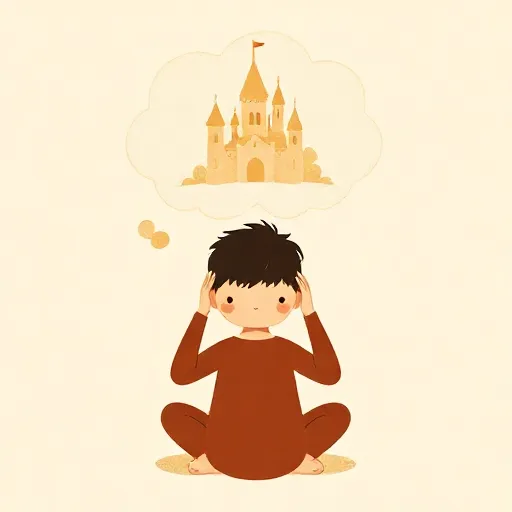
This meant that thoughts, for Suárez, do not depend on having objects. A thought can be contentful — it can be about something — without there being anything “out there” that it touches. The “aboutness” is built into the internal architecture of the mind, grounded in the real similarities we detect among individuals.
That might sound abstract, but it solved a whole family of problems. It explained how we can plan for future events that never arrive, enjoy stories about heroes who never lived, and use scientific models of “empty space” even if we think a vacuum is impossible. In each case, we are not peeking at ghostly entities; we are exercising the mind’s natural ability to frame concepts based on real features of the world — and then to treat those concepts as if they were things.
This way of thinking influenced generations of philosophers after Suárez, even those who never read his name. When later thinkers argued about whether we need a special “realm” of abstract objects, or whether fictional characters have some kind of being, Suárez had already shown a path that avoids multiplying mysterious entities. The mind is powerful enough on its own.
Why It Still Matters: The Monster Under Your Bed

If you’ve ever lain awake because you imagined something scary in the dark, you’ve lived inside Suárez’s puzzle. The fear is genuine. Your pounding heart and sweaty palms are real effects. But there is no monster there to cause them. The cause is a thought — a real, physical‑and‑mental event in you. Suárez would say that turning on the light isn’t making the monster disappear (it was never there), but it is changing the contents of your mind. Understanding the difference can make you a little less afraid next time.
More than that, his approach invites you to treat big ideas — justice, rights, equality — without thinking you need them to be floating Forms in another world. Like “human,” those ideas are grounded in real similarities among real people, noticed by reasoning minds. They are not pretend; they are ways of talking about genuine features of the world, just not extra things that exist like chairs and trees.
Suárez started out as the only teenager rejected from his school. He ended up writing one of the most careful, honest, and thorough attempts to say what is real and what is only in our heads. He didn’t settle every question. But he showed that you can be a serious thinker and still take monsters seriously — not because they’re real, but because you are.
Think about it
- If you make a plan to meet a friend tomorrow but she gets sick and you never meet, was your plan “about” something that never existed? Could it still have caused you to walk to the meeting spot?
- Is there a difference between being scared by a tiger and being scared by a story about a tiger? If both make your heart race, are they both real causes?
- If humans are just similar individuals with no universal “human nature,” do we still share something deep enough to ground equal rights?