Who Are You, Really? Paul Ricoeur’s Story-Shaped Answer
Can You Find Yourself Just by Looking Inside?
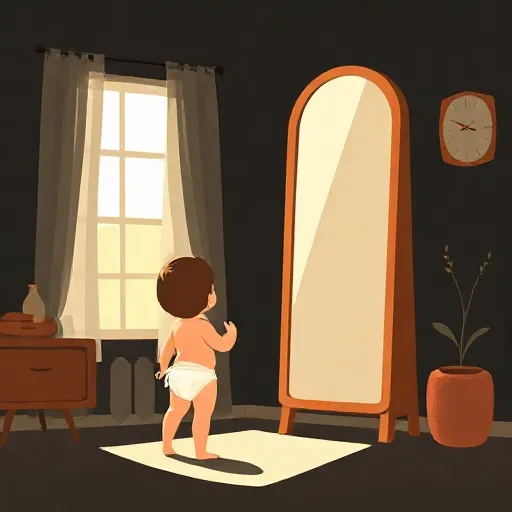
You wake up in the middle of the night, remembering something you did last week — maybe you lied to a friend, or you broke a promise. You think, “That was me, but it doesn’t feel like me now.” That unsettled feeling is exactly what Paul Ricoeur (1913–2005) wanted us to take seriously.
Ricoeur’s life was anything but settled. He was born in France and lost both parents as a baby. Raised by grandparents, he studied philosophy, and then World War II broke out. Drafted into the army, he was captured and spent years in German prison camps. There, with almost nothing, he read philosophy books and scribbled notes in the margins. He had to hide his writing from the guards. That experience of making meaning in a dark place shaped his whole career.
Many thinkers before him, like René Descartes (1596–1650), believed you could know yourself perfectly just by looking inward. Descartes’ phrase that I think, therefore I am suggested the self was a completely certain, inner thing — a solid core. Ricoeur disagreed. He argued the self is not a neat object you can inspect. He called it a wounded cogito — a self that is real but can’t be grasped directly. We know ourselves only through signs: our actions, our words, and especially the stories we tell. So if you’re wondering who you are, you can’t just stare into a mental mirror. You have to interpret your life like a book. This way of thinking is called hermeneutics, the art and practice of interpretation.
Why We All Have a Built-In Crack

Ricoeur’s first big project was about human freedom. He noticed something strange: we are free to choose, but our bodies and the world push back. You can decide to run a marathon, but your legs might give out. That’s not a design flaw — it’s what makes us human. Our freedom is always a finite freedom, working with and against what is involuntary.
But then he asked a tougher question: if we’re free, why do we do terrible things? In his book Fallible Man (1960), Ricoeur argued that we all have a built-in “crack” that makes evil possible. He called this fallibility. It comes from a basic disproportion inside every human. We have a limited, here-and-now perspective — what we see, touch, and feel in this moment. Yet we also have the ability to think about infinite ideas, distant places, and universal truths. We can imagine being someone else, or picture a perfect world. That stretching between the finite and the infinite means we’re never fully balanced, never completely at one with ourselves. Think of a pencil balancing on its tip: it can tip either way. That same instability is what lets us go wrong.
But here’s the crucial point: the crack is also what makes us creative, curious, and able to learn. Without it, we’d be predictable machines. So evil isn’t a necessary part of human nature — it’s a misuse of freedom that is always possible, but never forced. We are fallible, not doomed.
Why “I Can’t Wash It Off” Means More Than You Think

After realizing that evil can’t be explained by looking inside or by using cold logic, Ricoeur asked: how do people actually make sense of the bad things they do? He found the answer in the powerful language of symbols and myths. In The Symbolism of Evil (1960), he noticed that across cultures, people describe guilt using primary symbols like stain, sin, and burden. A kid who says “I feel like I can’t wash it off” after doing something wrong isn’t talking about soap and water — they’re using a symbol that carries a huge weight of meaning. Such symbols don’t have one clear definition; they have a surplus of meaning. They invite us to think, interpret, and tell stories.
Ricoeur’s famous phrase was: “the symbol gives rise to thought.” Myths about the origin of evil — stories of a lost golden age, a forbidden fruit, or a box that unleashes trouble — are not scientific explanations. They are ways communities have tried to live with the mystery of why suffering and wrongdoing exist. Philosophy, Ricoeur believed, must learn to think starting from these symbols, not ignore them. So when you feel a bad choice has left a “stain,” you’re not being irrational. You’re tapping into a deep layer of human understanding that needs interpretation, not just facts.
Reading Your Own Life Like a Novel
If symbols need interpreting, and we are storytelling creatures, then maybe the best way to understand a human life is to treat it like a text. That’s the heart of Ricoeur’s hermeneutics. When you read a novel, you don’t just decode letters. You imagine a world, you ask why characters act, you fill in gaps with your own experience. Ricoeur said the same is true of our lives. He defined discourse as someone saying something about something to someone. Every action, every word, is like a sentence in a story that can be “read” later — by you or by others.
An old diary entry from two years ago doesn’t just report facts; it needs interpretation, because you’ve changed and your situation has changed. That’s the surplus of meaning: texts, like lives, always say more than they seem to, and new readings can uncover new layers. Ricoeur talked about the world of the text — when you read a story, you project a possible world you could inhabit. So your own life projects a world too. Understanding yourself isn’t about digging up a buried true self; it’s about learning to read the story you are living and constantly rewriting it as you go. You’re both the main character and the co-author, never in full control, but never just a puppet.
The Two Ways You Stay the Same (Even When You Change)
So if you’re a story, what keeps you the same person over time? In his later work Oneself as Another (1992), Ricoeur gave a brilliant answer. He distinguished two kinds of sameness. Idem identity is the identity of a thing that never changes — like a rock that stays exactly the same. Ipse identity is selfhood across change — staying yourself even while you grow, learn, and make choices. You are not the same as when you were a toddler, but you are still you. How? Through narrative identity. Your life story connects the dots.
The question “Who are you?” can’t be answered by listing traits like “I’m short” or “I’m funny.” It’s answered by telling a story that makes sense of your actions over time. You are the character in that narrative, but also the narrator who chooses which events to emphasize, which to explain, and what meaning to give them. This narrative is never finished — your life is still happening. So knowing yourself is an ongoing work of storytelling, not a final discovery. That’s why you can look at a mistake from your past and say, “That was me, but it’s not the whole me, and I can write the next chapter differently.”
Rewriting the Painful Chapters
Why does all this matter? Because you don’t write your story alone. Ricoeur insisted that a self is always a self among other selves. We need mutual recognition: being seen, acknowledged, and valued by others. His ethical aim was “aiming at a good life lived with and for others in just institutions.” That means understanding yourself is tied up with treating others fairly, listening to their stories, and building a world where everyone can co-author their lives.
The hardest moments come when a painful chapter seems to define you — maybe you were hurt, or you hurt someone. Ricoeur didn’t offer easy answers, but he explored the possibility of forgiveness. He described it as a kind of gift that “unbinds the agent from the act.” Forgiving doesn’t mean forgetting or pretending it didn’t happen. It means releasing the person (including yourself) from being frozen in that one bad deed, so the story can continue. It’s like editing a manuscript: the terrible chapter remains, but it no longer controls the entire plot. In your own life, you can accept that you’re fallible, reinterpret the past, and choose a new direction — often with help from others. That’s why Ricoeur’s philosophy is hopeful. You are not a fixed thing. You are a story still being told, and you have a say in the telling.
Think about it
- Imagine you write your life story so far. Would you leave out a mistake you deeply regret, or include it? Why?
- If a friend said, “I’ve completely changed — I’m not the person who did that,” would you trust them? What would it take for you to believe it?
- Try to describe who you are without mentioning anything that has ever happened to you. Is anything left?