Who Is That in the Mirror? Lacan’s Strange Theory of You
How a Baby Meets a Stranger Who Is Also “Me”
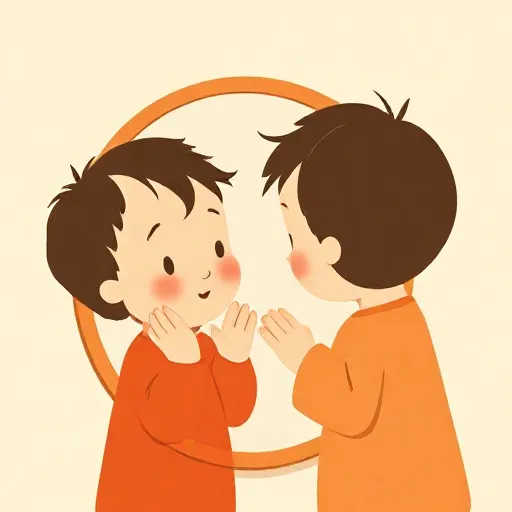
It is 1949. The place is Zurich, a conference of psychoanalysts. A French doctor named Jacques Lacan (1901–1981) stands up and tells a story you already know, whether you remember it or not.
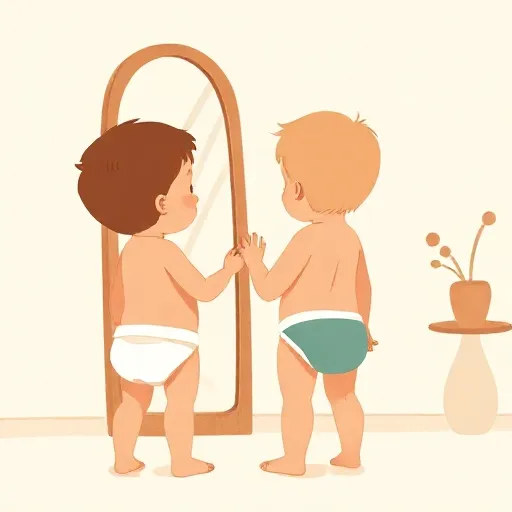
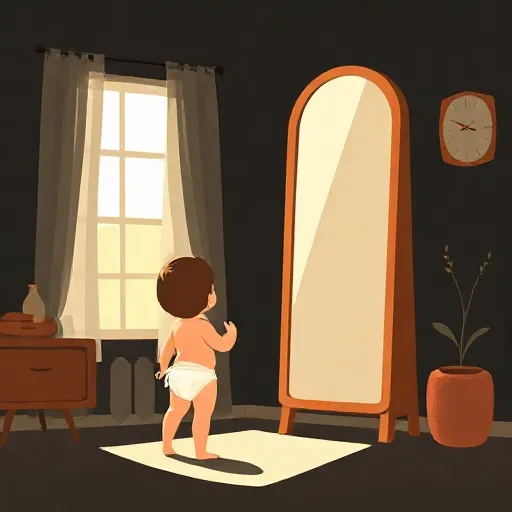
Sometime between six and eighteen months old, you did something amazing. You saw your own reflection — in a mirror, a window, maybe a shiny pot — and you knew, with a jolt, that’s me. Before that moment, you were just a bundle of uncontrollable limbs and hungry cries. Suddenly, you saw a whole shape: a smooth, finished child staring back. And you grinned. Lacan called this the mirror stage, and he believed it wasn’t just a cute moment. It was the very beginning of your ego — the “I” you call yourself.
But here’s the catch. The image in the mirror was never really you. It was a tidy picture, not the messy, helpless creature you actually were. From that moment on, Lacan argued, you started building your identity out of images and, soon enough, out of words — things that come from outside you, not from a deep inner core.
Three Floors of the Mind Factory: Imaginary, Symbolic, Real

Lacan spent the rest of his career painting a picture of a mind with three massive, interlocking pieces. He called them registers, and he gave them three strange names: the Imaginary, the Symbolic, and the Real.
The Imaginary is the floor of pictures, reflections, and daydreams. It’s where you “imagine” who you are and who other people are. Your ego lives here — that image of a stable, special “me” you first tasted in the mirror. But do not be fooled: the Imaginary is full of necessary fictions. Its job is not to show the truth; it is to make life feel manageable.
The Symbolic is the floor of language, rules, laws, and customs. Think of it as a giant invisible rulebook that was already running before you were born. Your parents, your school, the words you speak — they all belong to the Symbolic order. Lacan called this the big Other, the whole network of social and linguistic structures that shapes what you can even think.
The Real is the hardest to describe, because it is precisely what escapes words and images. It is not “reality” in the everyday sense. Reality, for Lacan, is a blend of Imaginary and Symbolic. The Real is what jams the machinery: a trauma, an unbearable bodily feeling, a meaningless sound that still haunts you. It always slips away the moment you try to name it.
By the end of his life, Lacan pictured these three registers as interlocking rings, like a chain of keyrings: pull one ring apart and the whole thing collapses. You can’t have one without the others.
Why the Unconscious Speaks Like a Code
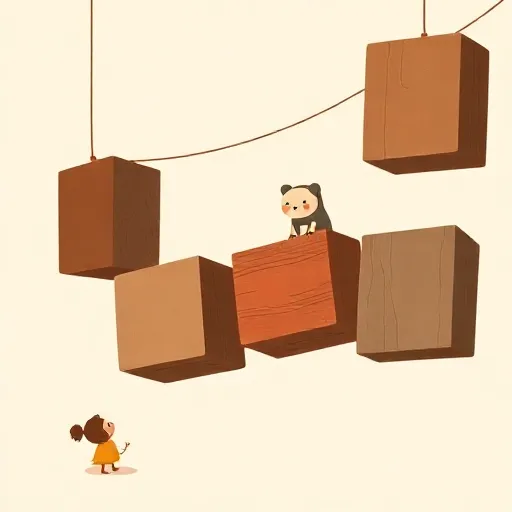
During the 1950s, Lacan launched a battle cry: “the unconscious is structured like a language.” He didn’t mean it speaks French or English. He meant it works by linking signifiers — those are the sounds and marks that carry meaning — in chains, slipping and sliding around. One word can trigger another, a dream-image can twist into a pun, a forgotten memory can pop up disguised as a bodily tick.
Freud had already shown that the unconscious does not think in neat, logical stories. It condenses, displaces, reverses. Lacan gave this a new toolkit borrowed from linguistics. A signifier doesn’t point to a stable thing in the world; it points to another signifier. You can never grab a final, fixed meaning. So the unconscious, like a lively game of telephone, keeps rearranging itself through the code of language.
That means the “you” that speaks is not the master in your own head. You are spoken through by a system of signifiers that existed long before you did. Lacan happily pushed this to its dizzying conclusion: your most private desires are shaped by the discourse of the Other — the words and wants of parents, culture, even strangers.
Why You Can Never Get Exactly What You Want
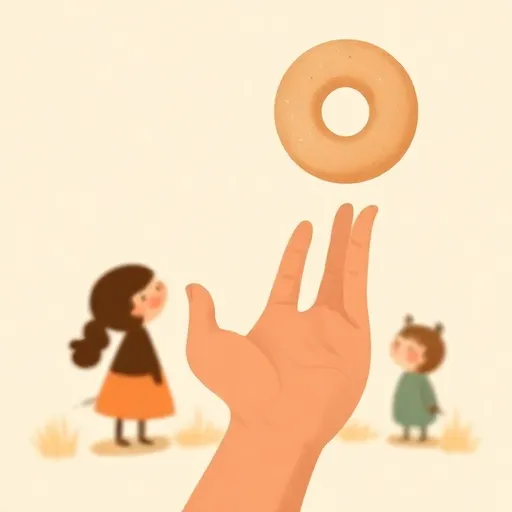
Now picture this: you are hungry. You cry or ask for a sandwich. Someone hands you food. The need is met, so you should be satisfied, right? But Lacan noticed a restless twitch. A minute later you want something else. No matter how many sandwiches or lollipops or new toys you get, a quiet feeling hums underneath: this still isn’t it.
Lacan wired three concepts together: need, demand, and desire. Needs are biological — hunger, thirst, warmth. Demands are the way you ask for them, wrapped in words and gestures that other people interpret. But every demand, Lacan insisted, secretly carries an extra request: love me. You are not just asking for a sandwich; you are asking the other person to prove you matter to them.
Now subtract need from demand, and what’s left is desire — a nagging, endless force that can never be fully satisfied. Desire does not want sandwiches. It wants what Lacan called objet petit a, the “object-cause of desire.” This is not a real object you can hold. It is a fantasy spark, an imaginary treasure that would (if only you could catch it!) finally make everything feel whole. But you can’t catch it, because it lives only in the gap between what you ask for and what you get.
This is why Lacan said human desire is the “desire of the Other”: you end up wanting what you think an important Other wants, or what would make you desirable in their eyes. Your cravings get tangled with someone else’s story.
Then there is the dark twin of desire: jouissance. Lacan kept this French word because “enjoyment” misses the strangeness. Jouissance is a kind of painful, overwhelming pleasure — the rush of breaking a rule, the repetition of a bad habit that hurts but feels strangely alive. It goes beyond ordinary pleasure. Like the Real, it crashes through the tidy order of your life. The speaking subject loses direct contact with raw jouissance, Lacan suggested, and then spends a lifetime bumping into its traces in moments of excess and trouble.
Being a Boy or Girl Isn’t What You Think
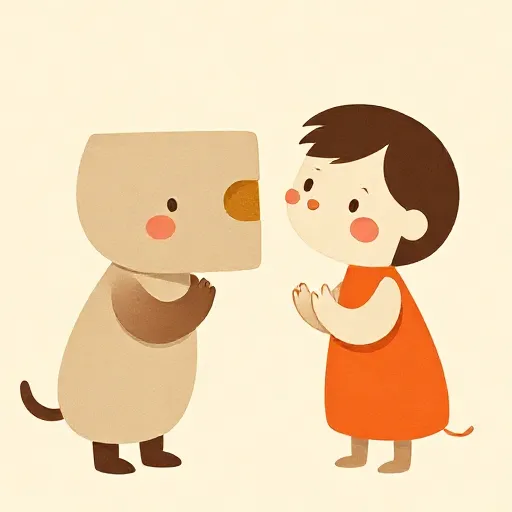
Later in his career, Lacan turned to the messy question of what it means to be a man or a woman. He wasn’t talking about biology. He invented the term sexuation to talk about the positions a speaking being can take up in relation to the big Other and to desire.
He arrived at a famously blunt line: “there is no sexual relationship” (il n’y a pas de rapport sexuel). That sounds like a grumpy joke, but it meant something specific. For Lacan, the masculine and feminine positions are not two halves of a whole. They are built on different, incompatible logics. There is no formula that can perfectly bridge them, no script that guarantees a smooth link between one person’s sexuated world and another’s.
This idea scandalized people in the 1970s, and it also energized feminist thinkers. Rather than reducing men and women to stereotypes, Lacan was saying that every subject is split, and that sexual difference is a gap that culture cannot fully paper over. It keeps returning as a question mark inside lives and relationships.
Why a French Analyst Still Tugs at Your Mirror

Lacan died in 1981, but his ideas keep rattling around. Why? Because he offered a way to think about identity that feels unsettlingly true. You are not a solid thing. You are a story woven from other people’s words, childhood images, and desires that were never simply yours. The “you” you see in the mirror is already an alien.
Next time you check your reflection, or scroll through photos where you look just right, or feel a pang of “is this really me?” — Lacan’s mirror stage is still at work. The hunt for a finished, perfect self never ends. The big Other still whispers through what you post and how you imagine others see you. And what you deeply desire? It might not be your secret at all. It might be the echo of a voice you heard long before you could speak. Lacan didn’t solve the puzzle; he showed us that the puzzle is what we are.
Think about it
- If your sense of “who you are” is built from images and words that came from outside you, could there ever be a purely “real” you underneath? What would that even feel like?
- Think of a time you really wanted something, got it, and still felt a little empty. What do you think explains that leftover itch — and can you imagine wanting something that would make it vanish for good?
- Lacan said we often desire what an important other seems to desire. Can you find an example in your own life where your “want” might have actually come from someone else’s expectations or wishes? Does spotting that change the want?