When You Think of a Donkey, Is the Donkey Inside Your Head?
The Donkey in Your Head
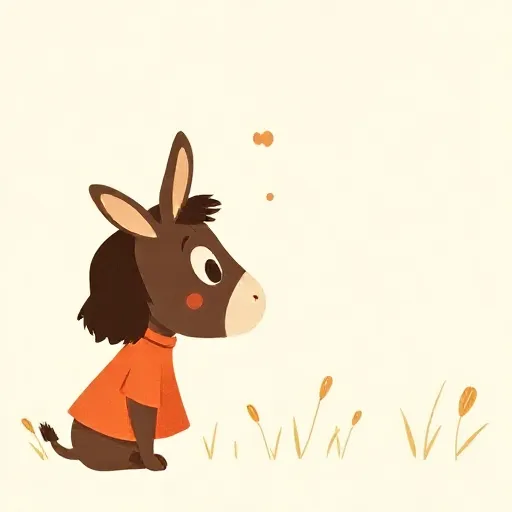
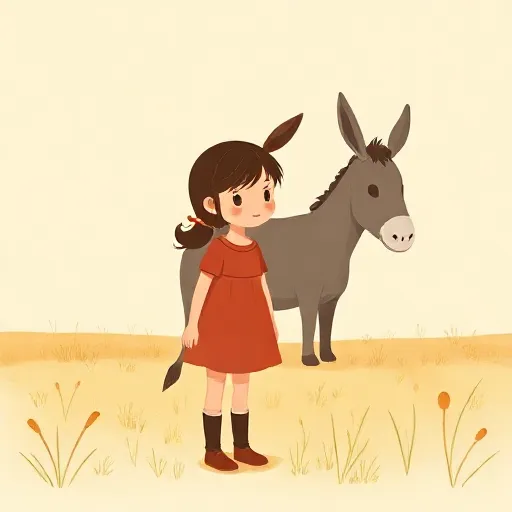
Imagine you are standing in a field. A dusty, big-eared donkey plods past you. You think, “That’s a donkey.” Your thought is somehow about that furry animal and not the tree beside it. But where exactly is your thought? Is a tiny picture of a donkey sitting inside your skull? If so, how does that picture fasten onto the real, living donkey outside your head?
This puzzle kept some of the sharpest minds of the Middle Ages awake at night. They called the mystery mental representation — the way your mind stands for or points to things in the world. Their answers shaped how we talk about thinking even today.
Thomas Aquinas: Your Mind Takes the Shape of Things
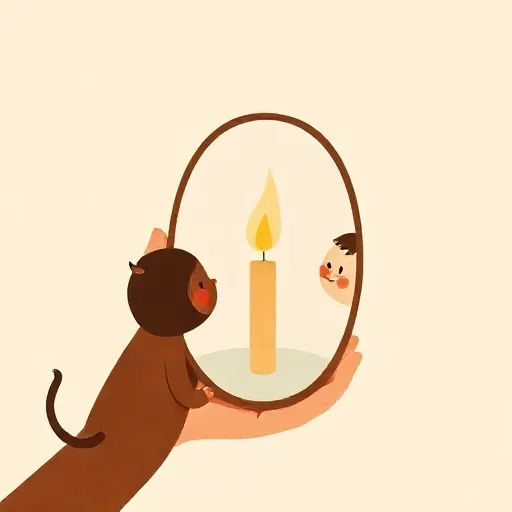
One of the first great answers came from Thomas Aquinas (1225–1274). He had a bold idea: when you think of a donkey, your mind becomes donkey-shaped. No — not that it grows hooves and fur. It takes on the donkey’s form.
For Aquinas, the form of a thing is its “whatness” — what makes a donkey a donkey instead of a cloud or a cabbage. Your intellect is like a blank wax tablet. When you encounter a donkey, your active mind pulls out the donkey’s form from the sensory images stored inside you. It stamps that form into your passive intellect as an intelligible species — a kind of mental shape. Your thought is literally the universal pattern of donkey-ness lighting up inside you.
Here’s the trouble. If my mind holds the very same form as the real donkey, why isn’t the real donkey thinking about me? The donkey and I would share a form, so shouldn’t its mind (if it had one) point right back at me? Aquinas had an answer. A form can be present in two different modes. In the donkey, the form is there naturally — it makes the animal a flesh-and-blood donkey. In my mind, the form is there spiritually or intentionally. That means it is present as a meaning, not as a physical thing. Think of a red apple’s color traveling through the air: the light carries red to your eye without making the air itself turn red. Your mind carries the donkey’s form without turning into a donkey. The form inside you is about the donkey outside you because its whole job is to point.
Peter Olivi: But How Do You Know You’re Seeing the Real Thing?
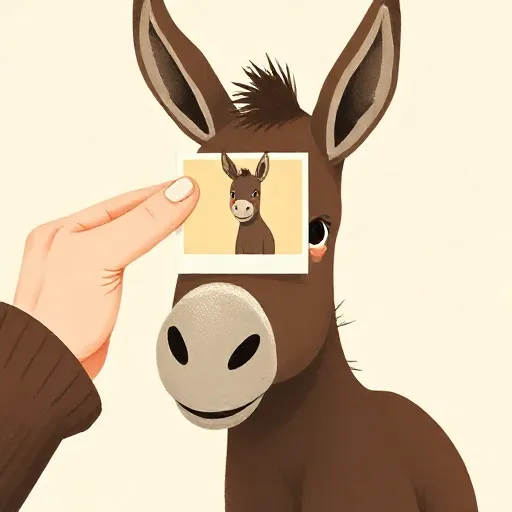
Not everyone was happy with species. Peter Olivi (1248–1298) argued that placing a mental thingy between you and the world just creates a new problem. If there is a little donkey-shaped species inside you, how do you know you are thinking about the real donkey and not just staring at the species?
Olivi said it feels like trying to look at a friend through a photograph. If your attention stops at the photo, you see only the photo. If it goes beyond the photo, then you are doing double work — first inspecting the picture, then the friend. He thought the mind is active enough to reach out and attend to objects directly, without needing a middleman. He didn’t throw out species entirely. For memory, he thought, we really do construct an inner image to stand in for something that is not present. But for perceiving what’s right in front of you, the extra step just gets in the way. Many thinkers who came after, including William Ockham, sharpened this worry and looked for a cleaner story.
William Ockham: Thoughts Are Words in a Secret Mental Language

William Ockham (c. 1287–1347) threw out intelligible and sensory species for cognition altogether. He replaced them with a new picture: thinking is speaking in a mental language.
Ockham started from a simple observation. When you see a donkey, that encounter causes something in you — an intuitive cognition. That intuition naturally causes a concept, a mental term that works just like the word “donkey” in spoken language, except it lives silently in your mind. The concept means the donkey because the donkey caused it. It’s like a footprint in the sand: the shape points to the creature that made it, not because it looks like the creature, but because the creature reliably produced it. Each concept is singular, tied to a particular thing you’ve met.
Once you have a stash of these mental terms, you can combine them into mental sentences — like “the donkey is tired” — and those sentences are the stuff of your beliefs and plans. On Ockham’s view, the mind is not a wax tablet taking on shapes; it’s a quiet chatterbox building thoughts from word-like parts.
John Buridan: But How Do You Think of Something Without a Name?
John Buridan (c. 1300–1358) liked the mental-language idea but changed one crucial piece. Notice what happens when you spot something far away: you think “there’s something… it’s an animal… it’s a donkey… it’s Brunellus!” Buridan called the early stages vague singular concepts — thoughts like “this thing” that get sharper as you approach. Eventually you collect enough details to pin down a full singular term like “Brunellus,” which includes all the circumstances and descriptions you know about that particular donkey.
But what about people or things you’ve never met? You have never seen Socrates. You only have a bundle of descriptions: “the Greek philosopher who drank hemlock,” “the teacher of Plato,” and so on. You stick the name “Socrates” onto that bundle. Buridan argued that meaning is sorted inside your head: you are the one who groups descriptions together and assigns a name. This makes his theory internalist — meaning depends on your own mind’s filing system. Two speakers can both talk about Socrates even if their private bundles of descriptions differ slightly. Ockham, by contrast, rooted meaning in the external cause, making his view more externalist.
The difference matters. If Buridan is right, your concept of “Brunellus” has a direct demonstrative hook — “this donkey” from your own experience. But “Socrates” always stays a creature of description. Exactly how rigidly names latch onto things became a live debate then, and it still is.
Why This Ancient Puzzle Still Matters

When you hear your own inner voice talking through a homework problem, or when you silently name the things around you — door, lamp, cat — you’re brushing up against an idea these medieval thinkers helped invent. The hunch that thinking is a kind of secret mental language, built out of word-like pieces, still drives research in psychology, neuroscience, and artificial intelligence. The question of whether meaning is inside your head or anchored to the outside world is alive every time you learn a new word or recognize a friend’s face.
So the next time a donkey plods into view and the thought “that’s a donkey” pops up, you know you are not just having a thought. You are wading into a conversation that started more than seven hundred years ago.
Think about it
- When your dog barks at a squirrel, do you think the dog has a mental word for “squirrel,” or is something else going on when it recognizes the animal?
- You can vividly imagine a dragon even though dragons don’t exist. How does your mind build that image if it never came from a real dragon?
- Close your eyes and picture your best friend’s face. Is that mental picture the same kind of thing as actually seeing your friend, or is it a completely different experience?