The Parisian Teacher Who Believed Grammar Holds the Key to Reality
A Sorbonne Classroom, 1295
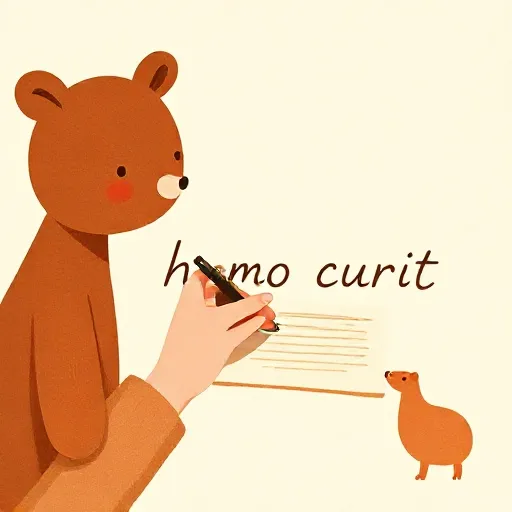
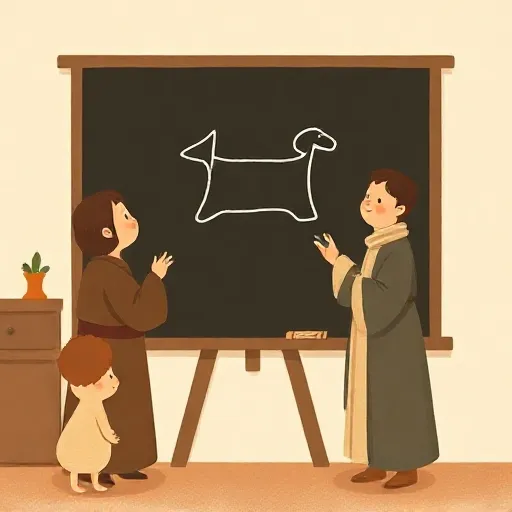
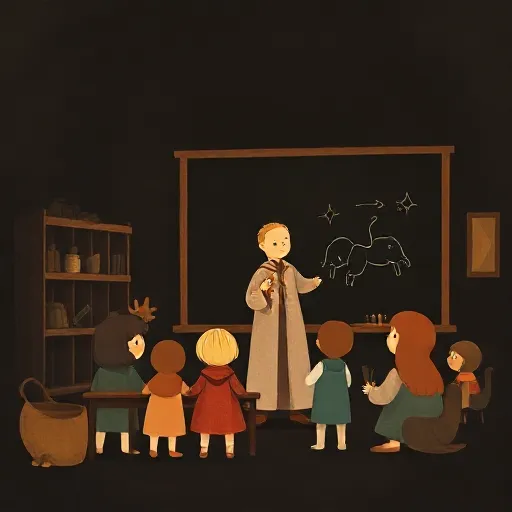
A cold January morning in 1295. In a hall at the University of Paris, a young teacher with alert eyes and a short beard stands before a dozen students. He scratches two Latin words onto a wax tablet: homo currit. “A man runs.” He turns to the class and asks why the sentence is correct, explaining that it is not because he says so, but because it follows the deepest laws of language — laws that mirror the way the world actually is.
That teacher was Radulphus Brito (c.1270–1320). He was born in Brittany, in western France, and by the 1290s he had become a master of arts in Paris. He later studied theology, earned a doctorate, and rose to become a provisor — an overseer — of the Sorbonne, one of the university’s most respected positions. But his real fame rests on the ideas he developed while still a young instructor: ideas about why language works, how logic really functions, and what it means to be alive and free.
Grammar: A Science With Deep Roots
Most people in Brito’s day treated grammar as a set of handy rules. Brito insisted it was a full-blown science, with its own subject matter and underlying principles. The subject, he said, is signifying speech — any meaningful grouping of words. And the principles that make those groupings grammatical are the modi significandi, or “modes of signifying.”
Every part of speech — noun, verb, adjective, and so on — gets its grammatical identity from one of these hidden modes. Where does the mode come from? Not from a textbook. Brito argued it arises from a chain: a thing’s mode of being (how it exists) is grasped by a mode of understanding, and that in turn produces a mode of signifying in the word.
Take the word “walk.” In the real world, walking is an action — a doing, not a thing. But in grammar, we can treat “walk” as a noun when we say “a walk.” Is that cheating? Brito answered no. Grammar doesn’t need to copy a thing’s actual mode of being; it draws on the possible modes a thing can have. An action can intelligibly be thought of as a substance-like entity. So grammar borrows that possible mode, stamps it onto the word, and creates a noun. That is why grammar is a science: its rules are not arbitrary inventions. They are anchored in the real, possible ways things exist.
A phrase like “a man runs” works because the mode of signifying of “man” (a qualified substance) and the mode of “runs” (an action being performed) are compatible. And Brito insisted this compatibility ultimately depends on real compatibility: a man genuinely can run. The harmony of a sentence is, at bottom, the harmony of the world, translated into words.
Logic’s New Job: Sorting Thoughts, Not Truths
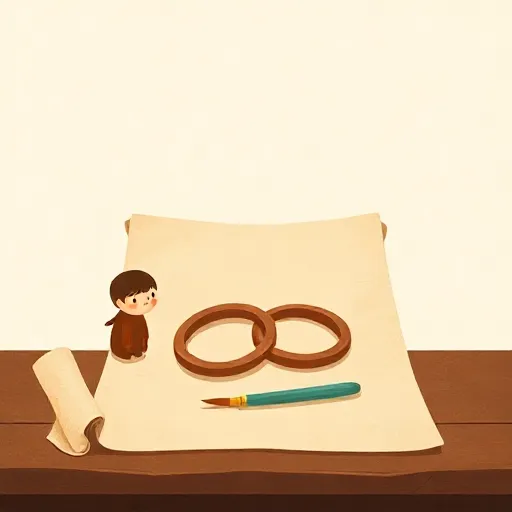
Brito’s most original contribution was a new way of thinking about logic itself. He introduced what scholars now call his logic of second intentions. To understand it, start with a simple idea. When you first grasp what a human being is — just the basic concept of “human” — you have a first intention. But when you take that same concept and add a logical filter, you get a second intention: human understood as a species, as a substance, or as the subject of a sentence.
Medieval logic was organized around Aristotle’s Organon, a set of six books that each seemed to talk about the same things — like the word “man” — in slightly different ways. Earlier thinkers worried: if logic studies simple words, why does “man” pop up in the Categories, the De Interpretatione, and the Prior Analytics? For Brito, the puzzle dissolved. The Categories treats “man” under the second intention of being a substance. The De Interpretatione treats it under the second intention of being a subject of predication. The Prior Analytics treats it under the second intention of being a term in a syllogism. The same first intention, different logical hats. No contradiction.
This approach led Brito to a startling conclusion: truth is not logic’s business. Whether “All humans are animals” is true depends on how the real world is — on the actual identity between humans and animals. That identity has nothing to do with whether we call human a species, a substance, or a-middle term. Second intentions determine whether an argument is valid, not whether its starting premises are true. Brito therefore banished truth from the realm of logic. Logic’s job is to tell you when reasoning hangs together, not when the facts are right.
The Soul Is Not a Ghost in a Machine

What makes a living body alive? For Brito, the answer was simple but profound: the soul is the substantial form of the body, not a separate occupant riding inside. He sided with Thomas Aquinas (1225–1274) against thinkers who described the soul as an external perfection added to the body. A substantial form is what makes something the kind of thing it is. Remove it, and you can’t even call the thing by its proper name — a dead horse is called “horse” only by a stretch of language. The science of psychology, Brito argued, therefore studies the animate body — the union of body and soul — not the soul in isolation.
How do we know anything beyond the senses? Brito offered a crisp account of intellectual cognition. Imagination, a bodily power, produces a sensory image — a phantasma — of, say, an apple. But that image is material, tied to brain organs. To understand the apple’s very essence, the mind needs to make the essence intelligible without physically slicing it away. Brito’s solution: the agent intellect acts like a light. Just as light makes milk’s whiteness visible without peeling the whiteness off the milk, the agent intellect illuminates the essence hidden in the phantasma. No mysterious removal, no transfer of parts. Once illuminated, the essence triggers the possible intellect — the receptive power — to form a concept. Thought is born from a union of inner light and the image’s hidden content.
Free Will and the Power of Thought
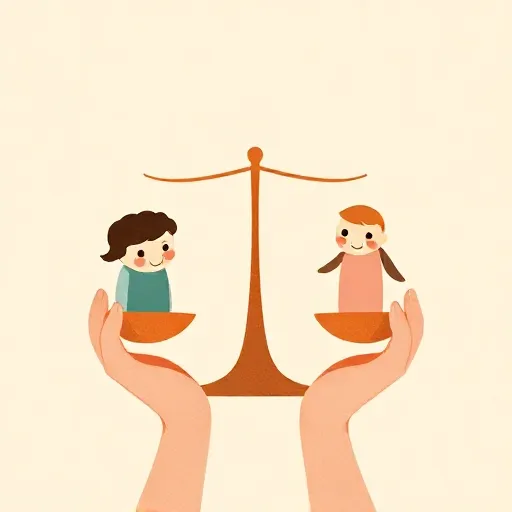
Brito also waded into one of philosophy’s most heated debates: do we really choose freely? Many theologians of his time were voluntarists, who claimed that the will can act independently, even against the intellect’s judgment. Brito thought that was mistaken. He argued that the will is naturally drawn to whatever appears good — it cannot ignore that pull. But that does not make us puppets. Our freedom lives in the intellect’s power to deliberate. Before you act, your intellect can pause, examine consequences, and uncover hidden drawbacks. If deliberation reveals that the object is not truly good, the appearance changes, and the will no longer desires it. Freedom, for Brito, is not an uncaused leap; it is the result of thoughtful judgment. This made him an intellectualist, a close follower of Godfrey of Fontaines. The act of thinking through a temptation — that is where real human freedom sits.
Why Brito’s Questions Still Matter

Brito’s classroom in 1295 feels far away. Yet every time you parse a sentence, every time you ask why “a man runs” is fine but “runs man a” is nonsense, you are touching the same questions he raised. His idea that grammatical structure is rooted in reality helped inspire later theories about how language maps onto the world. His logic of second intentions, which separated truth from validity, paved the way for modern metalogic and formal semantics. And his vision of freedom — that we are most free when we think hardest about what we want — echoes in today’s arguments about whether unconscious brain processes cancel out choice.
The young master from Brittany did not just teach grammar. He built a map of the mind that still helps us navigate. And the next time you catch yourself hesitating before a decision, weighing reasons until a once-tempting move suddenly looks like a mistake, you are living inside an idea Radulphus Brito defended seven centuries ago.
Think about it
- Brito said you cannot choose what seems good to you, but you can think until it stops seeming good. Have you ever talked yourself out of wanting something? If so, were you really free in that moment?
- Imagine a language that organizes words completely differently — for example, one where every action is always a verb and can never act as a noun. What would that tell us about how its speakers see the world?
- Brito removed truth from logic’s job. Can a perfectly logical argument built on a false premise still be a “good” argument? Should logic care about the real world, or only about how ideas fit together?