
Why Did You Check That Box? The Strange Story of Race
What are you really checking?
It’s your first day of middle school. You have a stack of forms. One question gives you five boxes: White, Black, Asian, Native American, Other. You’ve seen it before. You check one and move on.
But what did you just agree to? A biological fact? A family story? Something else entirely? This question has a history that stretches back more than 500 years — and philosophers are still arguing about what the boxes actually mean.
The first “race” law
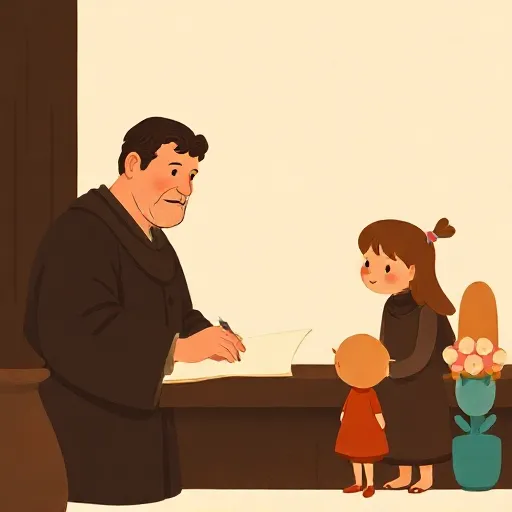
In 1449, the Spanish city of Toledo did something new. It passed a law based on limpieza de sangre — blood purity. The law said that conversos, Jews who had converted to Christianity, were permanently different from “old Christians.” Even if they prayed in church, their blood was considered impure. And because blood was inherited, their children and grandchildren would always be second-class.
According to the philosopher Adam Hochman, this was the first idea that counts as a race concept. Why? Because it had four key pieces that still sound familiar today: (1) a group forms because its members mostly marry inside the group, (2) the group is treated as a major human lineage, (3) it is seen as a real biological group in the present, and (4) membership is passed down through birth, forever.
Notice what’s missing: skin color didn’t matter here. The Catholic monarchs were drawing lines based on ancestry and religion, not appearance. And the law didn’t try to sort all of humanity — it only marked converted Jews and, later, converted Muslims. Still, the idea that biology makes some people permanently different had been born.
Measuring skulls and skin
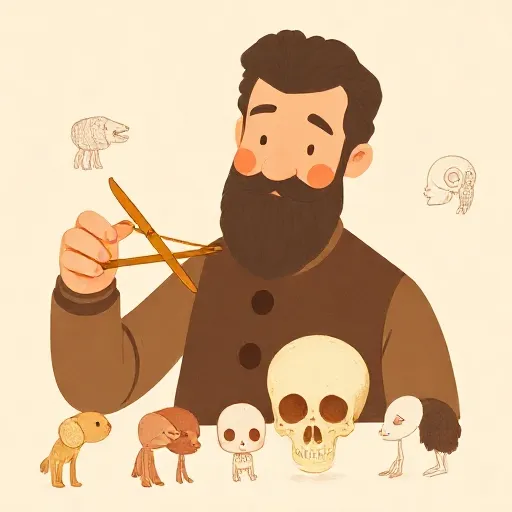
By the 1600s and 1700s, European explorers had traveled the globe and brought back stories of people who looked nothing like them. Natural philosophers wanted to sort humans the way they sorted plants and animals.
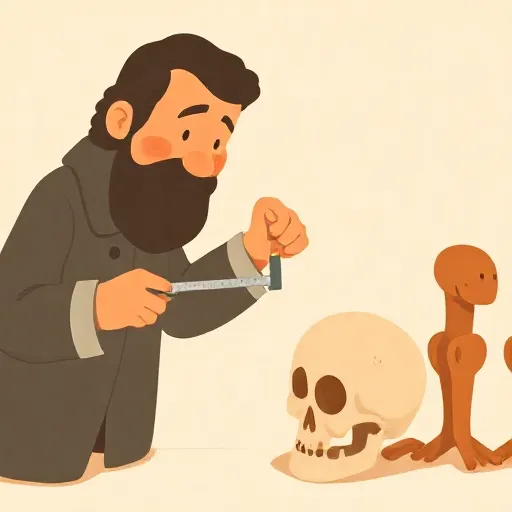
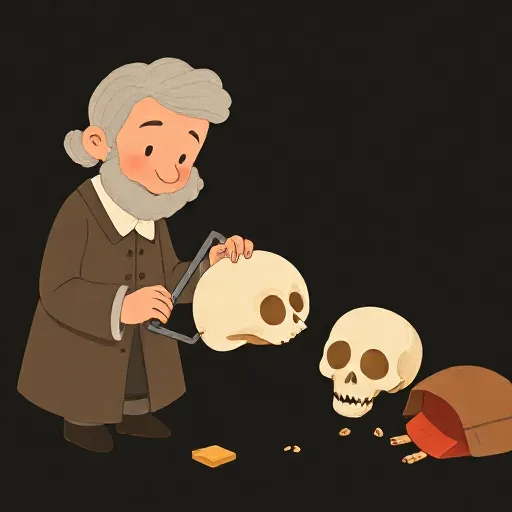
In 1684, the French traveler François Bernier published “A New Division of the Earth.” He grouped humanity into four or five races based on physical traits — hair texture, bone structure, skin tone. A century later, the German philosopher Immanuel Kant (1724–1804) argued that all humans came from a single original stock, but climate had triggered “seeds” inside them to produce four pure races: blond northern Europeans, copper-red Americans, black Africans, and olive-yellow Asians. Then the anatomist Johann Friedrich Blumenbach (1752–1840) added a fifth variety and coined the term Caucasian in 1795, because he believed the most beautiful people came from the Caucasus mountains. He measured skulls and decided five types covered the globe.
These thinkers weren’t just describing difference — they were building a ladder. White Europeans always sat at the top. And now the ladder was called science.
Scientists pull the rug
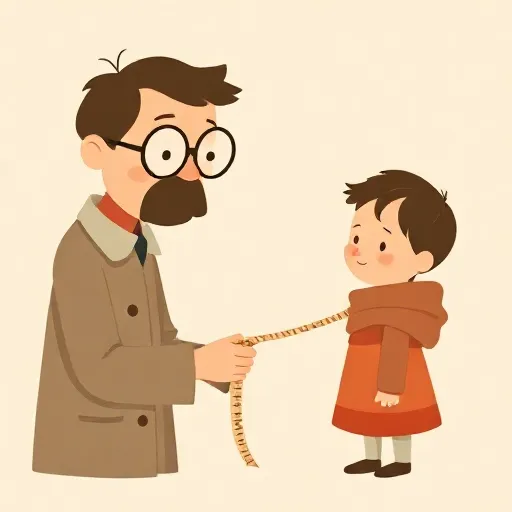
For a while, this ladder looked solid. But in the early 1900s, a German‑Jewish immigrant to the United States started to shake it. The anthropologist Franz Boas (1858–1942) measured thousands of skulls and noticed something strange: children born in America had larger skulls than their European-born parents. If skull size was fixed by race, that couldn’t happen. Boas showed that better nutrition literally changed bone size. Race wasn’t as permanent as everyone thought.
A generation later, the anthropologist Ashley Montagu (1905–1999) went further. Using the new science of genetics, he argued that traits we associate with race — skin color, hair texture — are controlled by many different genes that don’t travel together neatly. Two people with the same dark skin might have arrived at it through completely different genetic paths. In 1950, a group of scientists from around the world published a UNESCO statement: race has no biological basis. The old biological race concept, which said each race had a hidden essence that explained intelligence, character, and behavior, was scientifically dead.
The big divide: skeptics vs. builders
If races don’t exist in biology, should we stop using the word entirely? Here the arguments get especially lively.
Some philosophers, called racial skeptics, say yes. Kwame Anthony Appiah and Naomi Zack argue that the term “race” tried to name a real biological thing — and that thing turned out to be an illusion. There is no single gene, set of genes, or ancestral line that all and only “Black” people share, or all “white” people share. Zack goes through every possible scientific basis — geography, visible traits, genetics, family trees — and shows each one fails. So she concludes that race doesn’t exist and we should eliminate the concept. Using the word only keeps the illusion alive.
But other philosophers push back. Racial constructivists agree that biology doesn’t carve the world into races, but they insist that race is still real. How? It’s real as a social invention — like money, borders, or the “teenager” category. The philosopher Sally Haslanger defines a racialized group this way: a collection of people who are imagined to share certain body traits linked to a far-off ancestry, and who are marked for either a lower or higher place in society because of those imagined traits. In other words, race is real because people act on it. If society treats you as Black, you will have certain experiences — good or bad — whether or not a geneticist can find the label in a test tube.
That helps explain why many constructivists think we should keep the word. You need the concept of race to talk about racism, inequality, and identity. Ignoring it would be like ignoring gravity because you wish it didn’t exist.
A third group, population naturalists, tries to find a middle ground. They point out that there are real, fuzzy biological clusters in human DNA that roughly match major geographic regions — and these can be medically useful. But the clusters aren’t sharp lines; a scientist has to decide how many clusters to look for. Even here, human choices shape the categories.
So why does the checkbox still matter?
Back to that school form. The government asks about your race to track things like educational gaps, health access, and discrimination. Even though science says race isn’t a biological kind, its social career is massive: it has shaped where people live, how they are policed, and what chances they get. The constructivists argue we can’t fix inequality if we pretend race went away. The skeptics worry that every time we check a box, we strengthen the very illusion that caused so much harm.
So when your pencil hovers over those options, you aren’t pointing at a biological fact deep in your cells. You’re pointing at a 500-year-old invention — one that was built from blood law, skull calipers, and power struggles. The question is not just “What are you?” but “What kind of story are we still telling?”
Think about it
- If race has no biological basis, why do you think people still treat it as a real difference in daily life?
- Should schools stop asking students about their race, or would that hide problems like unequal treatment?
- Can you think of a group that was once labeled a different “race” but is now just seen as an ethnic group? What changed?