
If Science Says Race Isn't Real, Why Do We Still Talk About It?
A Box That Doesn’t Fit
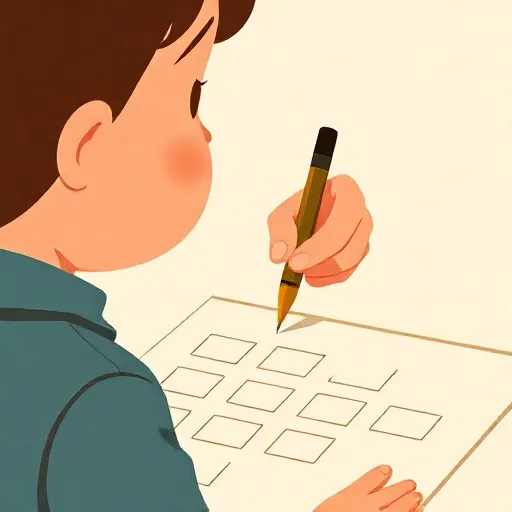
You are filling out a form. It asks for your race. You look at the little boxes — White, Black, Asian, Indigenous — and hesitate. Maybe you feel like more than one, or none at all. You choose something, but a quiet question lingers: what if the question itself is mistaken? What if race, the way we usually talk about it, isn’t a biological fact?
That is the hard problem philosophers and biologists in Latin America have been wrestling with, and their answer is surprising. Biological races, they say, do not exist. But that does not make the experience of race disappear. The idea still shapes lives, laws, and entire countries. Deciding what to do about that is a debate that is still very much alive.
Why Biologists Say Race Doesn’t Exist
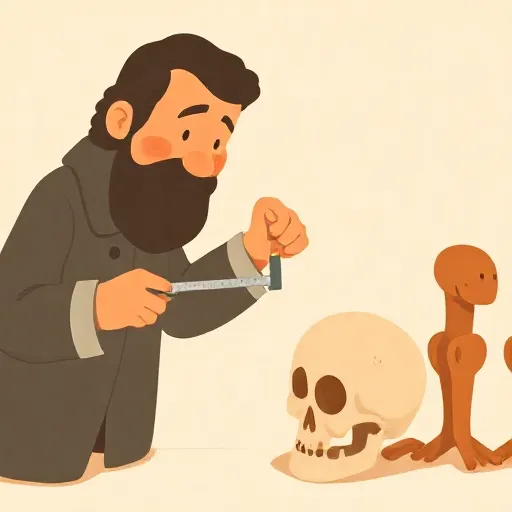
In the sixteenth century, Spanish thinkers used a then‑new biological category — race — to justify conquering and ranking people in the Americas. For centuries after, racial naturalism — the claim that humans can be divided into distinct natural or biological races — was taken as science. But by the early 2000s, a firm consensus had formed among Latin American biologists and philosophers. Racial skepticism had become the standard view: there are no biological human races.
The Brazilian geneticist Sérgio Pena (born mid-20th century) drove this point home with data. He and his team showed that all humans share about 99.9% of their DNA. The tiny slice that varies does not sort people into neat groups. Almost all the genetic diversity on Earth is found within any one population — say, within Brazil — not between different continents or skin‑color groups. If you pick two Brazilians at random, they can be more genetically different from each other than either is from a person in Japan or Nigeria. The old racial categories just do not match the way our genes actually work.
The Mexican philosopher Carlos López Beltrán (born mid-20th century) and others argued the same: traditional biological race is a taxonomic fiction. There are no genes for Whiteness or Blackness, no deep essence behind the labels. So why, then, do we still see race?
But We Still See It Every Day
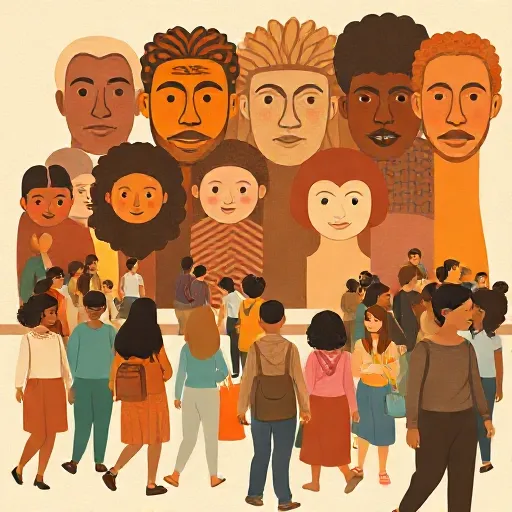
Denying that races are natural does not mean denying that people categorize each other by looks. The Argentine‑Brazilian philosopher Gustavo Caponi (born mid-20th century) calls the everyday idea the folk concept of race. It works through what he names a physiognomic type — the surface traits you can see with a naked eye: skin colour, hair texture, nose shape. These features exist, of course, but they don’t mark off natural kinds. They are like sorting people by height or whether they have freckles; the differences are real, but no scientist would call a group of freckled people a biological race.
Nonetheless, for hundreds of years societies built huge systems around those looks. This has led to racial constructivism — the recognition that race is a social object, created and kept alive by human decisions, laws, and habits. The folk concept is real as a social fact, not as a biological one. It affects who gets called smart, who gets pulled over by police, who is seen as “belonging.” Caponi insists that the folk concept and racialized thinking are not a social myth — they exist and have very real consequences.
The Great Debate: Erase, or Keep the Idea?

So what should we do with this powerful but scientifically empty idea? Latin American thinkers have taken two strong, opposing positions.
Pena and López Beltrán advocate normative racial eliminativism. They recommend getting rid of the concept of race entirely — stop using it on forms, drop it from official documents, stop talking as if races existed. The reasoning is simple: race concepts are built on biological misconceptions, and they are the very scaffolding of racism. If you want to knock down racism, you have to stop using the concepts that hold it up. When Brazil’s Supreme Court debated racial quotas for public universities, Pena gave evidence that genetics shows no racial basis for the categories, and he opposed the quotas themselves, fearing they would divide people artificially. (The court, by the way, upheld the quota system in 2012.)
Caponi sees it differently. He adopts normative racial conservationism. He agrees that humans do not belong to biological races, and he rejects all forms of racism. But he argues that, in some limited settings, understanding race as a physiognomic type — a visible social marker — can be useful and even just. For instance, in a country like Brazil where lighter skin colour has been tied to privilege for centuries, creating affirmative action programs for people whose physiognomy has been discriminated against may help erode that very discrimination. By promoting them into positions of prestige and power, society weakens the link between certain looks and low status. Caponi thinks that, used carefully, racial categories can be a tool to fix historical wrongs, not to reinforce them.
Both sides want to end racism. The fight is over the best tool: a clean eraser, or a chisel that carefully reshapes social reality.
When Genes Seemed to Bring Race Back
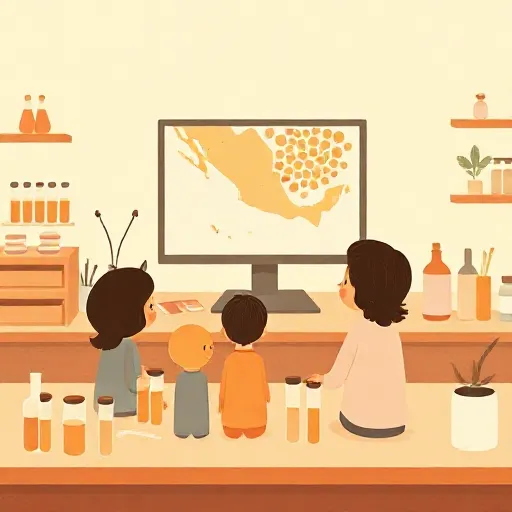
In the early 2000s, big‑budget genomic projects in Mexico and Brazil set out to map the DNA of their populations. The Mexican project coined the term mestizo genome to describe what they thought was a distinct genetic profile. Philosophers and social scientists warned that this looked like a genetic reification of an old nationalist myth — the idea of a single blended “Mexican race.” Yuriditzi Pascacio Montijo (born late 20th century) pointed out that the classifying categories used, like “Zapotec,” were not natural kinds but categories borrowed from government offices for Indigenous peoples. Alfonso Arroyo Santos (born late 20th century), a Mexican biomedical researcher turned philosopher, argued that the genes linked to common diseases in these studies were only surrogate variables — rough stand‑ins, not causal drivers — and that treating them as race‑linked genes was scientifically wrong. The real story behind diseases like diabetes, Arroyo Santos insisted, was not a genomic mestizo profile but rising malnutrition and economic inequality.
These careful criticisms showed how easy it is for modern science, even when aiming to help, to accidentally slip back into old racial thinking. They reinforced the point that race is a social map, not a genetic GPS.
The Form Is Still There
Filling out that form, you aren’t being asked about your DNA. You are being asked to place yourself on a social map that was drawn during centuries of conquest, slavery, and nation‑building. Knowing that doesn’t make the moment easy. But it does give you a choice: you can see the boxes not as natural categories but as political ones, with all the baggage that carries. And you can ask the deeper questions. If a category was built on a mistake, should we keep using it to try to correct past harm, or scrap it so it cannot cause more? That is exactly the issue Latin American philosophy of biology has brought into the light.
Next time you see that question, you will know that the most honest answer might be: “None of the above — and here’s why.”
Think about it
- If you could design a school application that never asks for race, would you do it? What might be gained, and what might be lost?
- Imagine a society where everyone’s ancestors came from all over the world many generations ago. Would the idea of race still have any meaning? Why or why not?
- Suppose a government uses racial categories only to give scholarships to groups that have been discriminated against for centuries. Is that fair to someone who looks different but grew up in the same kind of poverty?