
What Is Race? A Philosophical Investigation
Here’s a strange fact about the world we live in: race matters enormously. It affects where people live, how much money they have, how long they’re likely to live, whether they get stopped by police, and what kind of healthcare they receive. But when you try to pin down exactly what race is—what the thing is that’s having all these effects—it starts to feel very slippery.
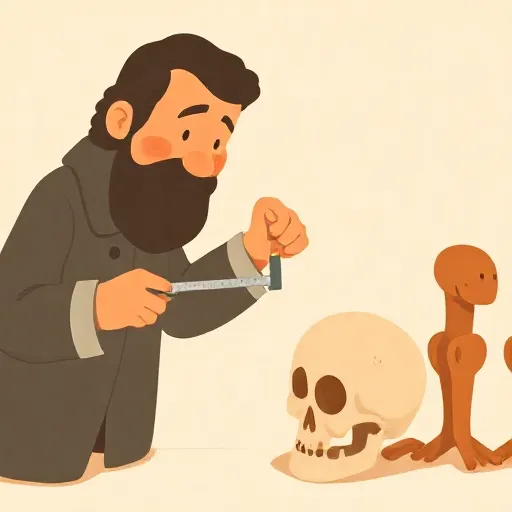
Scientists have pretty much agreed that there’s no good biological basis for dividing humans into races. If you look at our DNA, there’s more genetic variation within any so-called racial group than between groups. The physical traits we associate with race—skin color, hair texture, facial features—are just tiny surface differences that evolved as humans spread across the planet.
So if race isn’t biological, what is it? And if it’s not real in the way that, say, having a spleen is real, how can it have such enormous effects on people’s lives?
This is where the Critical Philosophy of Race comes in. It’s a way of thinking that starts with a surprising idea: maybe the most important thing about race is not whether it’s “real” or not, but how it works in the world—how it shapes people’s experiences, how it gets built into institutions, and how it becomes part of who we are.
The Puzzle of Race and Experience
Imagine walking into a room where you’re the only person who looks like you. Maybe you’re the only Black kid at a mostly white summer camp, or the only Asian kid at a school event, or the only white kid at a family gathering for a different culture. You probably become suddenly aware of your body in a way you usually aren’t. You might feel like everyone is looking at you, or like you have to represent your whole group.
Now imagine that this feeling never goes away. Not at camp, not at school, not at the store, not anywhere. Philosopher Frantz Fanon, who was Black and grew up in Martinique (a Caribbean island that was a French colony), wrote about this experience in the 1950s. He described it as a kind of “third-person consciousness”—you experience yourself not just as yourself, but also the way others see you, which is shaped by all the stereotypes and fears and stories they carry about your race.
Fanon noticed something strange: Black people in white-dominated societies were constantly having their actions interpreted through racist cultural images. If a Black person was angry, they weren’t just angry—they were an “angry Black person.” If they were walking down the street, they might be seen as threatening even when they weren’t doing anything threatening. Their own experience of themselves was constantly bumping up against what other people projected onto them.
This is what philosophers call a phenomenological approach to race—it starts with what it feels like to be a racialized person in a racist society. And it turns out that different racial groups have really different experiences.
Invisible and Hyper-Visible
Here’s a strange pair of opposites that Critical Philosophers of Race have explored: invisibility and hyper-visibility.
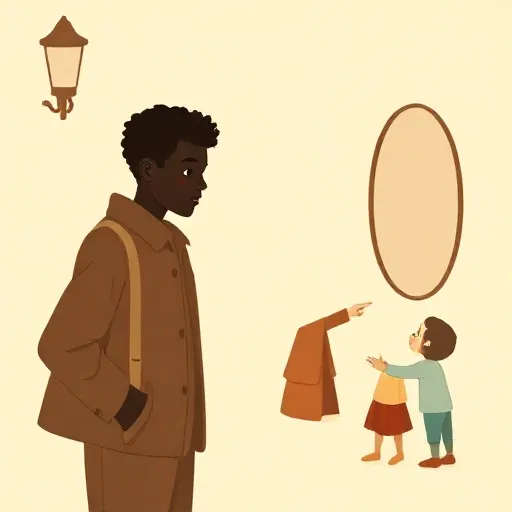
Lewis Gordon, a philosopher who built on Fanon’s work, described how Black people in anti-Black societies can become simultaneously invisible and hyper-visible. Their pain and suffering often goes unnoticed—there’s research showing that medical professionals take Black patients’ pain less seriously than white patients’. That’s a kind of invisibility. But at the same time, Black bodies in spaces that are assumed to be “white spaces”—like universities, corporate offices, or fancy neighborhoods—are hyper-visible. Everyone notices them. Everyone watches them.
Gordon described this as Black people becoming “mirrors” or “empty hulls” onto which white people project their own needs and desires. White affection for Black people can be like affection for pets—pets don’t judge their masters, don’t have their own independent perspectives. When Black people assert their own subjectivity—their capacity to think, judge, and see the world from their own point of view—they’re often met with violence or attempts to erase them.
This gets at something important: being a member of a dominant group (like being white in a white-dominated society) often means not having to think about your race at all. You can just be a person. But being a member of a marginalized group means race is constantly in your face, whether you want it to be or not.
How Race Gets Built Into the World
But Critical Philosophy of Race isn’t just about individual experiences. It’s also about how race gets built into the very structure of society—into laws, institutions, schools, and even the way knowledge is created.
Think about something that seems totally neutral: the concept of “merit.” If a school or a company says they hire the most “meritorious” candidates, that seems fair, right? But Critical Race Theorists (a movement that heavily influenced this philosophy) have pointed out that “merit” is often defined in ways that assume certain kinds of experience and background that are easier for privileged groups to have.
Here’s a concrete example: In 1984, legal scholar Richard Delgado wanted to find the most important law review articles on civil rights—the ones most often cited, published in the most respected journals. He found that every single one of the top twenty was written by white men. These scholars were citing each other, building on each other’s work, and having sophisticated debates about racial justice. But they were doing it without citing major Black thinkers like W.E.B. Du Bois, Kenneth Clark, or Frantz Fanon.
When Delgado asked one author why he didn’t cite these thinkers, the author said he preferred the source he used because it was “so elegant.” Now, this author probably wasn’t consciously racist. But something was happening: the definition of what counted as “good scholarship” was being shaped by a mostly white network, and this network systematically excluded the perspectives of people of color. The system was producing racial inequality even without anyone intending it.
This is what philosophers mean when they talk about structural racism—racism that doesn’t require individual bad intentions, but is built into the way institutions operate. The law, for example, might treat everyone equally on paper, but if it ignores the fact that different groups started from very different positions (some groups having been enslaved, having their land stolen, or being denied the right to own property for generations), then “equal treatment” just locks in existing inequalities.
The Question of Capitalism
Here’s another debate that philosophers have: Is racism mainly caused by economic systems like capitalism, or does it have deeper cultural roots?
The argument for capitalism goes like this: Racism is profitable. It allows employers to pay certain groups less, to divide workers so they can’t unite against their bosses, and to justify taking resources from some groups. Old-school capitalists in places like the United States and South Africa used racial divisions to keep the working class from organizing together.
But other philosophers argue that economic explanations alone aren’t enough. Racism also seems to be about identity, pride, and the desire to maintain social status. White workers sometimes vote against their own economic interests to keep racial hierarchies in place. And racist ideas can persist even when they’re not economically useful.
Stuart Hall, a cultural theorist who influenced this philosophy, argued that we need to understand racism as “overdetermined”—it has multiple causes that work together in complex ways. Economics matters, but so do culture, language, and the stories societies tell about themselves.
Can Race Ever Be Good?
This leads to a really tricky question: If race is a harmful social construction that was created to justify oppression, should we try to get rid of it entirely? Some philosophers, called eliminativists, think we should. The idea is that racial categories are so poisoned by their history that the best thing to do is stop using them.
But many Critical Philosophers of Race disagree. They point out that racial identities have also been sources of resistance, community, culture, and pride. When African people were kidnapped and enslaved, they were stripped of their specific ethnic identities and languages. But over time, a new identity—Blackness—emerged as a way to build solidarity and fight back against oppression. The same is true for Indigenous peoples in the Americas, who developed pan-Indigenous identities as a way to resist colonization.
Philosophers like W.E.B. Du Bois argued that Black people in America had developed a distinctive culture and way of being in the world that was valuable and worth preserving. This was partly a response to oppression, but it was also creative—Black people were making new art, music, religion, and ways of living together, even under terrible conditions.
So if we just eliminate racial categories, we might also lose the positive meanings people have created within them. And we might lose our ability to talk about the real effects of racism, since we’d have no language to describe the groups that are being discriminated against.
What About Whiteness?
Critical Philosophy of Race also asks questions about white people. If race is a social construction, then whiteness is too—and it’s worth asking what that means.
Du Bois wrote about what he called “the souls of white folk.” He was interested in what it does to a person to believe that their skin color entitles them to special treatment. He thought whiteness was a kind of pathology—a false sense of superiority that was constantly being reinforced by social arrangements, but that was ultimately damaging to everyone, including white people.
More recent philosophers have explored the idea of an “epistemology of ignorance”—the ways that dominant groups actively avoid knowing about the realities of oppression. To maintain a sense of moral goodness, white people might avoid watching certain news stories, reading certain books, or having certain conversations. They might insist that racism is mostly in the past, or that individual effort is all that matters. This ignorance is not just an accident—it’s something people work to maintain.
Shannon Sullivan, a contemporary philosopher, has written about white people’s “ontological expansiveness”—the sense that the whole world belongs to them, that they can go anywhere and do anything. This shows up in things like gentrification (moving into a neighborhood and changing it to suit your tastes) or in the assumption that you’re entitled to an explanation when a person of color doesn’t want to talk to you.
A Way Forward
So where does all this leave us? If race is not biologically real but socially constructed, and if it’s been used for terrible things but also for resistance and community, what should we do?
Most Critical Philosophers of Race would say there’s no simple answer. We can’t just pretend race doesn’t exist—it’s too deeply embedded in our institutions, our experiences, and our sense of self. But we also can’t treat racial identities as fixed or natural. Instead, we need to pay attention to how race is actually working in the world, context by context.
This means asking questions like: Who benefits from current racial arrangements? How do our institutions produce racial inequality even without individual racists? What would it mean to build institutions that genuinely respected human differences without using them to rank people?
These are not just academic questions. They’re about how we live together, how we know what we know, and who we understand ourselves to be. And they’re still very much up for debate.
Key Terms
| Term | What it does in this debate |
|---|---|
| Social construction | An idea that something is real not because of nature or biology, but because people have agreed to treat it as real and built institutions around it |
| Phenomenology | A method of philosophy that starts with describing what things feel like from a first-person perspective |
| Structural racism | Racism that is built into the way institutions and systems operate, not just in individual people’s attitudes |
| Epistemology of ignorance | The idea that dominant groups actively avoid knowing about oppression in order to maintain a sense of moral goodness |
| Eliminativism | The view that we should stop using racial categories altogether because they are harmful inventions |
| Overdetermination | When something has multiple causes that all work together, so you can’t point to just one reason |
Key People
- Frantz Fanon (1925–1961): A psychiatrist and philosopher from Martinique who wrote about what it feels like to be Black in a white-dominated world, and about the psychological effects of colonialism.
- W.E.B. Du Bois (1868–1963): A Black American sociologist, historian, and activist who wrote about race, double consciousness, and the experience of being both Black and American.
- Lewis Gordon: A contemporary philosopher who developed Fanon’s ideas further, analyzing Black existence in anti-Black societies and the ways Black people become invisible or hyper-visible.
- Charles W. Mills (1951–2021): A philosopher who argued that Western political philosophy was built on an unspoken agreement to treat some people as less than fully human (what he called “the racial contract”).
- Shannon Sullivan: A contemporary philosopher who writes about the unconscious habits of whiteness, including spatial entitlement and “ontological expansiveness.”
- David Theo Goldberg: A philosopher who analyzes how liberal societies can be “racist cultures” even when they officially reject biological racism.
Things to Think About
-
If race is a social construction, could we un-construct it? What would that look like, and who would have to give up what?
-
The philosopher Richard Delgado found that even well-intentioned white scholars writing about racial justice were ignoring Black thinkers. Do you think there are similar patterns in your own experience—ways that certain voices get heard while others are ignored?
-
Fanon described a “third-person consciousness” where you experience yourself through others’ negative projections. Can you think of situations where you’ve felt seen not as yourself, but as a representative of some category?
-
If we stopped using racial categories entirely, would racism disappear? Or would we just lose the ability to talk about it?
Where This Shows Up
- In schools: Debates about affirmative action, school funding, and curriculum choices (whose history gets taught, whose literature gets read) are all connected to ideas about race and social construction.
- In the news: Conversations about police violence, housing discrimination, and healthcare disparities all involve questions about whether racism is individual or structural.
- In your own life: The way people react to your appearance, the assumptions they make about you, and the spaces where you feel comfortable or uncomfortable are all shaped by racialization.
- In social media: Arguments about “colorblindness” versus “race-consciousness” are debates about whether it’s better to ignore race or to acknowledge it.