Are You Born to Rule, or Born Equal? The Fight That Still Isn’t Over
The Lie That Justified Slavery and Servitude
Imagine being told you can’t learn to read because your mind is too weak. Or that you must work for someone else your whole life because your ancestors were supposedly less intelligent. For centuries, that was the everyday logic of power. Philosophers, priests, and even scientists argued that some groups of humans are naturally inferior to others—that nature had stamped some people as rulers and others as born servants. This idea, the natural inequality thesis, wasn’t just a mistaken opinion. It was used to justify slavery, deny women’s rights, and keep poor people powerless.
Egalitarians—people who believe in equality—had to start by flipping this story on its head. They had to show that the vast inequalities we see around us aren’t written into our bones. Instead, they are built by laws, customs, and systems that protect the powerful. The fight to prove that all humans have equal moral worth was long, and it changed how we think about justice forever.
Rousseau: When a Fence Became Chains
In 1754 the French philosopher Jean‑Jacques Rousseau (1712–1778) published a small book that rattled Europe. He argued that inequality is not a fact of nature but a product of human choices. The powerful, he said, were trapped in a circular lie: they saw huge gaps between rich and poor and assumed those gaps must be natural. Then they used that “natural” inequality to defend their privileges, which made the gaps even bigger.
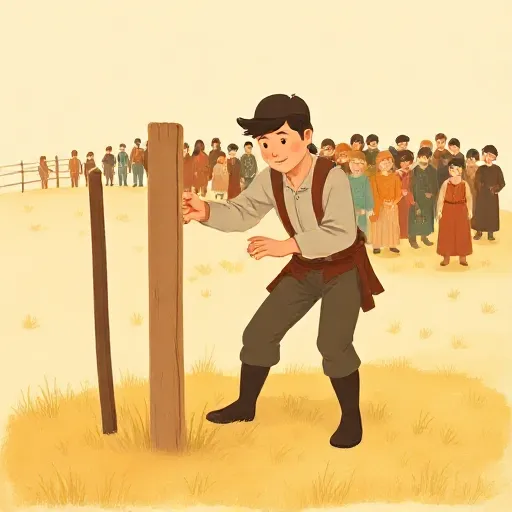
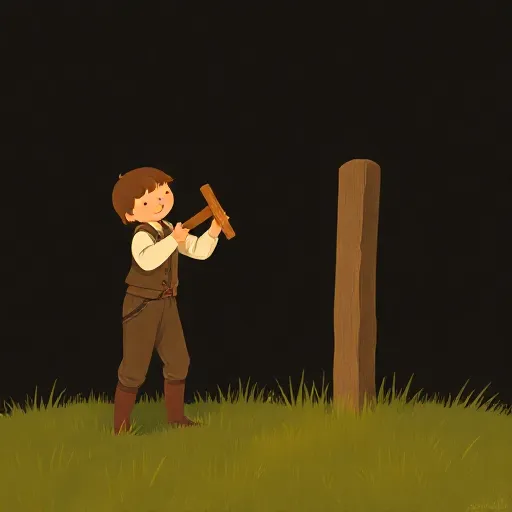
To break the circle, Rousseau invented a thought experiment he called the state of nature—a make‑believe past before governments, laws, or private property. In this world, people were neither rich nor desperately poor. Some were stronger or cleverer, but no one could turn that advantage into lasting power. You couldn’t store up mountains of grain if there were no laws protecting “yours” and “mine.” Inequality only exploded, Rousseau said, once fences and deeds arrived, and with them a whole machinery of domination. He wanted to show that what looked natural was actually the result of social conventions—and that we could choose to remake those conventions.
Rousseau’s story was a thunderbolt, but it had a blind spot. He still believed that men were naturally suited to rule and women to obey. The same critical thinking that toppled aristocratic privilege stopped at the doorstep of his own home.
Mary Wollstonecraft: Why Educating Girls Threatens the Powerful
The British writer Mary Wollstonecraft (1759–1797) couldn’t stand that hypocrisy. In 1792 she fired back with a book that still feels explosive. She pointed out that from infancy, girls are taught to be soft, obedient, and worried about their looks. Their “inferior” minds weren’t natural—they were carefully crafted by an upbringing designed to keep them dependent on men.
Wollstonecraft seized on a simple unfairness: even if women were, on average, physically weaker, why train them to be even weaker? Why treat strength as a virtue in men but a useless ornament in women? She refused to let the same bad arguments that kings used against citizens be used against half the human race. She directly criticized Rousseau for brilliantly explaining how inequality is socially built, then refusing to see the same forces at work in his own household.
Her remedy was education. Open the same books, the same debates, the same chances to everyone, she argued, and the myth of natural female inferiority would crumble. It was a daring bet that human reason, fairly shared, could topple even the most comfortable prejudices.
From Slavery to Freedom: Cugoano and Douglass
The ugliest form of the natural inequality thesis was the attempt to justify chattel slavery. In the 1700s and 1800s, defenders of slavery argued that Black people were naturally made to serve, like children or animals, and that slavery was a kind of protection. Against these claims, two former slaves—Ottobah Cugoano (born around 1757) and Frederick Douglass (1818–1895)—built a case that slavery was not natural but a human‑made theft.
Cugoano, kidnapped as a child and forced into slavery, wrote that scripture itself declared all humans brothers and sisters, all descended from Noah. Slavery, he said, was a violent act of theft, not a reflection of any natural order. No one is born a slave; they are made one through greed and brutality.
Douglass, writing his own life story, didn’t just argue with words—he stood as living proof. He described the beatings, rapes, and murders that held the system together, showing that what made slaves seem “inferior” was the denial of education, freedom, and safety. Once Douglass secretly learned to read, his entire world changed. He became a voice that no amount of racist science could silence. Together, Cugoano and Douglass made it clear: oppression creates the “inferiority” it claims to find in nature.
What Makes a Person Your Equal?
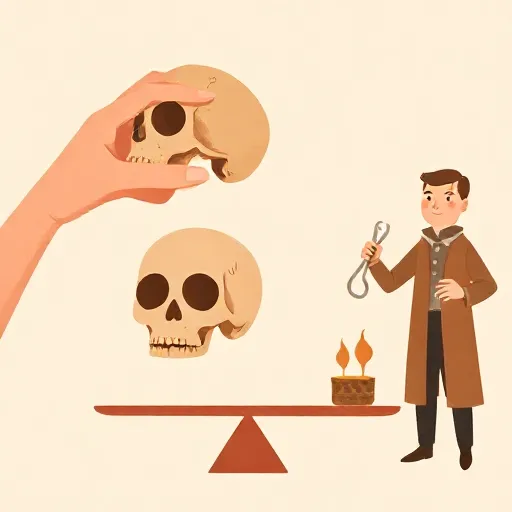
By the late 1800s, the moral case for basic equality had made great strides, but a deeper puzzle remained. If we say all human beings have equal moral worth, what exactly makes us equals? After all, people differ wildly in strength, intelligence, and talents. Some philosophers looked for a single trait we all share that grounds our dignity—a range property, like the capacity to reason or to feel pain. The idea is that even if you’re more rational than me, we both possess rational agency, so we deserve equal respect.
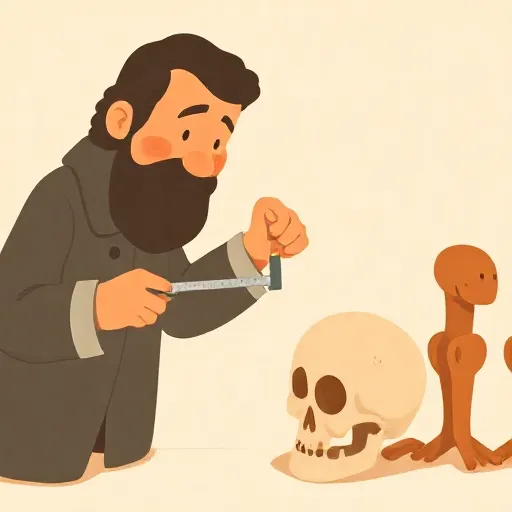
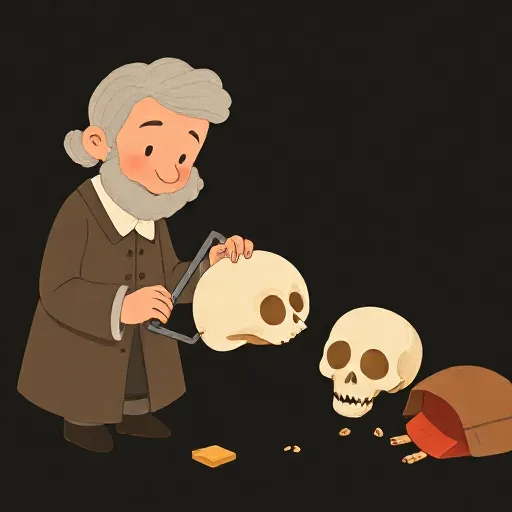
But picking such a property is dangerous. History shows that once you point to a specific ability, it’s tempting to rank people according to how much of it they have—and to use that ranking to justify new hierarchies. The same scientists who measured skulls in the 1800s thought they were just recording facts, but they were really selecting data that flattered their own group. Even today, some proposed range properties would exclude people with severe disabilities or those in a vegetative state, which many find unacceptable.
As a result, many philosophers now think basic equality isn’t a fact we discover in our DNA. Anne Phillips (b. 1950) has argued that equality is something we make happen by asserting it. No deep property of human nature seals the deal; instead, treating each other as equals is a political commitment we choose to uphold. Another thinker, Andrea Sangiovanni (b. 1970), suggests we can start from a simpler insight: being treated as an inferior is deeply harmful to human beings, and that gives us strong reasons to oppose hierarchies without needing to prove any special worth. This turns the question on its head: we don’t need a mystery ingredient to deserve equal treatment—it’s enough that we share the experience of being hurt by inequality.
Why This Still Matters: The Fight Isn’t Over
You might think that after Rousseau, Wollstonecraft, and Douglass, the natural inequality thesis would have died. But its ghost still walks. When people say that women are “naturally” more emotional and less suited for leadership, or that poverty is always the result of laziness, they’re recycling a very old lie. Even today, stereotypes about race, gender, or class can shape who gets hired, who is believed, and who gets to hold power.
The fight for equality isn’t about finding a magic trait that grants us equal worth—it’s about refusing to let anyone write a story where some people are born to rule and others to serve. Every law that guarantees fair access to education, every protest against discrimination, every conversation that pushes back against a casual prejudice is an act of carrying that fight forward. The philosophers of the past gave us tools, but the construction of an equal society is a job that never ends. And that’s good news, because it means we all get a say in which kind of world we’re building.
Think about it
- If you discovered that some people are naturally better at math than others, would that ever make it fair to give them more political power? Why or why not?
- Many people today accept that all humans have equal worth but still treat some groups poorly without realizing it. Can you think of a time you saw a classmate judged for something they didn’t choose, like their accent or where they were born?
- Suppose someone argues that we should treat people equally only when we can prove they’re equally capable. How would you respond using the ideas of Cugoano or Douglass?