You Were Born Good. Then Society Got in the Way?
The Shocking Idea That Hit Him on a Walk
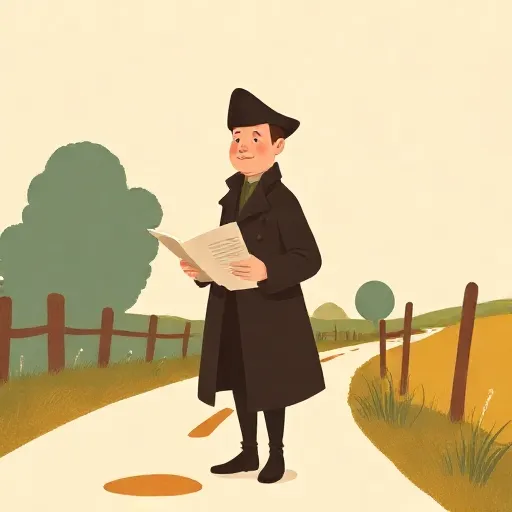
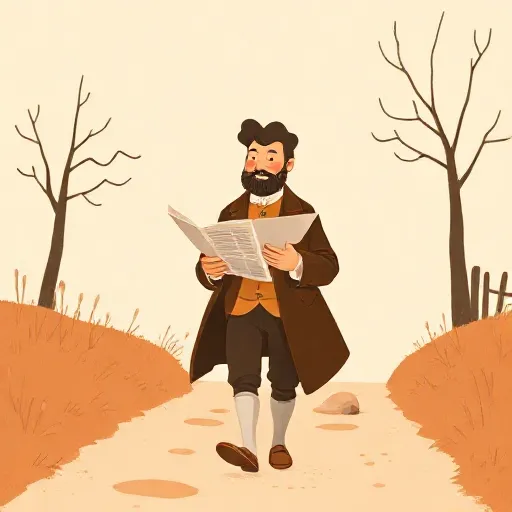
In the summer of 1749, a 37-year-old musician and writer named Jean-Jacques Rousseau (1712–1778) was walking to the prison fortress of Vincennes. He was on his way to visit his friend Denis Diderot, who had been locked up for publishing dangerously bold ideas. To pass the time, Rousseau picked up a newspaper.
His eye landed on an announcement from the Academy of Dijon. They were holding an essay contest with a huge question: “Has the revival of the arts and sciences done more to corrupt or to purify public morals?” Expecting the usual praise of learning, the judges wanted essays arguing that progress made people better. Rousseau froze. In a flash, he saw the opposite. Human beings are born good, he thought, but living together in organized societies — with its rules, fashions, and constant comparisons — poisons that goodness.
The idea hit him so hard he felt sick and dizzy. When he described it later, he said his heart pounded and tears streamed down his face. He would write his essay rejecting the contest’s basic assumption. And he would win first prize. That moment led to a wild career that still makes us argue about freedom, education, and whether society improves or ruins us.
The First Humans: Solitary, Kind, and Free
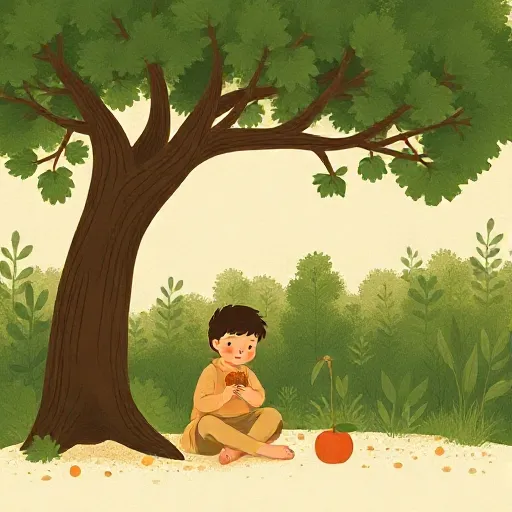
Rousseau didn’t think we can dig up exactly how the first humans lived. He used a story — a “conjectural history” — to separate what is truly natural in us from what society layers on top. In that story, humans begin as solitary wanderers. They don’t need anyone else to find food, shelter, or warmth. They rarely even meet each other. When they do, they mate and move on; babies get only brief care. Life is simple and mostly silent.
Even so, Rousseau saw two deep drives already at work. First, every creature has an instinct to preserve itself. He called this amour de soi: a love of self that pushes you to meet basic needs. It’s not greedy or cruel; it’s the same drive that makes you eat when you’re hungry.
Right next to it sits a second drive: pitié (compassion). When you see another living thing suffer — even an animal — pitié makes you want to relieve that suffering, as long as doing so doesn’t put your own survival at immediate risk. In the solitary early world, pitié is like a built-in brake on selfishness.
At this stage, humans don’t yet have morality in the full sense. They don’t reason about right and wrong. But they aren’t wicked either. Their goodness is negative: evil simply hasn’t appeared. Two special human powers, however, will change everything. One is freedom — the ability to say no to an impulse instead of just obeying it like a machine. The other is perfectibility, our capacity to learn and invent better ways to satisfy needs. These two powers let us leave the forest and build villages — and, eventually, pile up trouble.
Why Living Together Makes Us Fake and Miserable
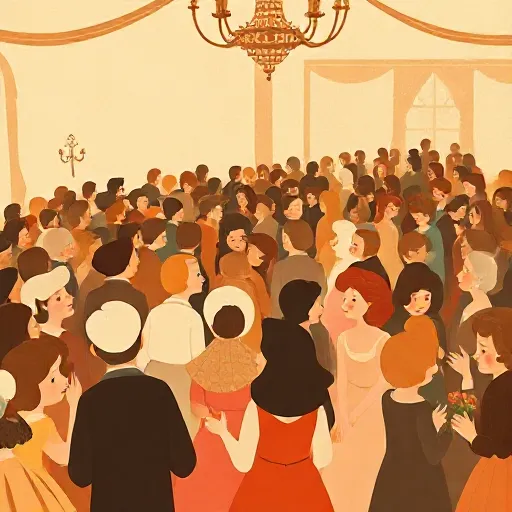
As populations grew, small groups formed to hunt or gather. For the first time, people began to notice how others saw them. This is where Rousseau says the great split happens. Our simple self-love, amour de soi, gives birth to a twisted twin: amour propre. Amour propre is the drive to be seen as worthy, to be respected, and very often to be seen as better than everyone else.
Think of it like this. Alone in the forest, you just care about staying warm and fed. But in a village, you start competing for a mate. Suddenly you worry about whether someone finds you charming or strong. You compare. You want not just to be liked, but to be admired. Your own sense of worth now depends on the glances of others.
Rousseau thought this craving for recognition is the engine behind almost everything ugly in civilized life. When people build farms, metals, and permanent property, they also build inequality. Those who own land need workers; those who own nothing need bosses. The rich demand admiration; the poor give it resentfully. Soon everyone is lying. To get what they want — food, protection, or applause — people hide their real feelings and wear masks. The boss smiles while feeling contempt; the servant bows while burning inside. No one wins. Even the person bathed in flattery can’t trust the love they receive, because they know they’ve bribed or bullied it out of others.
A State Where You Obey Only Yourself
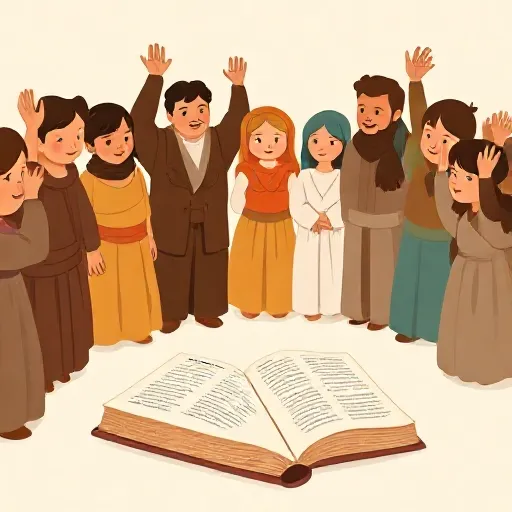
If society warps us, can we build one that doesn’t? That’s the question Rousseau tackled in The Social Contract. He began with a famous thunderbolt: that man is born free but is everywhere in chains. Those chains are the rules, bosses, and inequalities we submit to. Yet Rousseau believed those very chains could be made legitimate — fair — if we forge them together.
His solution is the general will, the shared will of the whole citizen body aiming at the common good. When you and your fellow citizens gather to make laws, and each of you asks, “What rule would be fair if it applied to everyone, me included?” you can arrive at a law that protects all of you equally. Obeying that law isn’t like obeying a king or a boss. It’s obeying the part of you that chose what you would want if you were thinking as a citizen among citizens.
But wait — what if you’re outvoted? Rousseau’s answer is blunt: you are “forced to be free.” At first that sounds like a bully’s trick. He means something more subtle. Before the state, your natural freedom lets you grab whatever you can reach. That sounds great until everyone is fighting. In a legitimate republic, the law shields you from being pushed around by any single person. You lose the wild freedom of the jungle and gain civil freedom — protected rights to your person and property. On top of that, you gain moral freedom: you only follow rules you helped author. The majority vote reveals what the general will actually is, and because you are a member of the sovereign whole, that will is still yours. Even when you disagree on a particular law, you are bound by a decision-making process you freely joined. Many philosophers have found this argument hard to swallow, but it’s the heart of Rousseau’s promise that freedom and authority can be reconciled.
The Mysterious Lawgiver
There’s a knotty problem at the center of this dream. To make good laws, you need citizens who already care about the common good. But the whole point of the state is to take people warped by inflamed amour propre and turn them into those very citizens. Where does the first spark come from?
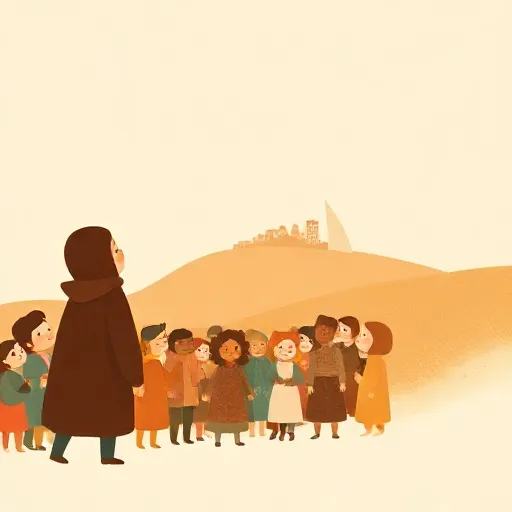
Rousseau introduces a strange figure: the legislator. The legislator isn’t a ruler. He is more like a founder who designs the new state’s constitution and inspires its people. But there’s a catch. Since the early inhabitants are still selfish and mistrustful, they can’t yet see the reasons behind the laws they need. The legislator must persuade them without rational argument — using stories, symbols, and a touch of awe — so they freely vote for laws that will eventually reshape their own characters.
This looks a little creepy. The legislator, like the tutor in Rousseau’s book on education, Emile, seems to manipulate people while giving them the illusion of choice. Critics have always asked: Who educated the educator? If the legislator was formed by a just society, then that earlier society must have had its own legislator, and so on backward. Rousseau could point to a few legendary figures, like Lycurgus of Sparta, but the mystery never quite dissolves. He leaves us with the uncomfortable thought that every fresh start might need a kind of noble trick.
Why Rousseau’s Questions Are Yours Too
Rousseau’s fingerprints are all over the way we argue about politics and growing up. His idea that society can corrupt natural goodness fed directly into Immanuel Kant’s thinking about morality and into John Rawls’s famous theory of justice. Rawls once said his principles of justice were an attempt to “spell out the content of the general will.”
Even outside philosophy books, Rousseau’s concerns are yours. Every time you scroll through a social media feed, you’re in the grip of amour propre: showing a version of yourself, comparing likes, performing for an audience. The anxious feeling that everyone else is judging you — that’s exactly the poison Rousseau described in 1755.
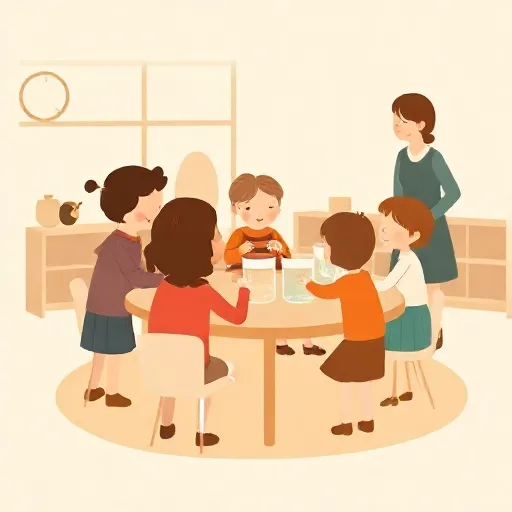
His educational ideas also shaped how many of you learn today. In Emile, he pushed for “negative education”: not cramming facts into kids but carefully arranging a world where they discover things on their own. Instead of a teacher lecturing from a podium, you get to experiment, explore, and figure out why you care about others. That slow, protected path from self-love to compassion is Rousseau’s answer to the question of how we might still grow up good, even in a world full of masks.
He never solved every puzzle. His republic shut women out of political voice — a glaring blind spot that Mary Wollstonecraft attacked soon after his death. His talk of forcing people to be free still makes many readers uneasy. But the core questions he asked belong to you as much as they belonged to him: Can we be truly free while obeying rules? Why do we care so fiercely what others think? And is the grown-up world really progress — or just a brilliant trap?
Think about it
- If you could design a club where everyone always agreed on the rules, would a person who voted “no” once still be free, or would they already be trapped?
- Is it possible to care deeply about what your friends think of you without becoming dishonest, or does any need for recognition eventually make you fake?
- If every human starts out naturally good, why do we even need laws — couldn’t we just trust one another to do the right thing?