
What Do We Owe One Another? The Fight Over a Social Minimum
The Veil of Ignorance: What Rules Would You Choose?
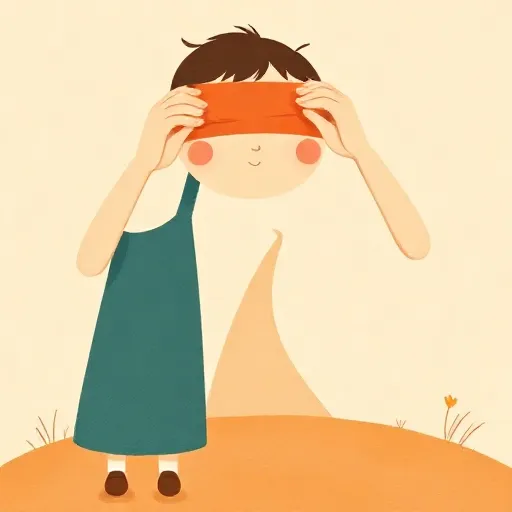
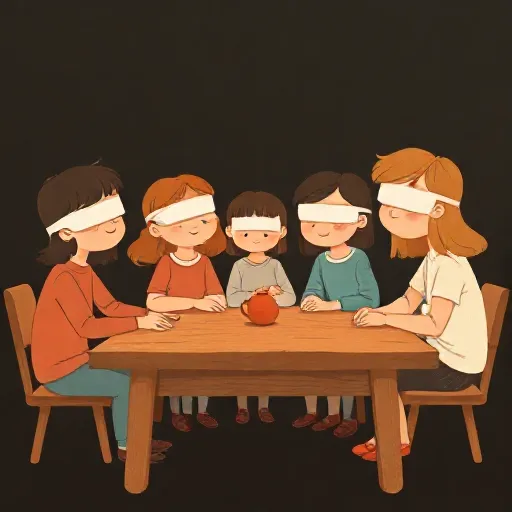
Close your eyes. You are about to be born into a country, but you have no idea who you will be. You might arrive as the child of a billionaire, or into a family living on the street. You might be born with a quick mind and a healthy body, or with a disability that makes everyday tasks hard. Before you learn your fate, you get to design the society’s rules for taking care of its members. What would you put in place so that no matter who you become, you could still lead a decent life?
This famous thought experiment, from the philosopher John Rawls (1921–2002), zeros in on the social minimum — the bundle of resources every person needs to live a minimally decent life in their society. The idea is not just about food and a roof. It is about whatever you need to truly belong: to go to school, to see a doctor, to appear in public without shame, to have some say over your own life. When a government creates programs to ensure everyone can reach this floor — through cash help, public healthcare, or job guarantees — we say it enacts a social minimum. But the fight begins when we ask: what exactly goes into that bundle, and who should pay for it?
What Counts as a Decent Life? Capabilities, Not Just Money
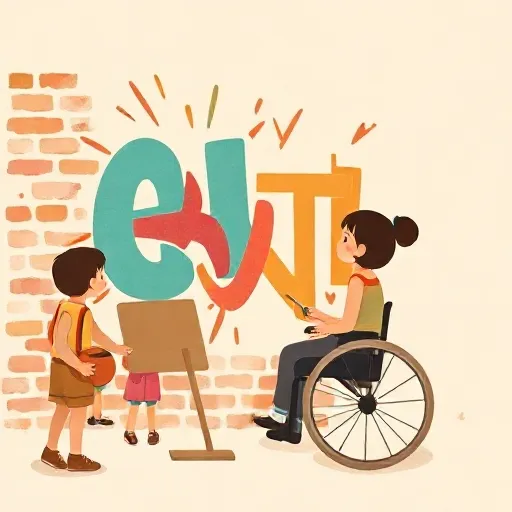
Early on, many thinkers thought the goal was simply welfare. In one version, pioneered by Jeremy Bentham (1748–1832), welfare means happiness — a balance of pleasure over pain. If you are smiling and content, you are doing well. But critics pointed out two big problems. First, people can adapt: if you grow up in a poor village with few opportunities, you might adjust your expectations and say you are happy. Does that really mean your life is fine? Second, happiness is not the only thing that matters. Having real choices, moving through the world with self-respect, and connecting with others all count.
The economist Amartya Sen (born 1933) offered a different lens. Instead of happiness or money, he focused on capabilities — what you are actually able to do and be. Sen called the things you achieve your functionings, like being well-nourished, being able to read, or joining a game. Your capability is your real freedom to achieve those functionings. Two people with the same amount of money can have very different capabilities if one has an expensive chronic illness. A decent life is not about handing everyone an equal check; it is about giving each person the specific resources they need to unlock a basic set of capabilities.
That raises a tough question: which capabilities are essential? The philosopher Martha Nussbaum (born 1947) tried to answer by asking, “What activities characteristically performed by human beings are so central that they seem constitutive of a life that is truly human?” She looked at stories people tell, at what we mourn when someone loses a capacity, and built a list of central human capabilities. It includes obvious ones like life and bodily health, but also the ability to use your imagination, to form friendships, to play, to have some control over your environment, and to reason practically about your own life. Nussbaum’s list is ecumenical — it tries to be broad enough that people from many cultures can agree. Yet critics worry it still smuggles in one person’s specific vision of the good life.
The resources you need to unlock a capability also depend on where you live. Appearing in public without shame requires a different bundle in a poor village than in a rich city where everyone owns a smartphone and fashionable clothes. So the social minimum rises a bit as a society becomes wealthier — though there must also be a floor below which no one should fall, no matter the country.
The Case for a Guaranteed Safety Net
Why should a society take money from some people to make sure others have this minimum? Philosophers line up several big arguments.
The greatest happiness. Utilitarians like Bentham argue that we should arrange society to produce the most total happiness. If a rich person gives up a small amount, the pain is tiny. If that same amount saves a poor person from hunger or shame, the happiness gain is huge. Because money matters less when you already have a lot, shifting a little from top to bottom can increase overall well-being. But a utilitarian is not automatically on board. If heavy taxes make the rich work less and the economy shrinks, total happiness might drop. So the case depends on how the economy actually works.
You behind the veil. Rawls pushed deeper. He asked us to imagine an “original position” behind a veil of ignorance where we do not know our future class, talents, or health. From that spot, would you gamble on ending up in the gutter? Most people, Rawls thought, would choose principles that guarantee the worst-off a decent floor — not total equality, but a system where even the lowest position is livable. Psychologists who have run similar experiments find that people consistently pick rules that maximize average well-being but also set a hard floor below which nobody can fall. If you would not accept life without a safety net for yourself, why would you impose it on others?
Freedom from domination. Another line comes from relational egalitarians — philosophers who care most about equality of power and status, not just money. Imagine a worker who has no safety net and must take any job, however awful, because quitting means homelessness. That worker is vulnerable to exploitation. Or imagine a spouse trapped in an abusive marriage because leaving means poverty. Guaranteeing a social minimum lowers the cost of walking away. It gives the weak more bargaining power and protects their freedom. Similarly, if you are too busy scraping for food to follow politics or vote, your voice in democracy is hollow. A social minimum helps every citizen participate meaningfully.
But Is It Fair? The Freedom and Fairness Challenge

Not everyone applauds. Some thinkers say a government-enforced safety net is an attack on freedom.
The self-ownership objection. The libertarian philosopher Robert Nozick (1938–2002) argued that each person has self-ownership — you own your body and your labor. Forcing you to hand over a chunk of your earnings to help others is like taking a part of your life without your consent. Nozick called it forced labor for the good of others. However, even Nozick admitted one exception. He borrowed the idea that when people grab natural resources like land and turn them into private property, they must leave “enough and as good” for others. If a private property system leaves some people worse off than they would be in a world without private property, they are owed compensation. But this baseline is extremely low — perhaps just avoiding starvation — so the right to assistance under Nozick’s scheme would almost never be enough for a full social minimum. Some left-libertarians say we should equally share all natural resources from the start, which could fund a basic income. Still, that grant might fall short of a decent life, and taxing labor incomes to top it up would violate self-ownership. So libertarianism gives only weak, uncertain support.
The fairness (free-rider) objection. A more everyday worry is that a social minimum invites unfairness. If everyone enjoys the benefits of a productive society, shouldn’t everyone who can work also contribute? This is the reciprocity principle. Many argue that cash benefits should be work-conditional — you only get them if you are looking for a job, training, or doing some kind of community work. Critics point out hidden traps. Work conditions can push desperate people into abusive jobs because they cannot afford to say no. They can hurt children who depend on the benefit. They often land harder on women who do unpaid care for family members. And what about the rich person who inherits a fortune and never works — why are they not also forced to contribute? Most importantly, in a society with unfair education and few decent jobs, the real cheaters might be the system, not the person who cannot find work. Philosopher Tommie Shelby argues that when background opportunities are deeply unjust, the obligation to work simply does not exist for the disadvantaged. Fairness may require fixing those injustices before imposing work rules.
Who Gets to Decide? The Legitimacy Problem
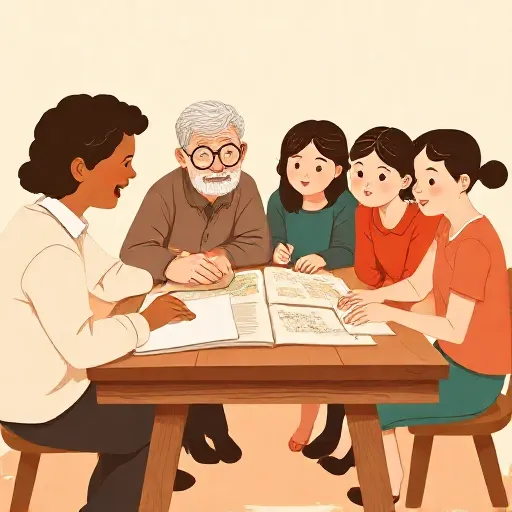
Even if we agree a social minimum is needed, a stubborn problem remains: who gets to write the list of essential capabilities, and where do we draw the line on how much is enough? This is the capability-list problem and the limit-setting problem.
Take healthcare. Nussbaum’s list includes bodily health. How much health is “decent”? If we try to pay for every treatment that could prolong anyone’s life by a week, the healthcare budget would swallow all other public spending — leaving nothing for schools, parks, or playgrounds. So limits must be set. Yet a decision to exclude a costly drug can feel arbitrary to the person who needs it. This is a crisis of legitimacy — the sense that a rule is not just enforced by power, but actually justifiable to those it binds.
Philosophers Norman Daniels and James Sabin argued that for such decisions to be legitimate, the process must meet four conditions: publicity (reasons are made open to all), reasonableness (reasons appeal to values others can accept as relevant), contestability (there is a way to challenge decisions with new evidence), and enforcement (the process actually follows these rules). When a health committee explains why it chose certain treatments and allows appeals, even the person who loses can feel the outcome was fairly reached.
The same logic applies to the whole social minimum package. Across the world, experiments like citizens’ assemblies, participatory budgeting, and Indian village parliaments try to bring everyday people into the conversation so decisions are not made only by distant experts. These democratic innovations aim to make the choices less arbitrary and more respectful of different views.
Why This Debate Is Your Future

The social minimum is not a dusty textbook idea. Every time your community debates whether to fund a homeless shelter, raise the minimum wage, or add mental health coverage to public insurance, it is wrestling with the very questions we have explored. Next time you hear someone say “people should just work harder” or “the government has no right to take my money,” you will recognize the ghosts of Bentham, Rawls, Nozick, and Nussbaum in the room.
The veil of ignorance is not real, but it gives us a habit of mind: would I be willing to live under the rules I am proposing if I turned out to be the one who needs help most? Your answer shapes the kind of society you will help build — and one day, you will vote on it, protest about it, and maybe even write the laws yourself.
Think about it
- If you could design a social minimum for your country, which three capabilities from Nussbaum’s list would you make the highest priority, and why?
- Some argue that if the government guarantees a basic income, people will stop working and become lazy. Do you think that is a risk worth taking if it means no one goes hungry? What if you were born into a poor family with few opportunities — would your answer change?
- Imagine a new medical treatment that keeps a very sick person alive for an extra six months but costs as much as building a new playground in every neighborhood. How should a community decide whether to include it in the guaranteed basics? What kind of process would you trust?