What Would You Choose If You Didn’t Know Who You’d Be?
What would you choose behind a veil?
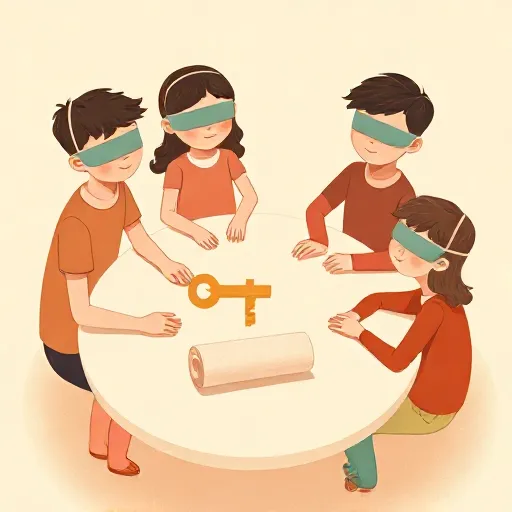
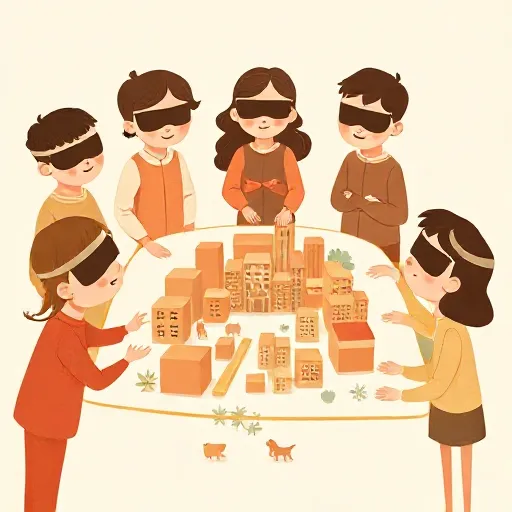
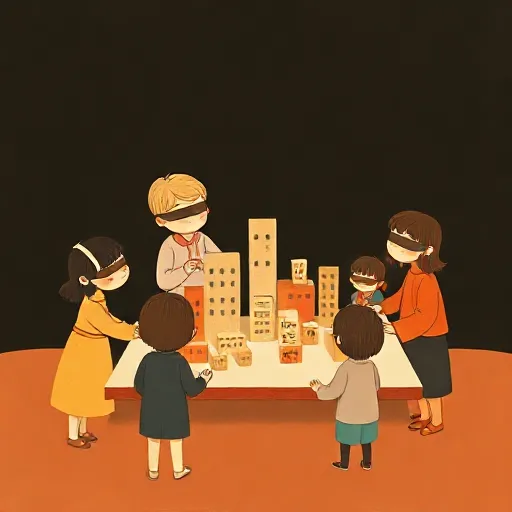
Close your eyes and imagine a strange power. You can design a whole new society from scratch. You get to write the rules about who gets what jobs, how much money people can earn, and what freedoms everyone will have. There is just one catch. After you finish, you will be born into that society at random. You might be rich or poor, a person of any race or gender, with any level of natural talent, or with any set of personal beliefs. Because you don’t know who you’ll be, you’ll want the society to be fair for everybody — just in case you end up at the very bottom.
This thought experiment is the heart of the work of the American philosopher John Rawls (1921–2002). He called it the original position, and he spent his life showing how it could give us a clear picture of a just society. When you step into the original position, Rawls said, you are placed behind a veil of ignorance. That veil blocks out all the details about yourself that you didn’t choose and cannot control: your social class, your natural gifts, your gender, your race, even your deepest religious or moral convictions. The only things you know behind the veil are general facts about human life — that people need food and shelter, that they have different goals, and that they want to be treated with respect.
Rawls didn’t just dream this up. He used a method called reflective equilibrium. That means he tried to get all his beliefs about justice to fit together without contradiction. He would start with a specific judgment he felt sure about — say, that slavery is wrong — and then look for general principles that could explain that judgment. When a principle clashed with another firm belief, he’d adjust either the principle or the belief, back and forth, until everything hung together. The original position was his most powerful tool for reaching that kind of harmony.
The two rules Rawls thought we’d all pick

Rawls argued that if you were behind the veil of ignorance, you would agree on two principles to shape your society’s basic structure — its constitution, legal system, and economy.
The first principle says each person must have the same set of basic rights and liberties: freedom of speech, liberty of conscience, the right to vote, and protection under the law. You would never risk being the one who is silenced or disenfranchised. That’s why equal basic liberties come first; Rawls insisted that they must never be traded away for economic gains or other benefits.
The second principle has two parts. The first part is fair equality of opportunity. If you don’t know whether you’ll be born into a wealthy family or a poor one, you’ll want a society where people with equal talent and motivation have the same chance to get a good education and a rewarding job, no matter their starting point. The second part is the difference principle. It says that any inequalities in income and wealth are allowed only if they end up helping the least-advantaged members of society.
Imagine four possible economic arrangements. In Economy A, everyone gets exactly 10,000. In Economy B, the poorest get 12,000, the middle 30,000, and the richest 80,000. In Economy C, the poorest get 30,000, the middle 90,000, and the richest 150,000. In Economy D, the poorest get only 20,000 while the richest get 500,000. Rawls’s difference principle would choose Economy C. It makes the worst-off group as well-off as possible, and the richer groups can do better only if their gains also lift those at the bottom. The principle does not allow the rich to get richer at the expense of the poor.
Why not just make the group as happy as possible?
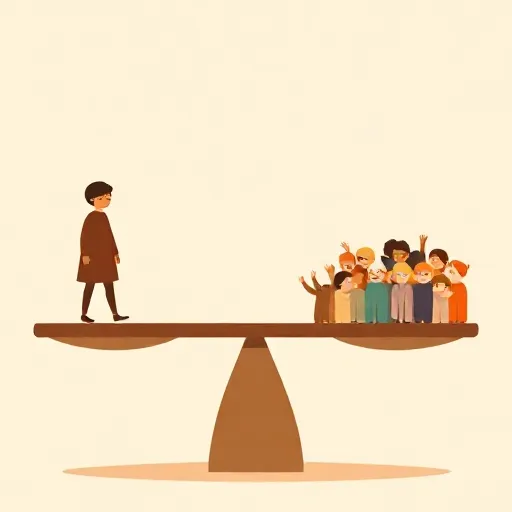
For a long time, the dominant theory of justice was utilitarianism — the idea that the best society is the one that creates the greatest total happiness. But Rawls thought that behind the veil of ignorance, you would reject utilitarianism.
Suppose a utilitarian society could increase overall happiness by denying religious freedom to a small minority. The majority would be pleased, and the average happiness level would go up. A party in the original position would see that the citizen they represent might end up as a member of that oppressed minority. Rawls said it is not rational to gamble with your basic liberties and deepest beliefs when you can instead choose a principle that guarantees equal rights for everyone. The parties would use a cautious reasoning that philosophers call maximin — they’d aim to maximize the minimum level of primary goods their citizen could end up with. The equal liberties of Rawls’s first principle are a sure thing; utilitarian calculations are too risky.
For the difference principle, however, Rawls didn’t rely on maximin. He argued that a society governed by his second principle would be more stable and cooperative. Under the difference principle, the worst-off would never feel that their well-being had been sacrificed to make others richer. Everyone would know that the economy is working for the benefit of all. By contrast, a utilitarian system would constantly be torn by mistrust, as groups argued over who should be sacrificed for the greater good.
Fairness when we all disagree: public reason
Rawls knew that in any free society, people will have deeply different comprehensive doctrines — their overall views about religion, morality, and the meaning of life. This reasonable pluralism raises a tough question: how can it be legitimate to use the law to force everyone to follow the same rules when people disagree so fundamentally?
His answer is political liberalism. He said political power is legitimate only when it is used according to principles that all citizens can reasonably be expected to endorse. This leads to the duty of public reason. When citizens or officials decide on the most fundamental political issues — who can vote, which religions are tolerated, what basic rights people have — they must justify their decisions by appealing to public values and public standards that everyone can share. A judge cannot base a ruling on a holy book that only some people accept. A legislator should not invoke a private spiritual revelation. Instead, they must use ideas like freedom, equality, and fairness, and rely on common sense and well-established science.
This doesn’t mean people have to hide their personal beliefs. Rawls said that citizens can speak the language of their faith, as long as they also connect their views to public values. Abraham Lincoln, for example, used biblical imagery when condemning slavery, but his core appeal was to the public values of freedom and equality.
Rawls hoped that a society could reach an overlapping consensus. In an overlapping consensus, citizens with very different comprehensive doctrines all support the same basic laws, but each for their own internal reasons. A Catholic might support religious freedom because of the dignity of the human person, while a Muslim or an atheist would support it for different reasons of their own. This makes social unity stable for the right reasons — not because one group holds power over others, but because everyone genuinely believes in the fair political framework from within their own worldview.
Why Rawls still matters on your block
Rawls’s ideas are not just a philosophical puzzle. They give you a way to think about the real inequalities around you. He argued that political liberties, like the right to vote, must have fair value — it is not enough to have the formal right if wealth determines who can actually influence elections. He was adamant that without public funding for elections and limits on campaign contributions, politics would be captured by money. A just society, in his view, would be either a property-owning democracy or a form of democratic socialism, where everyone has a real economic stake and the poorest are not left behind.
Take your school. In many places, the quality of a child’s education depends on the wealth of the neighborhood they happen to live in. Rawls’s fair equality of opportunity would say that is unjust. If you didn’t know where you’d be born, you’d want every school to give you a fair shot. His difference principle would push even further: any resources spent on better-off students should also improve the situation of the least-advantaged. These are not distant ideals; they are questions that show up in school board meetings and local elections.
Rawls called his vision a realistic utopia. He knew we might never achieve perfect justice, but he believed that having a clear picture of what a fair society looks like gives meaning to what we do today. By showing us that the worst evils of history — oppression, poverty, and injustice — are not inevitable, his philosophy invites each of us to take the next small step toward a world where everyone’s fate truly matters.
Think about it
- If you were behind the veil of ignorance and had to decide how much money the richest person in society could keep, what rule would you make, and why?
- In a country with many different religions, should the law ever force everyone to follow the rules of one religion? If not, where should the line be drawn?
- Think about the school you attend. Is there an inequality in resources or opportunities that would feel unfair if you didn’t know which family you’d be born into? What one change would you make to fix it?