Is the World Just a Game We Forgot We’re Playing?
A video game that swallowed the real world
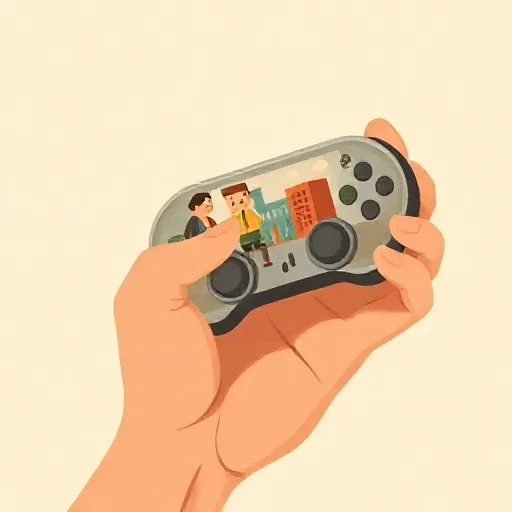
You put on a headset, grab the controller, and walk into a digital city. Every building, every person you meet inside the game feels solid and convincing. Then you notice something odd: the trees cast shadows that don’t quite match. Mistakes glitch in. So you pull off the headset — and for one second you wonder whether the room you’re standing in is also just a very good simulation.
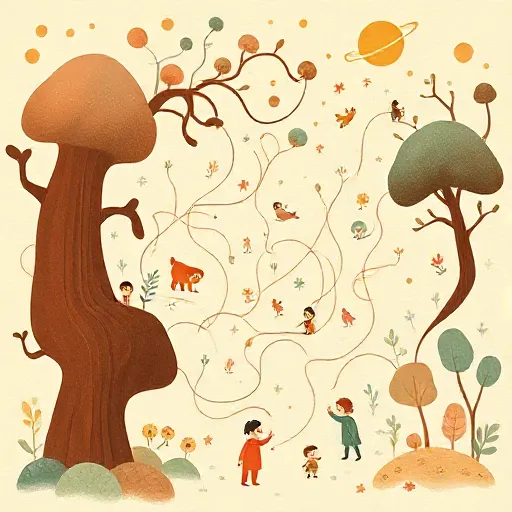
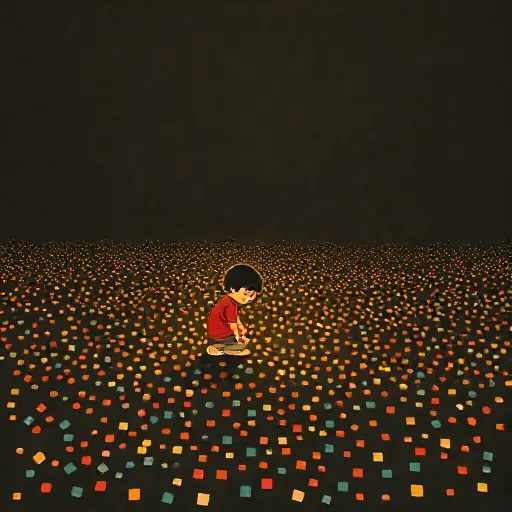
That queasy, half-excited feeling is the starting point for a family of ideas called postmodernism. Around the middle of the twentieth century, a group of mostly French thinkers began saying that the old stories we told to explain the world — stories about reason, progress, and what’s truly real — had stopped working. The world felt less like a single, tidy Grand Story, and more like a bundle of mini-games with conflicting rules.
Jean-François Lyotard (1924–1998) gave this mood its most famous name. In 1979 he wrote The Postmodern Condition, where he announced that “postmodern” means incredulity toward meta-narratives. A meta-narrative (or “Grand Story”) is a big, all-in-one explanation that promises to make sense of everything — science, history, morality, you name it. For centuries, people turned to religion, to the Enlightenment’s belief in reason, or to Marxism’s promise of a workers’ paradise. Lyotard said that in our age, those mega-stories have crumbled into “clouds” of tiny language games, none able to boss the others around. Science used to ask philosophy to give it a license to be true; now, science just plays its own game, and no one story can prove it’s truer than another.
The result, Lyotard thought, is that knowledge gets chopped into bits of information. What counts as “knowing” becomes whatever can be fed through a computer system efficiently. Anything that can’t be turned into digital code — like a feeling of justice, or a sense of beauty — gets pushed to the edges. And yet, Lyotard noticed, the system also needs constant invention. New codes, new data, new puzzles. So built into this information-chomping society is a hunger for the new — which means we’re always chasing another breakthrough without ever reaching a final answer.
The accidents that made your “self”
If the Grand Stories are broken, what about the main character who used to believe them — you? Postmodernism didn’t just question big systems; it took aim at the idea of a solid, continuous self.
Michel Foucault (1926–1984) used a method he called genealogy (borrowed from Friedrich Nietzsche, 1844–1900). Genealogy doesn’t look for a clean, original starting point. Instead, it digs through history to find the messy collisions, accidents, and power grabs that produced our most confident ideas. Foucault argued that what we call “reason” didn’t just bloom from clear thinking — it defined itself by pushing aside “madness.” In the 1600s, for instance, institutions that once housed lepers were left empty, and soon those same buildings were filled with people labeled mad. The new, sharp line between sane and insane wasn’t a discovery of science alone; it was a move of power, one that silenced the voices of those it locked away.
Even your most private sense of being a unique “I” is, for Foucault, something stitched together over time. The way you talk about your feelings, your choices, your identity — all of that is shaped by social norms you didn’t invent. The point isn’t that you’re a puppet; it’s that “you” are always being produced and re-produced by the rules and practices around you. Yet Foucault also thought there’s a spark of freedom in that. If your self is something under construction, you can experiment with it — try out ways of living, thinking, and relating that the official script didn’t plan for.
Nietzsche, a major inspiration for most postmodernists, had already suggested that the very concept of the “I” grew out of a need to hold people responsible. We invented a permanent inner cause — a little boss inside — so we could reward and punish actions over time. This self, he thought, is a useful fiction shaped by morals and language, not a given fact. Postmodernists ran with that idea, adding that today’s self flickers across social media, group chats, and shifting roles, never quite cohering into one finished product.
Words that never sit still

If the self is wobbly, maybe the words we use are wobbly too. Jacques Derrida (1930–2004) thought that meaning has no fixed center, no final destination. His approach, called deconstruction, begins with a careful reading of a text to show how its own moves undermine what it seems to be saying. Derrida noticed that Western philosophy has long treated speech as the real thing — a living voice with meaning fully present — and writing as a poor, lifeless copy. But he flipped that. At its core, language works through differences between signs, not through some rock-solid meaning that stands outside the chain of marks.
Derrida invented the term différance to point at this. It’s a fusion of the French words for “differ” and “defer.” A sign marks itself off from other signs (dog differs from log), and at the same time, its full meaning is always postponed — you need another word to explain the first word, and another to explain that one. So meaning is endlessly deferred, never finished. Even spoken words are a kind of writing, because they work the same way — by spacing and difference, not by plugging directly into a pure idea.
This doesn’t mean texts are meaningless soup. Deconstruction is less like tearing a book apart and more like tracing the hidden joints and fault lines that let it wobble without collapsing. If a philosopher claims that reason is a pure, self-supporting thing, a deconstructive reading might show that the argument relies on metaphors that reason itself can’t justify. The text is still clever; it just can’t keep its own promise. For Derrida, there’s no “outside” of text — when we try to point at reality, we do so inside a network of signs that already shape what we can see.
When the copy erases the original
Step back from philosophy lectures and look at your phone. The screen shows you a world of photos, videos, and messages. Those images don’t just copy a real event; they shape what we treat as real. Jean Baudrillard (1929–2007) pushed this thought to its extreme with the idea of hyperreality — a condition where signs no longer point to any original reality. They just point to each other.
Baudrillard described a progression: first we have a faithful copy (a map that represents a territory). Then the copy gets so good we start mistaking it for the real thing. Eventually, the map precedes the territory — we build a shopping mall that looks like the map, and now the map is “more real” than anything outside. When that happens, we live in a simulacrum, a copy for which no original has ever existed. He called this final stage simulation: the system generates its own truth.
A chilling example he gave was Disneyland. It’s presented as a fantasy land, which makes the rest of America seem real. But what if, Baudrillard wondered, the whole society functions like a giant Disneyland — a network of faked experiences that hide the fact that reality itself is missing? Our news feeds, our branded identities, our viral challenges — they all exchange one sign for another, with no anchor outside the digital flow.
Baudrillard thought that the only way to push back against this system wasn’t with rational argument (the system already absorbs that), but with something it can’t digest. He admired graffiti artists who scrawled mysterious tags — not to say a clear message, but to jam the communication machinery, to remind the system that something unexchangeable still exists: a kind of irreversible death, or a pure gift, that the code can’t process.
The big objection: you’re still using the tools you mock
Not everyone cheered. Jürgen Habermas (born 1929) launched one of the strongest counter-attacks. He didn’t try to defend the old, solid self or the Grand Stories from centuries past. Instead, he said that when postmodernists argue against reason, they commit a performative contradiction — they use logical arguments and expect to be understood, which depends on the very rules of communication they claim to distrust.
Take Foucault’s genealogy. Habermas pointed out that Foucault uncovers hidden power struggles in history, yet he never subjects his own position to the same treatment. If all knowledge is tangled with power, why should we trust Foucault’s account? To make his case, Foucault has to borrow the authority of the modern researcher he’s supposed to have left behind. Similarly, Derrida’s deconstruction still relies on the reader following a chain of careful distinctions — which is reason’s own work.
Lyotard pushed back: he never said we should stop reasoning, only that no one set of rules can claim to be the Final Word for all games. We can play the language game of justice without pretending it’s the same as the game of physics. Habermas responded that if you give up on the idea that conversation aims at mutual understanding, you lose the ability to ever truly agree on anything — including justice. That debate is still simmering, and no side has landed a knockout punch.
Where the puzzle lands today

So why does a bunch of tricky French philosophy from fifty years ago matter to you right now? Because you are living inside the experiment. Every time you switch between a video call, a meme, and an online quiz, you’re moving among the “language games” Lyotard described. Every time you see a deepfake or an edited photo and think, “Does it even matter what the original looked like?”, you’re brushing against Baudrillard’s hyperreality. And every time someone tells you to “just be yourself,” while the world throws a thousand templates at your feed, you’re facing Foucault’s insight that the self is something always under construction.
Postmodernism doesn’t hand you a tidy answer. It sharpens a handful of tools — suspicion of big promises, attention to power hidden inside words, comfort with uncertainty — and leaves you to work with them. The discomfort of not having a Grand Story might feel, as Lyotard suggested, like the weird exhilaration of a new game whose rules you get to help invent. And that, for better or worse, is the game we’re all already playing.
Think about it
- If a perfect virtual world offered you a full, happy life with no way to tell it from “real life,” would you want to know the truth? Why or why not?
- When you argue with a friend about what really happened in a shared memory, how much do both of your stories depend on the words you’ve heard other people use?
- Can a society still agree on what is fair if nobody trusts a single Big Story — religion, science, or history — to back up the rules?