Do You See the Real World — or Just Shadows?
A World of Shadows: What’s Really Real?
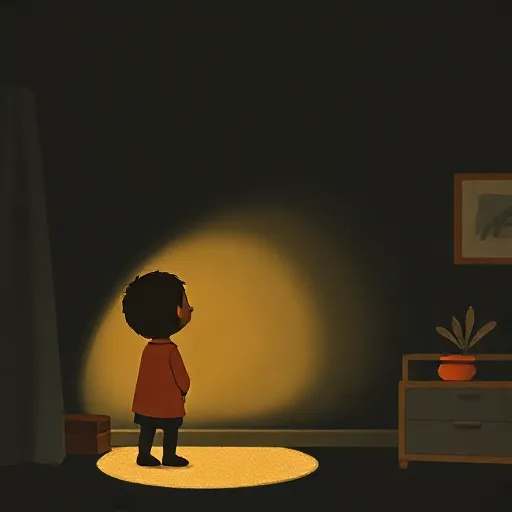
Imagine you live your whole life in a room where the only things you ever see are shadows dancing on a wall. You think those shadows are all that exist — the real world. Then one day you turn around and see the three-dimensional objects casting those shadows. Would you trust your eyes? Or would you stay convinced the shadows were reality?
This is the kind of jolt the ancient Greek philosopher Plato (c. 428–348 BCE) wanted to give his readers. He argued that the world we see, hear, and touch is in some way defective and filled with error. But behind it, there is a more real, perfect realm. That realm is populated by things Plato called Forms or Ideas — eternal, changeless, invisible models for everything we encounter with our senses.
Take beauty. You can point to a sunset, a song, or a friend and say, “That’s beautiful.” But those things also change, fade, or can be ugly in some light. Plato thought there must be one thing — Beauty itself — that never changes and is perfectly beautiful. That is the Form of Beauty. Every beautiful thing you see is beautiful only because it copies or shares in that Form. The same goes for goodness, justice, bigness, equality, and even for being itself.
This is the most fundamental distinction in Plato’s philosophy: the many changeable things that appear beautiful (or just, or equal) and the one unchanging thing that beauty (or justice, or equality) really is. The world we sense is a shadowy copy. The world of Forms is the original, more real than anything you can grab or gawk at.
How Do We Know the Forms? Remembering What We’ve Forgotten
If the Forms are invisible and not part of the everyday world, how could anyone ever know them? Plato’s answer is startling: you already know them. Your soul just needs to remember.
In several works, especially Meno and Phaedo, Plato’s character Socrates (c. 470–399 BCE) argues that the soul existed before you were born, and during that time it grasped the Forms directly. Being born and living in a body muddles that knowledge, but the soul always keeps the ability to recollect what it once knew. Learning, for Plato, is really a kind of careful remembering.
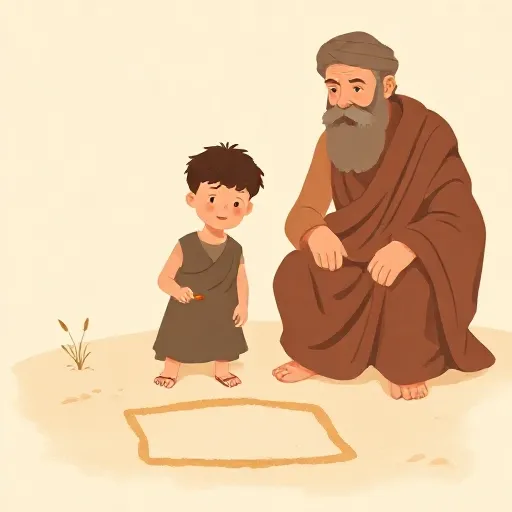
The most vivid illustration comes from the Meno. Socrates finds an enslaved boy who has never studied geometry and, by only asking questions, guides him to solve a geometrical problem. The boy discovers the answer on his own, as if he is pulling knowledge from inside himself. Plato’s point is that the boy is not learning something new but recollecting a truth his soul already possessed.
This idea makes the body almost a problem for thinking. The soul can grasp the nature of the Forms far more easily when it is not weighed down by its attachment to anything physical, Plato suggests. True philosophers are those who recognize how important it is to look past the many shifting things and seek the one stable reality behind them.
The Good That Everyone’s Talking About

Among all the Forms, one stands at the top: the Form of the Good. In the Republic, Socrates describes it as something of a mystery — its real nature is elusive and, he says, as yet unknown to anyone at all. But it is the most important of the abstract objects, because just as the sun lets your eyes see and makes things grow, the Form of the Good makes knowledge and truth possible. Without it, nothing else could be understood.
Plato does not provide a definition of goodness that settles the matter. Instead, he insists that to understand which things are good and why they are good, we must investigate the Form of the Good itself. If you are not even interested in that question, how can you become a good person? The whole project of becoming ethically superior to unenlightened people depends, for Plato, on the insight that you get from pursuing the Forms.
This is a high-stakes claim: the way you live your life ought to be transformed once you take seriously the greater reality of the Forms and the defectiveness of the everyday world. But Plato leaves the ultimate goal, the Good itself, wrapped in difficulty and mystery — a challenge rather than a comfortable answer.
Never a Straight Answer: Why Plato Wrote Dialogues
If you pick up nearly any work by Plato, you will notice something odd: he never says what he himself believes. Nearly everything he wrote takes the form of a dialogue — a philosophical discussion among a small number of characters, many of whom were real historical figures. Sometimes a single speaker narrates events; sometimes it reads like a play. But in all of his writings, it is the characters who do the affirming, doubting, and arguing. Plato himself stays silent.
This sets him apart from later philosophers like Aristotle, Aquinas, or Kant, who often build elaborate systems and state their conclusions plainly. Plato, by contrast, is far more exploratory, elusive, and playful. Even when a dominant speaker such as Socrates argues for a doctrine, the work often also raises puzzles that are not overtly answered. For example, the Forms are sometimes described as mere hypotheses — starting points open to further testing. And in the Parmenides, the character Parmenides subjects the Forms to a withering critique, making readers wonder whether Plato is undermining his own central idea.
Why would anyone write this way? Many scholars think Plato wanted his readers to be drawn into thinking for themselves, not to memorize a finished system. A dialogue gives you the strong sense that philosophy is a living, unfinished subject to which you yourself have to contribute. The dramatic settings — a prison, a wealthy house, a walk on a hot day — also make the philosophical questions feel human and urgent, not abstract and lifeless.
Does Plato Believe His Own Theory? The Puzzle of Parmenides
If the theory of Forms is so central, why did Plato write a dialogue where a respected thinker, Parmenides, picks it apart? In the dialogue that bears his name, Parmenides points out serious problems: How can one Form be present in many different things without being split apart? How can anyone know the Forms without falling into contradiction? The young Socrates in that dialogue listens, struggles, and does not deflect the criticism.
This has led to one of the biggest debates among Plato’s readers: did Plato change his mind about Forms? Some scholars think Plato eventually revised his early assumptions to avoid the difficulties raised in the Parmenides. Others think the later dialogues still assume the existence of Forms and that the critique is meant to show that a beginner’s version of the theory is not enough — you need a richer, more careful picture.
What makes this so fascinating is that Plato never steps in to settle the matter. The dialogue ends not with a solution but with a baffling series of arguments about oneness that seem to be full of contradictions. The effect is deliberate: you, the reader, are pushed to wrestle with the problems yourself. Perhaps that intellectual restlessness is exactly the state Plato believed a real philosopher should cultivate.
Why Plato Still Makes Us Think

You don’t need to believe in an invisible realm of perfect Forms to feel the pull of Plato’s questions. Every day, you make judgments about what is beautiful, good, or fair. When you and a friend disagree, is one of you simply wrong? Or is there no real standard? Plato pushes you to ask whether things like justice or beauty are just whatever people happen to say they are — or whether there is something true about them that you could get right or wrong.
And then there is his method. By never handing out a final answer, Plato forces you to do what the characters in his dialogues do: examine your own beliefs, follow the argument where it leads, and live with uncertainty when necessary. The dialogues were meant to be used alongside real conversation, and Plato’s Socrates even warns readers against relying on books alone. A written text can remind you of the spoken discussions where genuine thinking happens.
Almost 2,400 years later, we still use the Socratic style of asking questions to break down false confidence and get closer to the truth. We still wonder whether what we see is all there is. And we still feel the uneasy thrill of a thinker who refuses to close the case.
Think about it
- If you say a building is beautiful and your friend says it is ugly, could there be one true “Beauty itself” that decides who is right — or is beauty entirely a matter of personal taste?
- Suppose all your knowledge is just remembering what your soul already knew before you were born. Would that mean a person could know something they’ve never been taught?
- Plato wrote dialogues in which characters argue for ideas he may or may not have believed. Is it fair to say he had a philosophy at all, or was he only trying to make you think?