Is Art a Lie? Plato’s Deep Worry About Poetry and Painting
A Know-It-All, a Barefoot Gadfly, and the Question “What Is Beauty?”
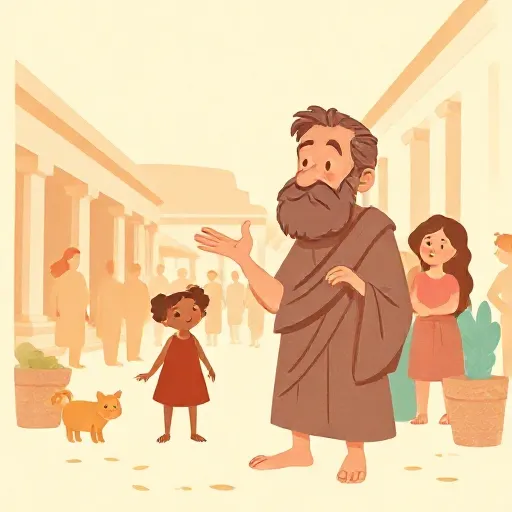
Imagine Athens around 400 BCE. A wealthy traveling teacher named Hippias strides through the marketplace, famous for knowing everything from Olympic history to astronomy. Beside him walks a barefoot, snub-nosed man with nothing but questions: Socrates. Hippias boasts he can explain any subject. So Socrates asks, “What is beauty — the one thing that makes every beautiful object beautiful?”
Hippias answers confidently: “A beautiful young woman is beautiful.” He might as well have said “a gold pot,” “a fine horse,” or “a two-handled bowl” — all things that his hero Homer praised. Socrates is unimpressed. That’s an example, not an explanation. It’s like answering “What is sweetness?” by handing someone a honey cake. You haven’t gotten to the essence of sweetness.
This conversation, recorded in Plato’s dialogue the Hippias Major, kicks off a search for the nature of beauty that runs through Plato’s whole career. For Plato (c. 427–347 BCE), beauty wasn’t just a matter of looking nice. The Greek word he used, kalon, could mean “fine,” “admirable,” or even “noble” — a beauty that could belong as much to a courageous deed as to a graceful statue. But in all its forms, beauty seemed to promise something real and important. The question was: could art deliver that reality, or did it just fake it?
Beauty: The Brightest Form
Plato’s most famous idea is that the world we see is only half the story. Behind every chair, every triangle, and every human being, there is a Form — a perfect, unchanging model that exists in a higher reality, accessible not to eyes but to thought. A physical chair is just a wobbly copy of the Form of Chair. The Form of Chair is what a chair truly is.
Beauty, Plato insists, has a Form too. In lots of dialogues — Symposium, Phaedo, Republic — he talks about the Form of Beauty as a real thing, not just a matter of taste. It never fades, never argues with its neighbor, never needs an ugly detail to set it off. Every gorgeous sunset or lovely face is only a blurry photo of that one ultimate Beauty.
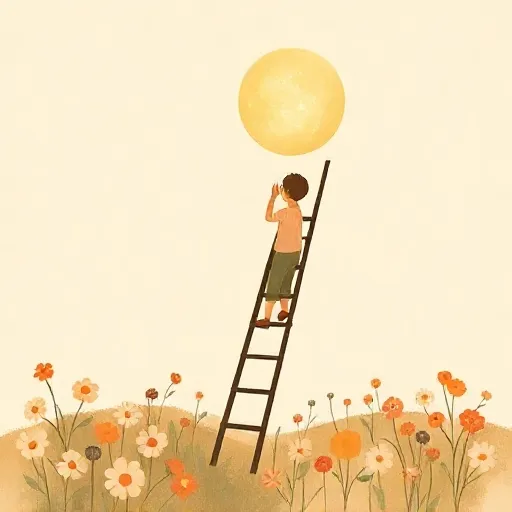
Why does this matter for thinking about art? Because for Plato, beauty is unique among the Forms. It’s the only one you can kind of see. Justice and goodness are invisible; beauty shows up in the visible world and grabs you. In the Symposium, the wise woman Diotima describes a soul climbing a ladder: from loving one beautiful body, to all beautiful bodies, to beautiful souls and laws, and finally to Beauty itself. The desire that beautiful sights spark can, if guided right, push a person toward philosophy. Plato loved that idea. He believed beauty could educate the soul.
Imitation: The Art of Faking It
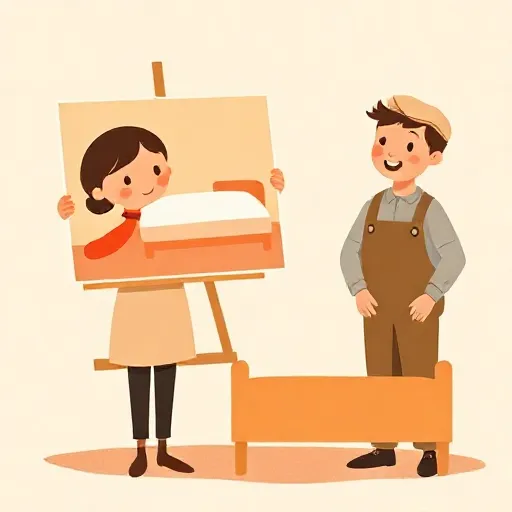
If beauty draws you toward truth, then artworks that are merely flashy or emotional might tug you the wrong way. Plato’s sharpest weapon for criticizing art was his concept of mimēsis — a Greek word usually translated as “imitation,” “representation,” or “mimicking.” In Book 10 of the Republic, Socrates argues that painting and poetry are almost all mimēsis, and that mimēsis is a cheat.
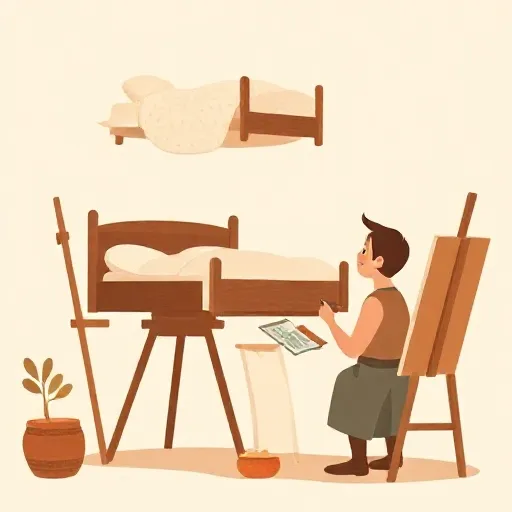
He sets up a three-level ranking:
- The Form of a bed, created by a god — the real thing.
- The physical bed a carpenter builds — a decent effort, made with some true understanding.
- A painting of that bed — a copy of how the bed looks from one angle.
The painter doesn’t know how to build a bed or what makes a bed a bed. The picture captures mere surface: color, shape, shadow. It can trick you into thinking you’re seeing a real bed, but it’s a two-dimensional phantom. Plato calls such art an “imitation of appearance.”
And it’s worse with stories. Homer and the tragic poets show heroes weeping, raging, or acting impulsively. When you watch a tragedy, your reasoning part feels disgusted, but the emotional part inside you cheers and cries along. The more you indulge those feelings in front of a stage, Plato warns, the more you let desire and emotion boss you around in real life. Imitative art, he concludes, corrupts the soul’s inner balance — it feeds the least wise parts of you.
The City Without Acting
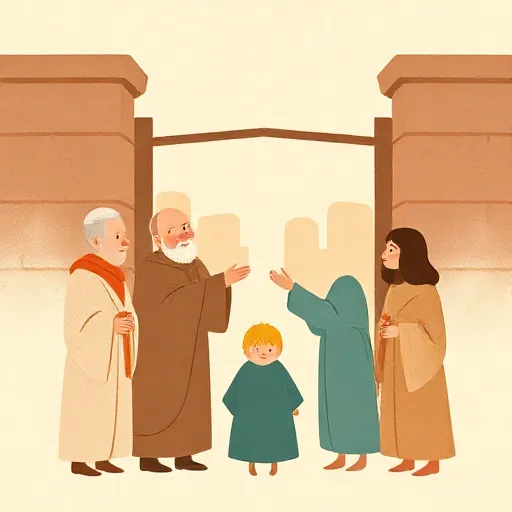
This suspicion of imitation shows up early in the Republic. In Books 2 and 3, Socrates is designing the education of young guardians. He wants them to grow up brave and truthful, so he bans stories that picture gods lying, fighting, or transforming into sorcerers. Then he asks: how should stories be told? A poet can narrate in his own voice, or he can impersonate a character — speak as if he were that person. Plato calls this impersonation mimēsis too.
If young actors repeatedly pretend to be villains, cowards, or even clattering machines and whinnying horses, Plato argues that they risk taking on those traits in real life. It’s a psychological worry: “going into character” leaves a mark. At the end, the dialogue imagines a brilliant performer arriving in the city. The founders would anoint his head with myrrh, crown him with wool — and send him away. No mimetic poetry at all, because the performance itself is the danger.
Scholars still argue about whether Book 3’s worry about impersonating bad characters fits with Book 10’s claim that all mimetic art is deceitful. What’s clear is that Plato sees imitation as a force that pulls the mind toward surfaces and away from understanding.
The Divine Madness That Might Save Poetry
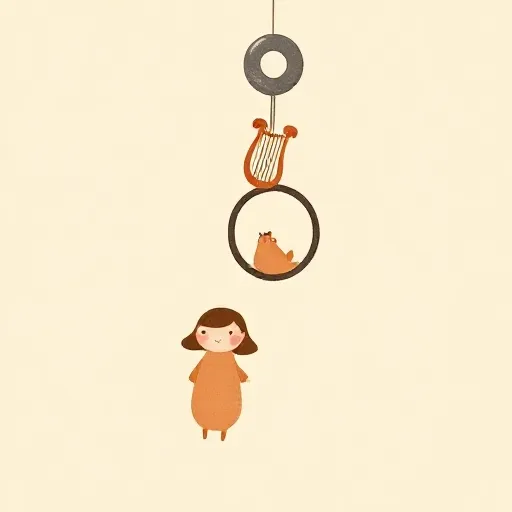
So is all art doomed? Not exactly. In his shortest dialogue, the Ion, Plato offers a very different picture. Ion is a rhapsode — a professional reciter and explainer of Homer’s epics. He’s won prizes for his performances, yet he admits he can only speak well about Homer, not about any other poet. Socrates says that’s weird: a real expert on poetry would understand all poets. Ion’s talent must come not from skill but from being inspired — literally “breathed into” by a god.
Socrates describes a chain of magnetized iron rings. The Muse is a magnet; the poet is the first ring clinging to it; the rhapsode is the next ring; the audience, the last. The power flows down, but no ring possesses the magnetism except for the moment. Ion is, in a sense, possessed and out of his mind (enthousiasmos). Ion recoils at being called mad, but Socrates doesn’t totally dismiss it. After all, prophets and priestesses also speak truth when the god overtakes them.
The Phaedrus goes further, dividing madness (mania) into a bad, diseased kind and four divine kinds: prophecy, mystic frenzy, love, and poetry. The best poetry, it says, is composed in this state and can “embellish the deeds of the ancients to teach later generations.” But notice: Plato still only praises poems that honor gods and heroes. The hymns and encomia he allows in the Republic might be exactly the verses that divine inspiration produces. Everything else — the dramatic tragedies, the lying legends — still sits outside the holy fence.
Why Plato’s Quarrel With Art Still Matters

Plato never found a single, tidy theory that stitches beauty, imitation, and inspiration together. What he left us is a live argument. Beauty, he thought, is a real and perfect thing that can tug a mind toward wisdom. Mimetic art, on the other hand, often pushes the soul in the opposite direction — toward surface, illusion, and ungoverned emotion. Inspiration might rescue a few true poems, but it’s a divine wildcard, not a safe pass for artists.
These questions haven’t gone away. When adults worry that violent video games or endless TikTok feeds teach bad habits or make us feel feelings we don’t think about deeply, they’re echoing Plato. When we argue about whether a novel can contain deep truths or just a clever surface, we’re wondering whether art can ever do what Beauty itself does: lead us toward something real. Plato was the first to ask those questions with such intensity, and he gave us the words to keep asking them.
Think about it
- If a painting only shows how something looks, can it still teach you a truth you didn’t know before?
- Would Plato say that a wildly popular but violent superhero movie is dangerous for your character? What might a supporter of the movie reply?
- If a made-up story makes you cry, is that emotion real or fake — and does that difference matter for how you treat people outside the story?