
What If No Single Story Explains the Whole World?
When Your Rules Aren’t Their Rules

Imagine you and a friend are fighting over the best game ever made. You pull up sales charts, review scores, proof. Your friend shrugs and says, “That’s just numbers. The best game is the one that feels alive.” Neither of you can win, because you are playing by completely different rules. This is exactly the problem that obsessed the French philosopher Jean-François Lyotard (1924–1998).
Lyotard saw that our world is made of many separate language games—each a set of rules for what counts as true, just, or worth talking about. Science is one language game; the law is another; art, friendship, family dinner talk are others. Inside each game, moves make sense. A scientist can prove a hypothesis with an experiment, a lawyer can win with a precedent. But when one game tries to settle a dispute in another, the rules fail. There is no master rulebook that covers them all.
Lyotard gave this kind of deep, unresolvable clash a name: a differend. A differend happens when one side cannot even present its case because the rules of the dominant game do not recognize it as a case at all. It is not just an argument you lose; it is an argument you are never allowed to have.
The Big Stories That Used to Hold Everything Together
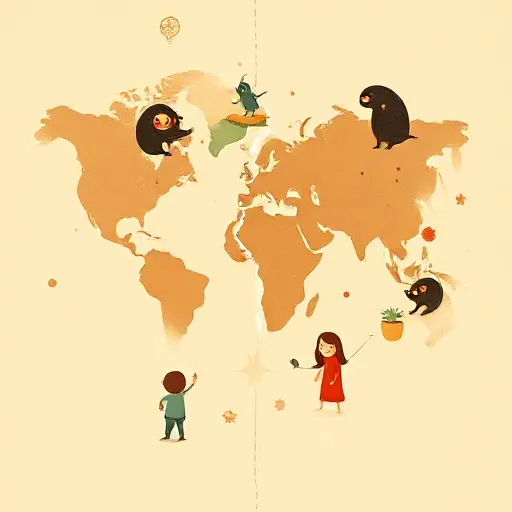
For centuries, Lyotard argued, people trusted metanarratives: giant stories that explained all of history and gave every smaller story its place. Think of the Christian story of salvation, the Enlightenment story of reason slowly conquering ignorance, or the Marxist story of class struggle leading to a perfect society. These were not just opinions; they were grand narratives that promised one true direction for everyone.
Lyotard’s most famous book, The Postmodern Condition (1979), announced that these big stories have crumbled. He defined the postmodern as “incredulity toward metanarratives.” We no longer believe that a single story can explain why things happen, what counts as knowledge, or how we should live. Two things pushed this collapse. First, science itself ran into trouble: its models kept overturning, and it had to borrow narratives from outside science just to claim it was the final word. Second, a new kind of economy was taking over. Knowledge was being turned into an informational commodity—something you package, sell, and transmit quickly. Lyotard predicted that anything that could not be digitized and put to efficient use would slowly be abandoned. We see that now when humanities departments beg to prove they are “valuable” to employers.
Lyotard was not celebrating. He was describing a world where the old certainties had died, leaving us with only little narratives—regional stories that don’t add up to a single picture. But he also thought this loss could be liberating.
How Can You Judge Without a Scorecard?

If no grand narrative tells us what justice means, are we stuck? In Just Gaming (1979), Lyotard gave a surprising answer: we judge without criteria. He meant that there is no fixed theory or moral codebook that can tell us in advance what is right in every situation. Instead, we have to invent justice case by case.
This does not mean anything goes. Lyotard argued that the truly unjust thing is to silence someone’s ability to even raise the question of justice. An unjust act, he wrote, is one that prevents the “game of the just” from being played. All terror, massacre, or threat of annihilation is wrong because it destroys the very possibility of asking whether it is fair. Without a big story to lean on, justice becomes a practice—a habit of attending to the many voices that get shut out when one language game tries to rule them all.
He compared this to the ancient idea of pagans, who lived among many gods without one supreme deity. Today we live among many language games, and none of them gets the final word. Politics is about inventing new rules, not simply obeying old ones. That sounds dizzying, but Lyotard thought it was the only honest response to a world without a metanarrative.
When Silence Is Louder Than Words
In his masterwork The Differend (1983), Lyotard sharpened his picture of how language games collide. He now spoke not of “games” but of phrase regimens—any happening that can be called a phrase. A gasp, a diagram, a poem, a legal sentence: all are phrases. Each regimen has its own rules about what can be said, how to link one phrase to the next, and who gets to speak.
Linking phrases across different regimens is “the problem of politics,” he wrote. When a powerful genre of discourse—say, corporate efficiency—links everything to its goal, it can erase other regimens. That is a differend. The victim suffers a wrong: a damage plus the loss of the means to prove that damage.
Lyotard’s most troubling example involved a Holocaust denier, Robert Faurisson, who demanded testimony only from someone who had actually died in a gas chamber. That demand made it impossible for survivors to speak, because the dead cannot testify. The differend was absolute; one side’s way of phrasing reality simply could not be heard by the other. Still, Lyotard did not say all narratives are equal. He argued that the horror of Auschwitz is so enormous that it imposes a silence—not the silence of forgetting, but a silence that signals “something remains to be phrased which is not.” Justice, he said, means finding new phrases, new gestures, that let what was silenced finally find a voice.
Why Your Phone and a Crayon Drawing Both Matter

This all sounds abstract, but Lyotard’s ideas press right against your daily life. Critics often accuse him of helping to create a “post‑truth” world where facts don’t matter. But that gets him backwards. Lyotard spent his career warning against the real danger: one language game—usually the game of efficiency and data—trying to dominate everything else. In The Inhuman (1988), he described a future where technoscience dreams of making thought go on without a body, replacing human judgment with perfect calculations. That future, he argued, would erase suffering, surprise, and the very differences that make justice possible.
Yet Lyotard also pointed to a different kind of inhuman—the childlike openness that refuses to be programmed. He loved the question “Is it happening?” because it leaves room for something new, something no rulebook can predict. That is the power of art. A monochrome painting, a strange poem, a dance that makes no argument: these do not give you an answer. They ask you to stay open to what cannot be presented in today’s headlines or metrics. That, Lyotard thought, is real thinking—and real resistance.
You face a small version of this every time you decide whether a grade captures who you are, whether a social media post can say something true, or whether a song that makes no sense still matters. Lyotard’s answer is that we live most fully when we let many stories play without giving any one story the final kill switch.
Think about it
- If two people use completely different rules to argue about a movie, can one of them be “right”? How could a conversation move forward without a shared scorecard?
- The word “wrong” for Lyotard means not just being hurt, but losing the chance to even describe the hurt. Can you think of a time when someone’s voice was treated as if it didn’t count in an argument?
- Should art have a clear message, or is it okay for a painting or a song to leave you confused but somehow moved? What could that confusion make room for?