Can We Build a Better Language for Thinking?
The Night Philosophy Became Engineering
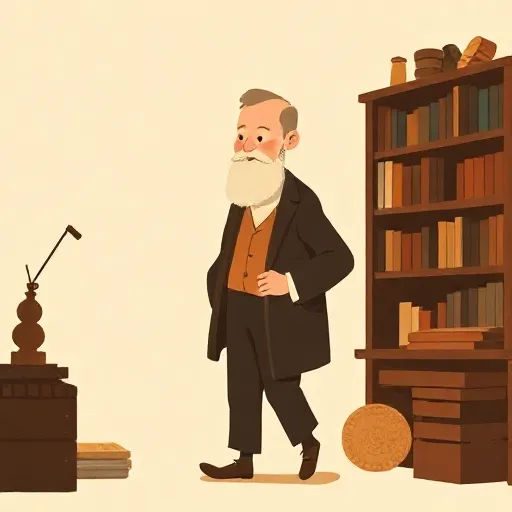
On a January night in 1931, the philosopher Rudolf Carnap (1891–1970) could not sleep. He walked back and forth in his study in Prague, filling page after page with symbols and diagrams. By morning he had a wild new vision: philosophy should not be a hunt for hidden truths. It should be a kind of engineering — building clear, precise language tools, the way someone designs a bridge or a machine.
Carnap believed that most bitter arguments in philosophy happen because we inherit a messy language. Our words evolved around campfires and marketplaces, not for sorting out deep problems like “What is knowledge?” or “Do numbers exist?”. These old words, he thought, often trick us into asking fake questions. The solution? Throw out the dusty vocabulary and construct new language systems from scratch. He called this conceptual engineering.
To see how it works, think of the word “confirmed”. A scientist might say a theory is “confirmed” after a few experiments, but one person means “it’s almost certainly true” while another means “it survived one test”. Carnap wanted to replace that wishy-washy term with a clean, rule‑based version. He called that explication — taking a fuzzy everyday idea and building a sharper, more useful version of it. It is like cleaning a pair of glasses until you can see every detail of the dog across the street, instead of just a brown blur.
Language Frameworks: Write the Rulebook First

Imagine playing chess without knowing the rules. If someone shouted “checkmate”, you would have no idea what just happened. The rules create the game. Carnap saw language the same way. Before you can ask “Does a proton exist?” or “Is that conclusion logical?”, you need a working language framework. A framework is a rulebook that says which words are allowed, how they combine, and what it even means for something to be “true” inside that system.
Early in his career, Carnap tried to build one giant framework for all science in his book The Logical Construction of the World (often called the Aufbau). His plan was to start with raw, unfiltered moments of personal experience — a forgotten taste of strawberry, a sudden chill — and then define every physical object and scientific concept using only logic and patterns of similarity. That project was too narrow and soon ran into walls. But it taught him something crucial: a framework is always a choice. There is no single correct rulebook that nature forces us to use. You can build a phenomenalist framework (where everything reduces to sensations) or a physicalist one (where everything refers to objects in space). They are tools for different jobs.
Choose Your Own Logic: The Principle of Tolerance

In 1932, while writing what became his most famous book, The Logical Syntax of Language, Carnap reached a startling conclusion. He was watching mathematicians fight over the foundations of their subject. Three schools — logicists, intuitionists, and formalists — each insisted their approach was the only right one. To Carnap, the fight looked absurd. They were simply arguing about which language to speak, not about facts. The world would not care if we used classical logic or a weird new one, as long as the rules were spelled out clearly.
He announced the principle of tolerance: “In logic, there are no morals.” Everyone is free to build their own logic, their own form of language, however they please. If you want to discuss it with others, you just have to state your rules honestly. No logical system is truer than any other in the way the law of gravity is true. They are more like board games — chess is not more “correct” than Go, though one may be better for teaching war tactics and the other for relaxing.
This pluralism gutted many old philosophical debates. For instance, ask “Do numbers exist?” Carnap’s reply: inside the framework of arithmetic we accept (because it’s hugely useful), the sentence “there are infinitely many prime numbers” trivially follows from the rules we set up. So, yes, within that game numbers exist. But if you step outside all frameworks and ask “Really, really, without any rules, do numbers exist?”, you are asking a question with no answer. It is like asking whether a rook exists outside the rules of chess. The question, Carnap thought, is a ghost created by messy language.
Detective Work: How Sure Can You Be?
Many people think that science proves theories beyond doubt. Carnap and his Vienna Circle friends knew better early on. Suppose I say “All swans are white.” No matter how many white swans I find, I can never be absolutely certain a black swan isn’t hiding in Australia. You can’t fully verify a universal claim. The philosopher Karl Popper (1902–1994) later said we should focus on falsification — looking for black swans — but Carnap noticed that most real scientific theories are harder to falsify cleanly. They contain phrases like “for every particle there is some force…” which can’t be killed by a single counter‑example.
So Carnap turned to confirmation. Instead of flipping a theory’s truth value like a light switch, you gradually turn up your degree of confidence. You start with a number between 0 and 1 representing how strongly the evidence supports a hypothesis. This is inductive logic, and Carnap spent the last 25 years of his life building mathematical systems for it. He distinguished sharply between probability as a physical frequency (like a coin’s long‑run tendency to land heads) and probability as a measure of belief — how sure you personally should be, given the data and the rules of your chosen logical framework.
Picture a detective walking into a crime scene. She updates her suspicion list as each clue comes in. Carnap’s ideal scientist does the same with theories: never jumping to 100% belief, always keeping an eye on exactly how strong the evidence is. His systems made that reasoning precise. Though modern Bayesians do not copy Carnap exactly, his work helped revive the idea that probability is about rational belief, not just counting frequencies.
The World Is Structure, Not Stuff
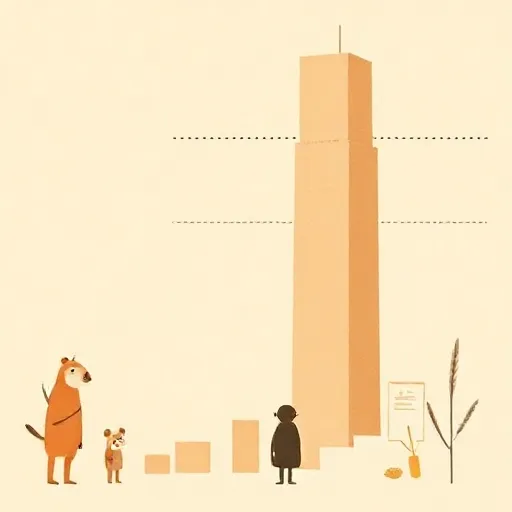
There is another puzzle lurking in Carnap’s toolbox. When physics says an electron has a certain mass or spin, is it describing what an electron really is, down to its deepest soul? Carnap’s answer was a firm no. From his very first writings, he held that knowledge is always about structures, not mysterious essences. Science gives us the network of relations — how things connect, how they transform, how they influence each other — but it never reveals a “thing‑in‑itself”. Two different models that are structurally identical (what mathematicians call isomorphic) carry exactly the same information, even if you imagine them built from completely different stuff.
Think of the sound waves from a song versus the digital file that carries the same music. They have totally different physical forms, but the musical structure is what we actually listen to. Carnap’s structuralism means that asking whether electrons are “real little billiard balls” or “pure ripples in a field” is the wrong question. The science lives in the abstract pattern, and that pattern stays the same across many possible pictures. This shift toward structure helped shape modern thinking about mathematics and even the foundations of computer science.
Why It Still Matters: Build Your Own Ideas, Carefully

Carnap’s whisper keeps echoing today. When programmers design a new computer language like Python, they are doing exactly what he envisioned: picking rules that are convenient for a task, not claiming to have discovered The One True Grammar of all computation. When scientists argue about whether an artificial intelligence “understands” language, they are often grappling with a Carnap‑style choice: which framework do we adopt, and what results does it lead to? The modern idea that many philosophical fights can dissolved by clarifying language owes a heavy debt to logical empiricists like Carnap.
You can use his toolkit even without a PhD. The next time a debate about a big word — “justice”, “intelligence”, “art” — goes in circles, ask yourself: what exact rulebook are we using? Could we just invent a sharper version of the word, try it out, and see if the argument settles? Carnap believed we are not prisoners of old vocabularies. We can grab the blueprint and draft something better. Philosophy, in his hands, became not a dusty discipline but a workshop for building clearer thoughts.
Think about it
- If you could invent a brand‑new word that would make arguments about fairness easier, what would it be, and what exact rule would define it?
- Imagine you and a friend debate whether the main character in a video game “exists.” Could changing the rules of the game settle the argument without either of you being wrong?
- Carnap thought we could choose our logical rules freely. But do you think some rules are just wrong for all purposes — like a rule that says “a statement is both true and false at the same time”? Why?