Are There Invisible Worlds Just as Real as Ours?
The Unwritten Rules of the Playground

Every day at lunch, your friend group sits in the same places. You didn’t vote on it. Nobody announced the rule. Yet it feels wrong if someone takes a different seat. You’ve stumbled into an unwritten rule — a convention.
David Lewis (1941–2001) was a philosopher who thought that conventions like these are the hidden glue of human life, including the biggest thing of all: language. He wanted to show how rules can emerge without anyone explicitly agreeing to them.
Lewis looked at conventions as solutions to coordination problems. Imagine two people who want to meet but forgot to pick a place. If both think “the clock tower,” they’ll succeed. If each picks a different spot, they’ll fail. Even if no one said “let’s meet at the tower,” the habit of going there can become a convention because it works and everyone wants it to keep working. Lewis borrowed ideas from game theory to make this precise. A regularity in how people act is a convention if everyone expects others to follow it, prefers to follow it when others do, and there’s at least one alternative people could switch to if enough others did.
He applied this to language: speaking English is a convention. We use certain sounds to mean certain things not because those sounds are magic, but because it solves a huge coordination problem. We want to be understood; hearers want to understand. Lewis argued that whole languages can be built on this kind of unspoken, self-reinforcing habit, with no original agreement needed.
What If Your Volcano Had Erupted?
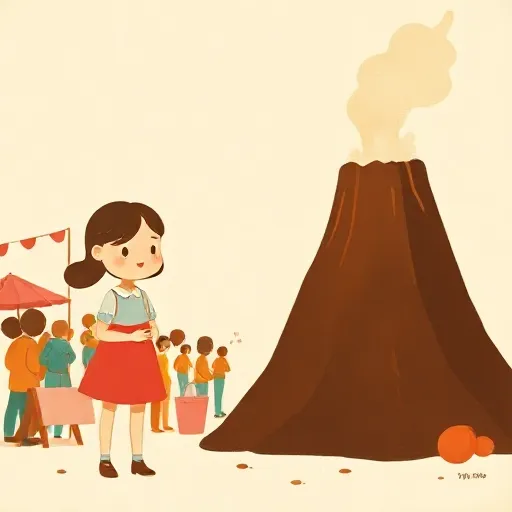
You say, “If Maya’s volcano had erupted, she would have won the science fair.” That’s a counterfactual — a statement about what would have happened if things had gone differently. Philosophers have long wondered what makes such sentences true.
Lewis gave a bold answer that used possible worlds — ways things could have been, taken as fully real. He proposed that a counterfactual is true if, in the closest possible world where the volcano did erupt, Maya wins. “Closest” means most similar to the actual world. So we don’t imagine a world where volcanoes suddenly turn into dragons. We keep everything as similar as possible.
He laid out a rough recipe for similarity: first, avoid big, widespread violations of the laws of nature. Second, keep the match of everyday facts as large as possible for as long as possible. Third, small, local law-violations are better than large ones. So the nearest world where Maya’s volcano erupted is one where a tiny change happened just before the fair — maybe the baking soda spilled differently — and then the laws of physics took over normally. That world is much more similar to ours than a world where gravity stopped working. So the counterfactual comes out true.
This analysis didn’t just help with science-fair wishes. It became Lewis’s engine for explaining cause, chance, and the laws of nature.
A Library of All Possible Worlds

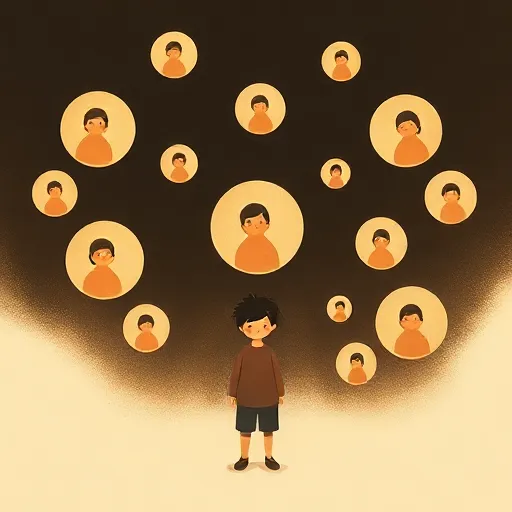
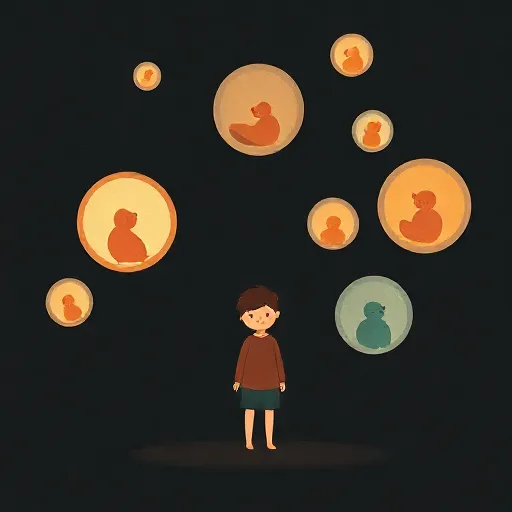
Lewis’s most famous and startling idea is modal realism: other possible worlds are just as real and concrete as the world you’re sitting in right now. They aren’t just stories or ideas. They are full of real places, people, and events, but they are completely isolated from ours — no spaceship could fly to one.
Why believe such a wild-sounding thing? Lewis argued that possible worlds earn their keep. When we talk about what’s possible or impossible, we seem to be talking about worlds. “Unicorns could have existed” means there is a possible world with unicorns. Counterfactuals, as we saw, depend on comparing worlds. Our theory of mental content — what beliefs are about — works best if we think of contents as sets of possible worlds. And properties can be understood as sets of things across all worlds.
He also held a counterpart theory: you yourself exist only in this world. In other worlds, there are counterparts of you — individuals who resemble you in important ways. So “You could have been a painter” is true if a counterpart of you in some possible world is a painter. This neatly solves a tricky puzzle. You are, say, 150 cm tall. Could you have been 180 cm tall? If you yourself existed in another world with a different height, you’d have two heights — a contradiction. But if your counterpart there is 180 cm, there’s no conflict. Different worlds, different individuals, different heights.
The Vast Mosaic of Tiny Facts
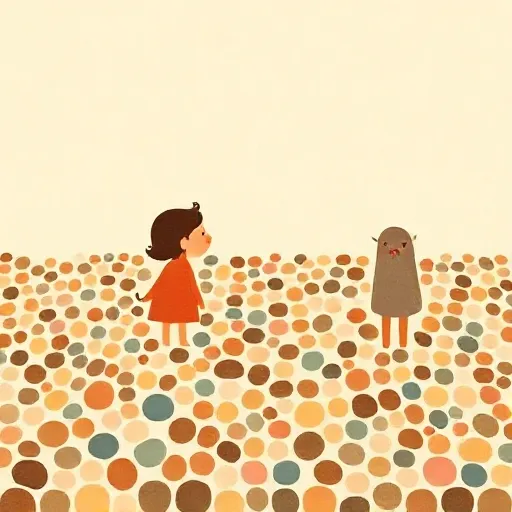
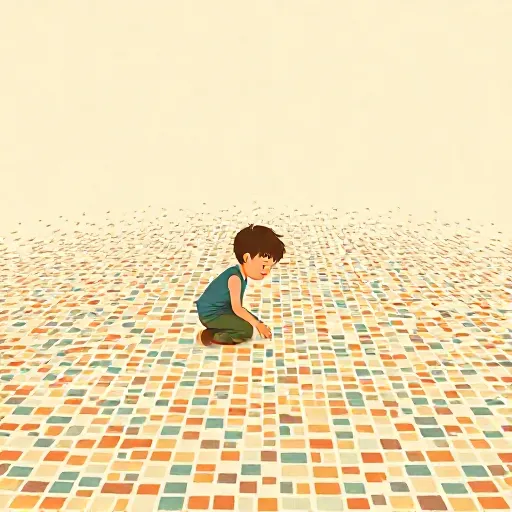
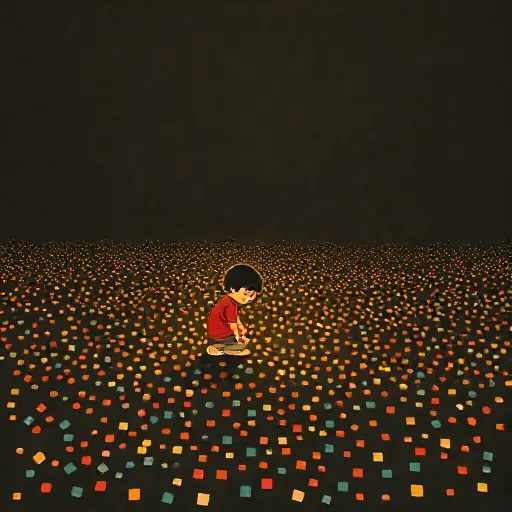
Lewis had a big vision of how reality fits together, which he called Humean supervenience. The idea is that everything that exists is a vast mosaic of local little facts — the properties of point-sized things and the spatiotemporal distances between them. All the complicated stuff — minds, laws, causes, values — is nothing over and above patterns in that mosaic.
Take laws of nature. Lewis said laws aren’t a mysterious extra force pushing things around. They’re simply the best summaries of the mosaic. Imagine a competition: every true story about the world gets scored for simplicity, strength (how much it covers), and how well it fits the actual happenings. The winners — the simple, strong, accurate patterns — are the laws. Even chance fits in: if a world is indeterministic, laws give probabilities, and the best system includes probabilistic patterns that make the actual sequence of events not too surprising.
Causation, too, becomes a pattern in the mosaic. Lewis first said that one event causes another if there’s a chain of counterfactual dependence: if the first hadn’t happened, the second wouldn’t have. Later, faced with tricky cases like late prevention, he refined this to say causation is a kind of influence — how much altering one event would systematically alter another. That influence is just a family of counterfactuals, which again are about similarity across possible worlds.
Your Mind, Your Brain, and the Madman
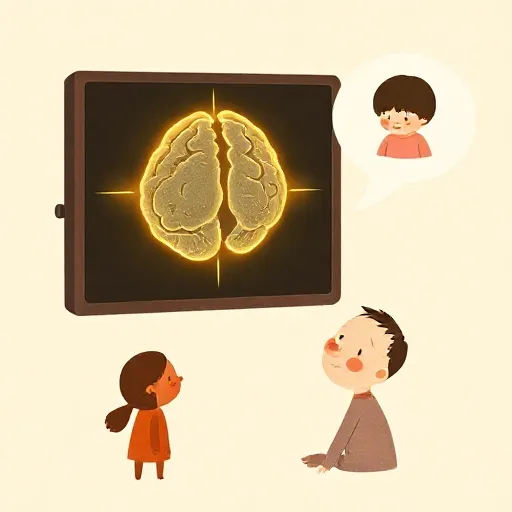
Lewis also applied his reductionist toolkit to the mind. He defended the identity theory: mental states are brain states. His argument didn’t rely on saying “it’s simpler.” Instead, he used a formal trick called a Ramsey sentence. Take our folk theory of pain: pain is the state typically caused by injury and typically leads to wincing, saying “ouch,” and avoiding the cause. Replace the word “pain” with a variable X and say, “There is an X that plays that role.” Science then discovers that X, in humans, is a certain neural state firing. So pain is identical to that brain state.
But what about a madman who seeks out pain, or a Martian whose pain is realized in silicon, not neurons? Lewis’s answer: pain is defined relative to a kind of creature. In humans, pain is that neural state because it typically plays the pain-role for humans. In Martians, pain is whatever silicon state typically plays that role for Martians. So a Martian can be in pain without any neurons, and a madman can be in pain even if his state doesn’t make him avoid it, as long as that state usually plays the pain role in humans.
Lewis also thought about beliefs about yourself, like “I am hungry.” He argued that the content of such a belief isn’t about a world, but about who you are — you self-ascribe a property (being hungry). This helped him make sense of amnesia cases where you don’t know who you are but still have thoughts about yourself.
To keep all this from turning into interpretive chaos — since many patterns can fit the same behavior — Lewis added a crucial ingredient: perfectly natural properties. Some properties carve nature at its joints (like being an electron), while others are messy and artificial (like being “grue”). More natural properties get priority when we assign mental contents or state the laws.
Why It Still Matters

You might not be a philosopher, but you already use Lewis’s machinery. Every time you think, “If I had studied harder, I’d have aced that test,” you’re comparing a possible world to this one. When you follow an unwritten rule — not because it’s the law, but because everyone expects it — you’re in a convention. Lewis showed that all these everyday moves can be understood in a single, unified picture of reality: a mosaic of local facts, with possible worlds to make sense of “could have been,” and conventions to hold language together.
His work matters because it took our ordinary talk about cause, chance, knowledge, and choice seriously, while refusing to add mysterious extra things to the universe. Instead, he tried to locate everything inside the world that physics describes. Whether or not you accept his concrete possible worlds, the questions he sharpened are still alive today. Philosophers still debate whether laws of nature are just patterns, whether other worlds exist, and whether your mind is your brain. And when you daydream about how life could be different, you’re stepping into a debate that David Lewis helped shape.
Think about it
- If every possible world is real, does that mean there’s a world where you never existed? Would that bother you?
- Do you think an unwritten rule — like always sitting in the same seat — really counts as a rule, if nobody ever agreed to it?
- Could your mind be completely explained by the activity of your brain, or do you think there is something extra that makes you who you are?