Why Do Sad Movies Feel So Good?
The Tearful Smile
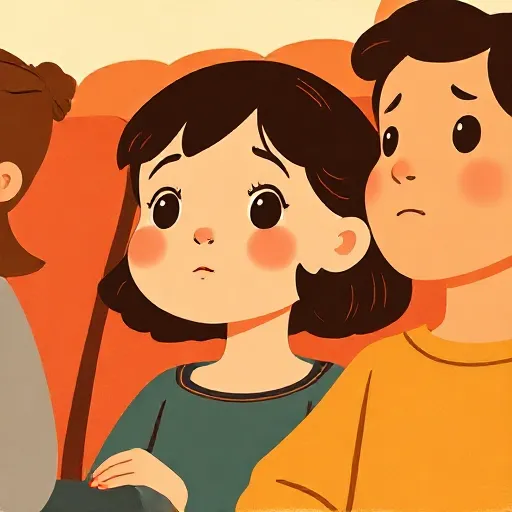
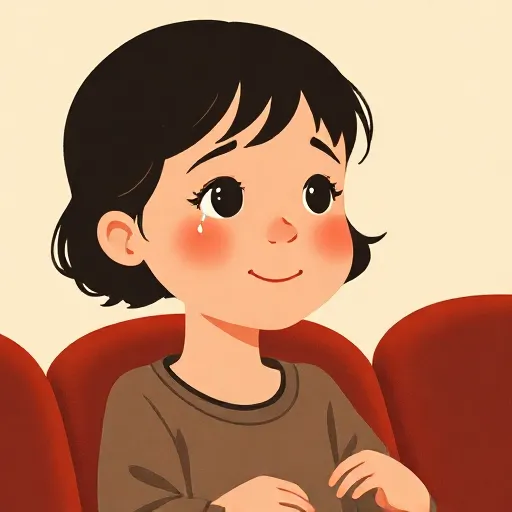
You’re in a dark theater watching a film. The hero just lost everything. You feel a lump in your throat, your eyes sting, and a tear rolls down your cheek. But when the credits roll, you turn to your friend and whisper, “That was amazing.” You don’t rush to forget it — you want to talk about it, think about it, maybe even watch it again.
This is the problem David Hume (1711–1776) stared at centuries ago. He noticed that audiences at a tragedy leave the theater feeling something weird: not just sadness, not just pleasure, but a feeling where the sadness itself seems to be part of the pleasure. He wrote that spectators are “pleased in proportion as they are afflicted” — the more the play makes them hurt, the more they enjoy it. That’s the paradox of tragedy, and it doesn’t just live in old plays. It shows up every time you choose a heartbreaking movie over a comedy, or a horror game that makes your palms sweat.
What Makes It a Puzzle?
A little pain alongside fun isn’t strange. You freeze your fingers building a snowman but still love the afternoon. The mystery Hume saw is different. In a tragic story, the pain doesn’t just happen to sit next to the pleasure — the pleasure depends on the pain. Take away the heartbreak of King Lear, and the play loses its power. Make it end happily, and audiences feel cheated, not relieved.
So we have three claims that can’t all be true at once:
- Appreciation Condition: Properly enjoying a tragedy means forming a mental state with a negative valence — you feel sorrow, dread, or distress.
- Coordination Condition: Under normal circumstances, we don’t enjoy or seek out experiences with a negative valence. We avoid pain, dread, and grief.
- Response Condition: We do enjoy properly appreciating a tragedy — we come back for more, and we even pay for it.
If all three are true, then we seek out an experience whose main ingredient we normally flee from. That’s the paradox. And it’s not just about plays — it covers horror films, sad songs, video games that scare you, even disgust in art. The question is: which one of those three claims should we give up, or how can we make them fit together?
Paying the Pain Tax: Compensatory Theories
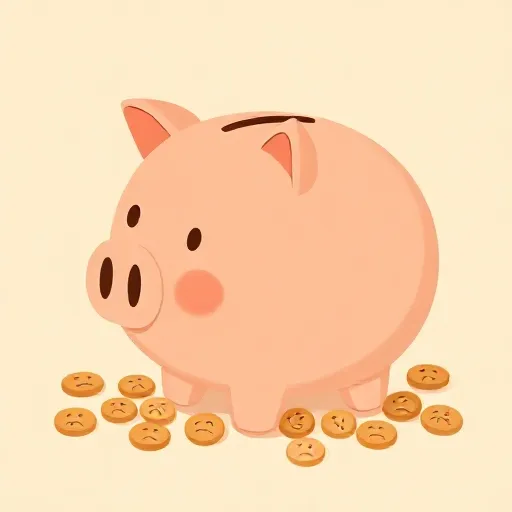
One way out is to keep all three claims but argue that the distress is the price of admission for something valuable. These are compensatory solutions. We don’t enjoy the sadness itself — we enjoy what it buys us.
The simplest version says the pleasure comes from the art’s formal features: the beautiful language, the clever plot, the stirring music. Aristotle (384–322 BCE) pointed out that we delight in seeing an artist paint a decaying corpse with incredible skill, even though the real thing would revolt us. The problem? In a work of art, you can’t really separate the “how” from the “what.” The way a story is told shapes the very events you imagine. You never experience the murder of Cordelia without the words and staging that deliver it. And if the pleasure were only in the form, we’d be just as happy seeing that same artistry in a comedy — but we often deliberately choose the tragedy.
Other compensatory thinkers locate the reward in a meta-response — a second-order feeling about your first-order distress. You might feel proud of your own compassion when you pity a character (some philosophers call this a recognition of your own virtue). Or you might savor the exploration of an emotion without the real-world danger, as when you learn what grief feels like without actually losing anyone. The worry, voiced way back by Jean-Jacques Rousseau (1712–1778), is that this turns our pity into something selfish: we’re not really caring about the character; we’re admiring our own caring. And if you’re busy feeling proud of your tears, are you still fully absorbed in the story?
A third group says the payoff doesn’t even need to be pleasure — it can be non-hedonic goods like understanding or meaning. Perhaps we value the powerful cognitive insight we get: tragedy clarifies what suffering is, or shows us our own vulnerability. Samuel Johnson (1709–1784) wrote that the real sting of a tragedy is not that the evils are real, but “that they are evils to which we ourselves may be exposed.” That knowledge may be worth the ache. Yet if learning is the main draw, why do we rewatch the same tragedy again and again? We already know what it teaches. Maybe the feeling of learning is enough — but then we’re back to pleasure after all.
A Safe Distance That Hurts Just Right
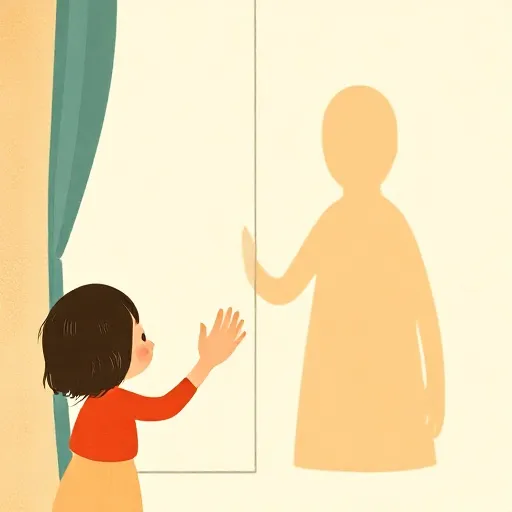
What if the pain we feel in art isn’t the same kind of pain we feel in life? Edmund Burke (1729–1797) suggested that when danger or pain press too near, they are simply terrible. But at a certain distance — the distance fiction gives us — they can be delightful. The distance theory says we can enjoy tragic art because we know we’re safe. The monster on screen can’t touch us; we can stop the video anytime. That control softens the emotion into something bearable, even sweet.
The difficulty is that we often experience powerful, gut-wrenching distress while watching a tragedy. If distance truly dulled the feeling, why do we sob and gasp? And if distance transforms the emotion into something entirely different, then the theory hasn’t explained how we can feel pain and pleasure in the same response — it has just denied we feel the pain. Besides, people can enjoy non-fictional accounts of awful events, too. A gripping documentary or a well-told historical narrative can produce the same mix of sorrow and satisfaction, even though we know those events really happened.
What If the “Pain” Isn’t Really Painful?
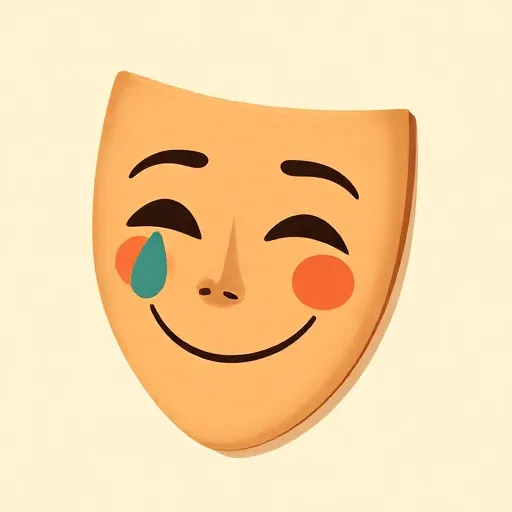
A more radical solution looks back at the Appreciation Condition and asks: must the sorrow we feel during a tragedy actually feel bad? Some revisionary theories insist that negative emotions — sadness, fear, even disgust — don’t always carry their usual unpleasant charge. The emotion stays negative in what it’s about (a terrible event), but its phenomenology — what it feels like inside — can be neutral or even agreeable. The philosopher Kendall Walton (born 1939) suggested that when we engage with fiction, we experience quasi-emotions: states that share features with real emotions but lack the full belief that the events are real. You might quasi-cry, but you’re not truly miserable.
This idea has its own hurdles. If a feeling doesn’t include the sting we all recognize as sadness, why call it sadness at all? And if quasi-sadness feels just like real sadness — ache and all — then the paradox hasn’t gone anywhere: we still need to explain why we seek out an experience that feels awful. The debate about fiction-directed emotions remains wide open, but it forces us to wonder how different an imagined feeling really is from a real one.
Why It Still Matters
The paradox of tragedy isn’t locked in a museum. It’s there when you queue up a song that will definitely make you cry, when you read a novel that breaks your heart on page fifty and you keep reading, when you play a horror game in the dark because it terrifies you. The puzzle teaches us that emotions are not simple labels. Fear, sorrow, and disgust can twist together with curiosity, beauty, and even joy in ways that make life richer.
Philosophers still disagree about which of the three claims to drop, tweak, or reinterpret. Every approach captures something true: we do get real cognitive rewards, we do operate at a safe distance, and our emotions in fiction may not be identical to the ones we carry in the grocery store. Grappling with the paradox helps you notice your own inner experience more sharply. Next time you feel a story-wound ache inside you but also feel oddly whole, you’re not broken — you’re just running into a riddle David Hume couldn’t solve and that millions of us keep living out, screen after screen.
Think about it
- If a filmmaker could remove every sad moment from a tragedy and still keep the story, would you still want to watch it? Why or why not?
- Can you think of a time you felt two opposite emotions — like laughing and crying — at the exact same moment? What were you reacting to, and did it feel like one tangled feeling or two separate ones?
- If a scientist invented a pill that let you experience the gripping intensity of a sad movie without any distress, would you take it before watching, or would something important be lost?