Why Do We Feel Real Emotions for Fake People?
A Hammering Heart and Still Hands
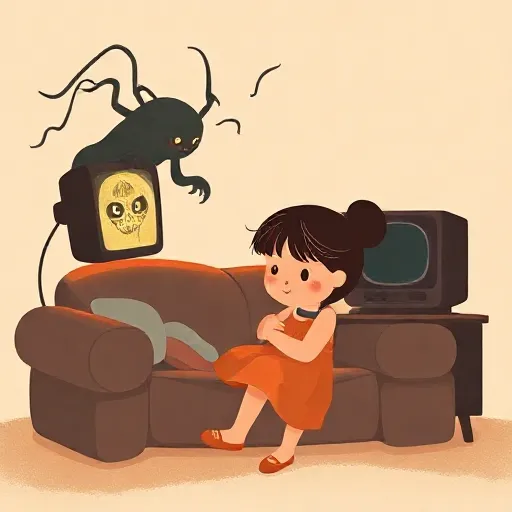
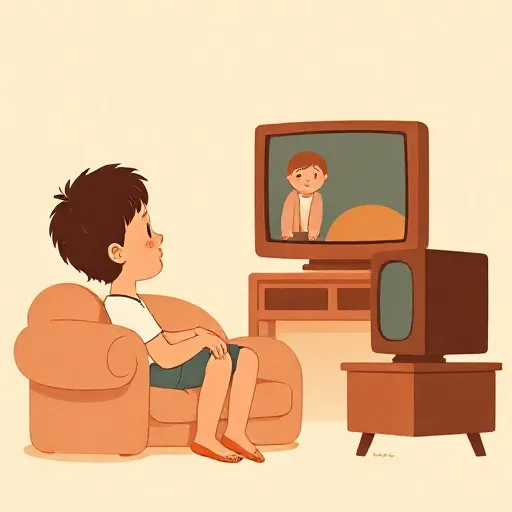
You are watching a scary movie. A monster creeps around a corner. Your heart pounds, you grip the pillow, but you do not bolt from the room. You know it is not real, yet the fear feels real. Why don’t you act the way you would if the danger were real?
The philosopher Colin Radford (20th century) raised a famous example in 1975. Watching a performance of Romeo and Juliet, he sees Mercutio killed on stage. Radford does not weep over the actor’s body or leap up to challenge Tybalt to a duel. But he feels strong sorrow. His feelings are intense, yet his behavior is completely different from what would happen if a real friend were murdered right in front of him. This gap between how we feel and how we act — the asymmetry problem — is the first great puzzle about emotions and fiction.
Radford’s question points to something strange about our minds. We seem to care deeply about characters we know do not exist, and we react with genuine-looking sadness, anger, or fear, while doing almost nothing about it. If our emotions were exactly the same as real-life emotions, wouldn’t they push us to act? The fact that they do not makes many philosophers think that emotions about fiction must be a different kind of mental state.
Three Ideas That Can’t All Be True
The asymmetry problem leads to an even sharper riddle: the paradox of fiction. It takes three statements that each seem obviously correct, but they cannot all be true together. Here is a version:
- We have genuine emotions about fictional characters and events all the time.
- We do not believe that fictional characters or events are real.
- We can only have genuine emotions about things we believe to be real.
If you accept all three, you are stuck. You feel sad when a beloved character dies (1). Yet you know the character is made up (2). But to feel genuine sadness, you would need to believe the death is a real event that matters for your life (3). Something must give.
Radford himself thought the paradox reveals that our emotions about fiction are a bit irrational. He said they involve us in “inconsistency and so incoherence.” He did not see this as a flaw that needs fixing, though. He pointed out that we have similar odd emotional responses all the time — like yelling at a sports team on TV, knowing your shouts cannot affect the game, or fearing death while believing it is just a dreamless sleep.
Most philosophers today try to resolve the paradox by denying one of the three propositions. The next sections look at the main ways they do that.
Pretending to Be Scared: Kendall Walton’s Answer

The most influential way to reject the first proposition comes from the philosopher Kendall Walton (20th–21st century). Walton argues that when we engage with fiction, we play a game of make-believe. Just as a child pretends a stick is a sword or a couch is a castle, adults pretend that the words in a novel or the images on a screen describe a real world. The novel acts as a prop that tells us what to imagine.
Walton says our emotions inside the game are not genuine fear or sorrow, but quasi-emotions — emotion-like states that feel real but are missing the belief that the danger or loss is actually happening to us. Because we do not believe the monster is real, we do not run away. The pretend emotions are quarantined inside the game, disconnected from real-world action. So proposition 1 is false: we do not feel genuine emotions about fiction; we feel make-believe ones.
Some thinkers add that our mental processes run offline, like a computer simulation. Gregory Currie (20th–21st century) and his co-authors suggest that when we imagine Frodo facing danger, our brain uses the same fear circuits but disconnects them from the usual outputs that would make us move. The result is an imaginary belief and an imaginary fear, not the real thing.
A strength of this approach is that it explains why we actively seek out stories that make us feel afraid or sad — we can enjoy the thrill of quasi-emotions without the costs. If the fear were genuine, we would avoid it, not buy a ticket.
Do We Secretly Believe the Story Is Real?
Some philosophers try to solve the paradox by rejecting proposition 2 instead. They argue that while we are absorbed in a story, we temporarily suspend our disbelief and genuinely believe, in that moment, that the fictional events are occurring. The British poet Samuel Taylor Coleridge (18th–19th century) first suggested this idea of a willing suspension of disbelief.
In its strongest form, the illusion theory says that fiction creates a kind of cognitive trick. Perhaps a film makes us form perceptual beliefs — quick, low-level judgments — that a face is really there, even while our high-level reasoning knows it is just light on a screen. Jake Quilty-Dunn (21st century) has proposed a version of this: the visual system processes the image as if it were a real face, generating contradictory beliefs that stir genuine emotions.
Many philosophers, however, push back hard. Noël Carroll (21st century) points out that if we truly believed the zombies were shambling toward us, we would scream and run, not admire the special effects. Katherine Thomson-Jones (21st century) notes that during a frightening film we still notice camera angles, music, and storytelling choices — things you would entirely miss if you were genuinely terrified for your life. So most philosophers think illusion theories cannot fully explain our calm, thoughtful reactions to fiction. The asymmetry between feeling and acting remains.
The Feeling Theory: Your Racing Heart Is Proof Enough
What if we instead reject proposition 3 — the idea that emotions always require a belief that something real is happening? A long tradition, going back to the psychologist William James (19th century), holds that an emotion just is the feeling of bodily changes. On this non-cognitivist view, fear is simply your heart racing, your muscles tensing, your skin flushing. No belief about real danger is required; if the bodily pattern occurs while you watch a movie, that is genuine fear.
Today, some philosophers and neuroscientists argue that emotions are primarily evaluative perceptions of the world that can be triggered by imagined events. When you feel elated because Frodo finally throws the ring into Mount Doom, your body reacts, and those reactions are your joy. The fact that Frodo does not exist does not erase the state of your body and brain. So the emotions we have about fiction can be perfectly real.
This approach fits well with the strong feeling that our responses are authentic — after all, nobody who is sobbing at a tragic ending feels like they are merely pretending. But critics worry that it goes too far. If fear is just a bodily pattern, then a racing heart from running up stairs could also count as fear. Most people think emotions involve more than that: they involve caring about something. When you care about a fictional character, you do not seem to care in the same way you care about a real friend, because the friendship ends the moment you close the book. So the debate over proposition 3 remains very much alive.
Why We Love the Villain and Enjoy a Good Cry
These puzzles do not stop at basic emotions. Why do we sometimes root for morally horrible characters, like the brilliant but ruthless Walter White in Breaking Bad? This sympathy for the devil puzzle shows that our emotional lives are flexible. Carroll suggests that storytellers use emotional prefocusing: they spotlight a villain’s good traits or tragic past so that we cannot help feeling compassion. Safe inside a fictional world with different rules, we allow ourselves to care about figures we would despise in reality.
And why do we seek out art that makes us feel sorrow, anxiety, or dread — emotions we normally try to avoid? If fiction only gave us quasi-emotions, the pleasure might be easy to explain: we enjoy the make-believe without real pain. But if the sadness is genuine, as the feeling theory suggests, then we face the paradox of painful art. One solution is that we get a deeper satisfaction from being the kind of person who can be moved by a story. The philosopher Susan Feagin (20th century) called this a meta-response — feeling good about our own capacity for compassion or courage, even while the direct story makes us cry.
These riddles matter because they map the strange landscape where imagination, emotion, and morality meet. Every time you lose yourself in a film or a book, your mind does something extraordinary: it runs powerful feelings through a make-believe world without letting them spill into the wrong actions. Understanding this helps you see not just what stories do to you, but what you are doing when you feel anything at all.
Think about it
- If you cry when a character dies in a book, do you think that sadness is exactly the same as crying for a real person, or is it a different kind of sadness? What makes you think so?
- Imagine a video game that is so vivid it makes your heart race with fear. If you knew the game could not actually harm you, would you say your fear is still genuine fear — or should we give it a different name?
- Have you ever felt sympathy for a character who does terrible things? What do you think that says about how your moral feelings work inside stories versus in real life?