Why Do We Love Sad Stories? Nietzsche’s Strange Answer
The Puzzle of Sad Stories
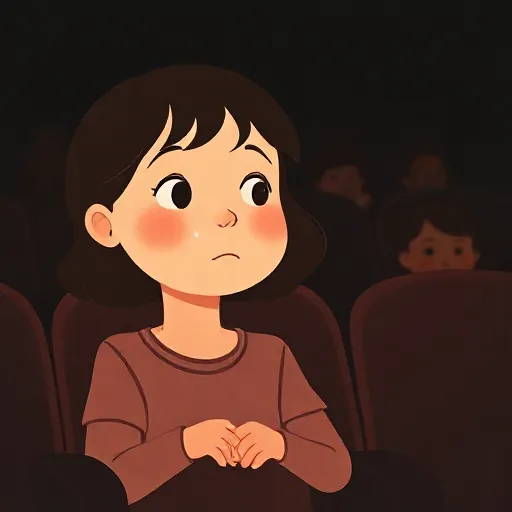
You have probably cried at a movie, or felt a knot in your stomach reading a book where the hero suffers. Yet you didn’t close the book or walk out of the cinema — you stayed, and something about the experience felt important, even good. This is strange. Most of the time we avoid pain, but in art we choose to feel pity, fear, and sorrow. Why?
The philosopher Friedrich Nietzsche (1844–1900) spent his whole life thinking about this question. When he was just twenty-seven, he published his first book, The Birth of Tragedy, which offered a dramatic answer. He believed that art — especially tragedy — helps us face the hardest truths about life without being destroyed by them. And the way it does that, he argued, is by lying to us in a beautiful way.
Apollo, Dionysus, and the Birth of Tragedy
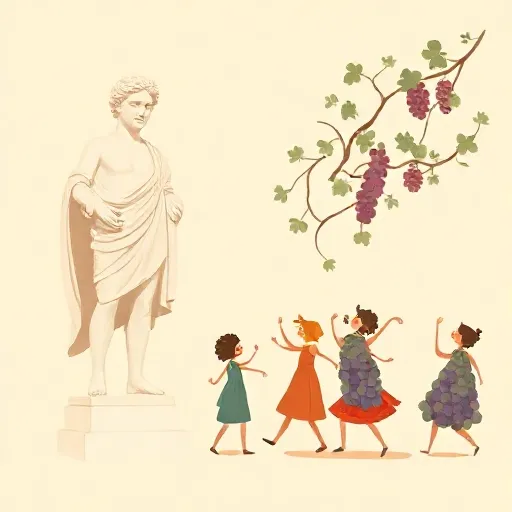
To explain tragedy, Nietzsche invented two legendary forces: the Apollonian and the Dionysian. He named them after the Greek gods Apollo and Dionysus.
The Apollonian drive is the need for beautiful order, clear shapes, and dreamlike images. It’s what painters, sculptors, and epic poets use when they create calm, harmonious forms. In your own life, the Apollonian part of you wants to see the world as something tidy and meaningful — like a well-organized painting.
The Dionysian drive is completely different. It’s the urge to lose your separate self in wild music, dancing, and intense emotion. Under Dionysus, you forget that you are a single person and feel merged with everyone else. Nietzsche thought the ancient Greeks experienced this in ecstatic festivals where normal rules dissolved.
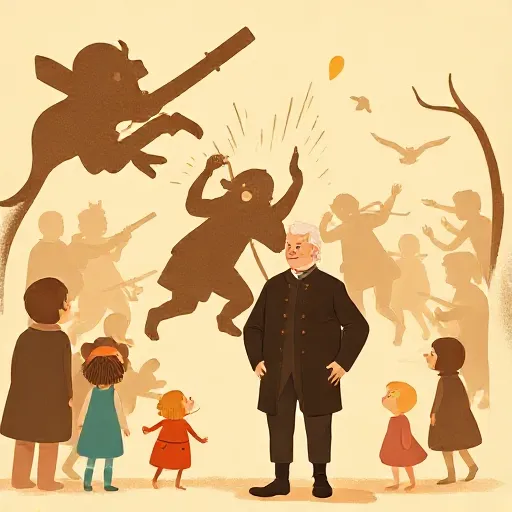
Greek tragedy, he argued, was a miracle because it combined both drives. The dialogue on stage — the characters’ speeches — gave form and story (Apollonian). But the chorus, a group of singers and dancers, provided the raw musical power (Dionysian). Together, they allowed the audience to experience life’s terror and still walk away feeling that life was worth living.
Nietzsche was deeply influenced by the composer Richard Wagner (1813–1883), who dreamed of a “total work of art” that would unite music, poetry, and community festival. For the young Nietzsche, ancient tragedy was exactly that kind of powerful art — and he hoped modern German culture could rebirth it.
The Comfort of an Illusion
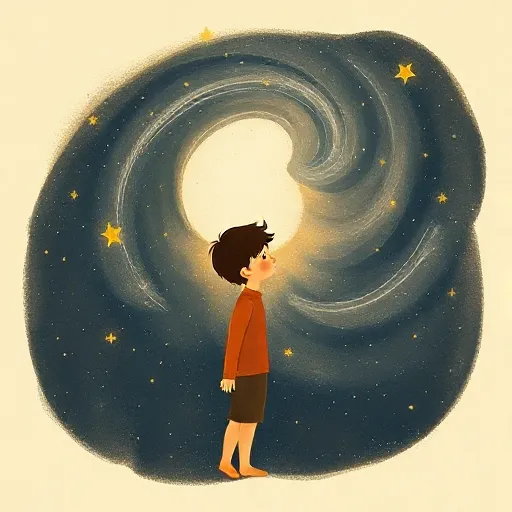
But why would watching terrible things happen make anyone feel better? Nietzsche’s early answer leaned on a big metaphysical idea. Drawing partly on the philosopher Arthur Schopenhauer (1788–1860), he suggested that the world we see — separate people and objects in space and time — is only a surface appearance. Beneath it all, there is a single, timeless reality, a kind of world-will or primordial unity. Tragedy, he wrote, gave audiences a metaphysical solace: the feeling that “under the whirl of appearances eternal life flows on indestructibly.” When the tragic hero dies, we glimpse that our individual lives are like waves on an ocean — they rise and fall, but the ocean remains.
Here, however, scholars disagree fiercely. Did Nietzsche actually believe this cosmic story, or was he crafting a powerful myth on purpose? Some readers point out that even in The Birth of Tragedy, he calls the metaphysical solace an illusion — a trick that keeps us attached to life. Later in his career, Nietzsche seemed to reject such otherworldly comfort entirely. He would come to insist that art’s value lies not in revealing hidden truths, but in celebrating beautiful falsehoods.
Why Art Has to Lie

As Nietzsche grew older, he became famous for a startling idea: the truth is ugly, and we need art so we don’t perish from it. He attacked the ancient Greek philosopher Plato (428–348 BCE) for calling art a dangerous copy of a copy. Plato worried that a painting of a bed is doubly false — it’s not the real bed, and it appeals to our emotions instead of our reason. Nietzsche flipped this complaint on its head. He agreed that art is full of semblance (Schein in German), meaning beautiful appearance or illusion. But that, he argued, is exactly what makes art good.
Think of a story that shows heroes overcoming impossible odds, or a painting that makes a simple landscape look radiant. It isn’t pretending to be a documentary; we know it’s made up. Yet we let ourselves be lifted by it. Nietzsche said art glorifies the “good will to semblance” — it teaches us to enjoy the surface of things without always demanding cold, hard reality. For him, a life lived only with factual truths would be unbearable. We need the honest lie of art.
But there is a tension here. Nietzsche also praised the ideal of truthfulness and said that the strongest people do not hide from reality — they love it exactly as it is, even the painful parts. If art is supposed to help us by hiding ugly truths, doesn’t that make us weaker? Some philosophers think Nietzsche never fully solved this puzzle. Others suggest that art’s value is not in the content of its lies, but in the fact that it gets us to create — that making and enjoying illusions is itself a powerful, life-affirming activity. The artist says, “Look what I made, even though the world is hard,” and that act of creation is a kind of victory.
Saying Yes to the Worst
Near the end of his writing life, Nietzsche returned to tragedy with a new fire. He no longer relied on a mystical world-will to explain why sad stories lift us up. Instead, he said that the tragic artist communicates a triumphant condition: “courage and freedom of feeling before a powerful enemy.” When we watch a hero struggle and refuse to break, we don’t just feel pity — we feel inspired. The tragedy glorifies the strength it takes to look at life’s worst storms and still say “Yes.”
This ideal, which Nietzsche called amor fati — loving your own fate — became the core of his mature philosophy. He imagined the tragic person as someone who has suffered deeply but does not seek escape. Instead, that person transforms suffering into a challenge, an occasion to overcome. A sad movie can leave you feeling drained, or it can leave you feeling strangely alive and ready to face your own difficulties. That second feeling is what Nietzsche meant by tragic pleasure.
Why This Still Matters

Nietzsche’s ideas might sound dramatic, but you likely live them out without realizing it. When you get lost in a song that makes you feel understood, when you draw a picture to work through a bad day, or when you watch a brutally honest film and come away feeling more yourself, you are tapping into the very power he described. Art does not just decorate life — it can make life feel worth tackling, even when it’s hard.
His philosophy challenges us to think differently about truth and lies. Is a piece of fiction really “false” if it helps you understand your own life? Should we always value bare facts over a well-told story that brings comfort or courage? Nietzsche wanted us to see that sometimes a beautiful illusion can be more life-giving than a grim truth. And he wanted us to become creators, not just consumers, of that beauty.
Next time a story makes you cry, ask: what is this sadness doing for me? Maybe it’s not escape — maybe it’s training for real life.
Think about it
- Can a story that is completely made up teach you something true about yourself? How?
- If you could push a button and live in a perfect, happy virtual reality that was totally believable, would you? Why or why not?
- Are there some truths you would rather not know about yourself or the world? Should art protect you from them, or force you to face them?