Who Invented Good and Evil? Friedrich Nietzsche's Answer
The book that set a mind on fire
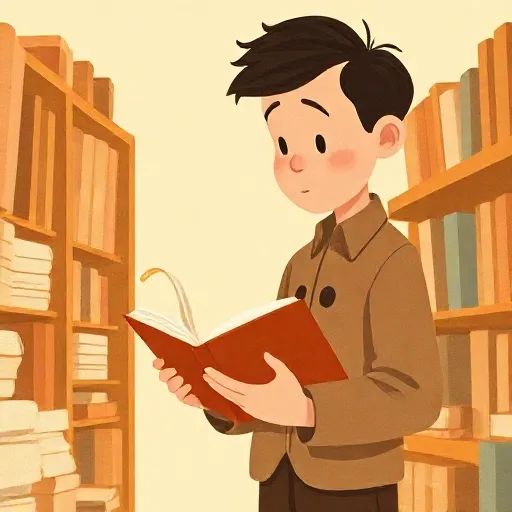
In 1865, a 21-year-old university student walked into a bookshop in Leipzig, Germany. His name was Friedrich Nietzsche (1844–1900). He pulled a worn, heavy volume from the shelf: Arthur Schopenhauer’s The World as Will and Representation. Schopenhauer (1788–1860) argued that the universe is not guided by a good God or a rational plan. Instead, the whole world boils with a blind, restless striving — a force that never settles, never satisfies, and feels no mercy. That vision struck Nietzsche like a thunderbolt. From that day, he began asking a question that would grip him for the rest of his life: if God does not exist and the world has no built-in purpose, where do our ideas of good and evil come from? And are we brave enough to live without them?
Nietzsche was born in a small German village, the son of a Lutheran pastor. He grew up steeped in religion, but by his early twenties he had lost his faith. He studied classical languages and became a brilliant professor of philology — the study of ancient texts — at the University of Basel when he was only 24. But his health was frail and his thinking was too explosive to stay inside a university. Over the next two decades, he wrote a wild, poetic, and deeply unsettling body of work that challenged almost everything Western civilization thought it knew about morality, truth, and the meaning of life.
The wild and the orderly
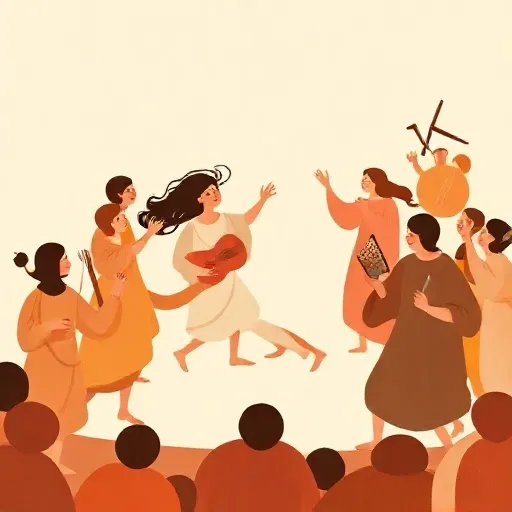
Nietzsche’s first big book, The Birth of Tragedy (1872), introduced two Greek gods to explain how human beings make sense of the world. He called the two forces the Dionysian and the Apollonian. The Dionysian side — named after Dionysus, the god of wine and ecstasy — stands for wild instinct, chaos, music, and the terrifying thrill of losing your individual self in a crowd. The Apollonian side — named after Apollo, the god of sun, clarity, and sculpture — stands for order, calm beauty, logic, and the clear outline of things.
For the ancient Greeks, Nietzsche argued, the greatest art form was tragedy: plays in which a hero suffers terribly, but the audience experiences an intense, life-affirming joy. Tragedy worked, he said, because it balanced the Dionysian and Apollonian forces. The chorus sang with raw, passionate music (Dionysian), while the actors and the plot gave shape and meaning to the chaos (Apollonian). But then something changed. Socrates came along — a man who trusted reason above everything — and European culture swung hard toward the Apollonian. Art became tame, philosophy became bloodless, and the dark, creative energy of the Dionysian was suppressed. Nietzsche believed modern life had become too safe, too reasonable, and — in the deepest sense — sick. He hoped that the music of his friend, the composer Richard Wagner (1813–1883), might awaken that sleeping Dionysian fire and heal the culture.
God is dead, so now what?
In 1882 Nietzsche published The Gay Science. The title sounds cheerful, but inside it he declared something that shook the 20th century: God is dead. He did not mean that a real deity had been killed. He meant that modern people — even those who still went to church — no longer truly believed in an absolute, God-given meaning to life or in universal moral rules handed down from heaven. The old foundations had crumbled, and most people had not yet noticed the earthquake. Without those foundations, Nietzsche asked, what keeps us from falling into despair?
His answer was a startling thought experiment called eternal recurrence. Imagine a demon whispers to you that your life, exactly as you have lived it — every triumph, every embarrassment, every boring Tuesday afternoon — will repeat forever, in exactly the same order, with no final escape. Would you curse the demon, or would you thank him as if he were a god? For Nietzsche, the ability to say “Yes!” to eternal recurrence — to love your life so fully that you would gladly live it again infinitely — was the ultimate test of spiritual health. A person who can pass that test does not need a heavenly afterlife; this life, with all its mess and pain, is enough.
Good guys and bad guys? Not so fast
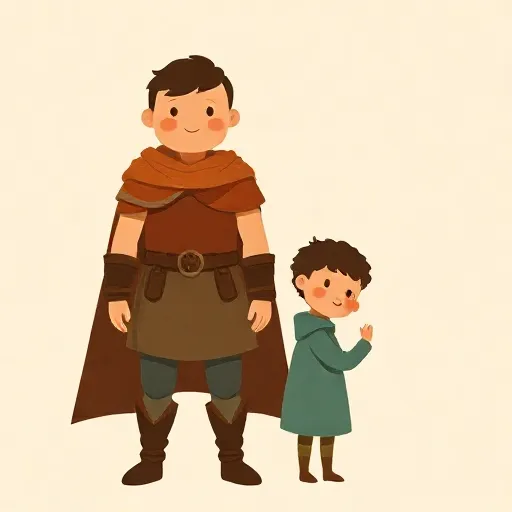
If God is dead, then the old moral rules lose their power. But where did those rules come from in the first place? In On the Genealogy of Morals (1887), Nietzsche offered a shocking story. He imagined two types of morality. Master morality is the outlook of strong, self-confident people. They decide what is “good” based on what they themselves are — proud, powerful, generous, open-handed. “Good” is whatever expresses overflowing strength, and “bad” is what is low, cowardly, or mean. Slave morality comes from the weak. Unable to fight the strong directly, they begin to call “good” what they are — humble, longsuffering, gentle — and they call “evil” what the masters are: arrogant, dangerous, dominant. For Nietzsche, this slave morality rose to power through Christianity, which preached that the meek shall inherit the earth and that the powerful will burn. The values we now take to be obviously right — pity, equality, turning the other cheek — grew out of what Nietzsche called ressentiment, a festering vindictiveness that the weak feel toward the strong.
He also developed the idea of the will to power. For him, every living thing does not merely try to survive; it strives to pour out its strength, to grow, to overcome obstacles. A tree does not just sit there; it thrusts its roots down and its branches up, claiming more sunlight. A musician does not just exist; she creates, performs, imposes her vision on the world. Nietzsche saw this expansive energy as the true force behind all life, far more fundamental than the pursuit of pleasure or the avoidance of pain.
Build your own values
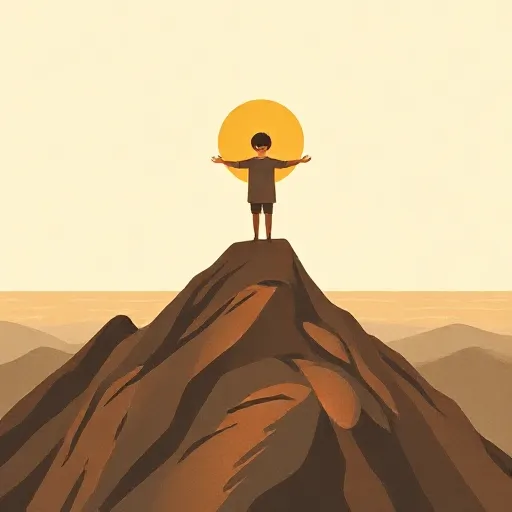
In his most poetic work, Thus Spoke Zarathustra (1883–85), Nietzsche introduced his vision of the overhuman (sometimes translated as “superman”). This is not a comic-book hero; it is a person who has left behind the old, reactive morality of “good vs. evil” and learned to create their own values. The overhuman does not beg the world for comfort or cling to promises of an afterlife. Instead, they dance, laugh, and give laws to themselves — not out of cruelty, but out of overflowing strength and joy. Nietzsche saw today’s humans as a rope stretched between animal and overhuman, a dangerous crossing, but one worth making.
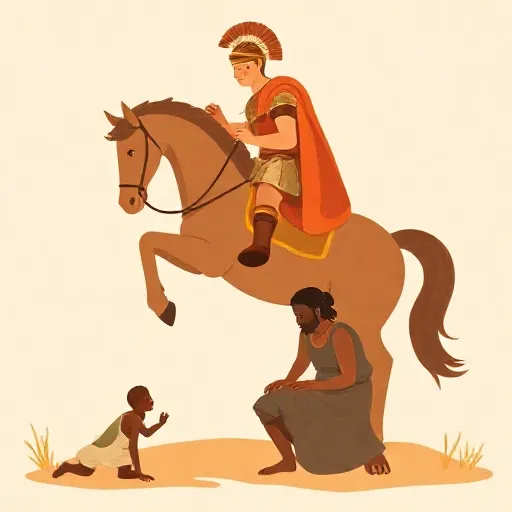
At the very end of his working life, in early January 1889, Nietzsche collapsed on a street in Turin, Italy. According to one story, he saw a horse being whipped and threw his arms around its neck in tears before losing consciousness. He never regained full sanity and died 11 years later. His ideas, however, raced across the globe. Artists, psychologists, and philosophers drank from his fire — sometimes to build liberation movements, sometimes to justify terrible cruelty (the Nazis twisted his words horribly, encouraged by his sister, who edited his late writings). Nietzsche himself had warned against followers who would turn his thoughts into a new prison.
Why does this still matter to you? Because every day you are handed values — be kind, be fair, obey the rules — without always asking where they came from. Nietzsche’s challenge is not to become an overhuman overnight, but to examine your own beliefs: do you hold them out of fear or habit, or because you have tested them and made them truly yours? There may be no cosmic scorekeeper, no fixed list of do’s and don’ts. And that means the task of creating a meaningful life lands right where it always did — on you.
Think about it
- If there is no God and no built‑in moral law, do you think right and wrong are just things people invented? Why or why not?
- Nietzsche thought the “will to power” drives all living things. Can you think of an example where someone’s desire for power explains their actions better than their desire to be good?
- If you had to live your life again and again, exactly the same down to every embarrassing moment, would you be happy about that? What might you change about how you live now?