Does Morality Hold Back the Most Brilliant People?
A Choice Between Kindness and Greatness?
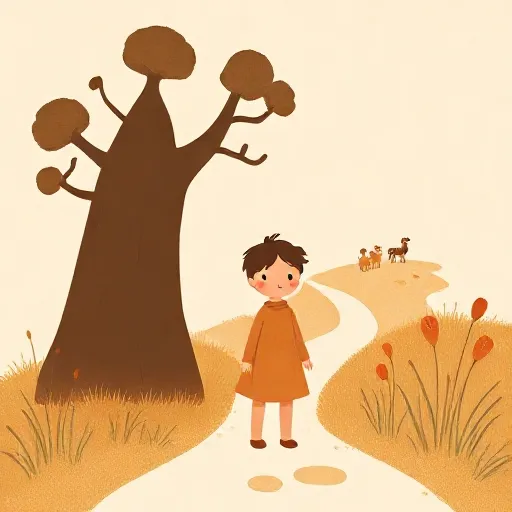
Imagine a young person who burns to paint. She spends hours alone, pushing herself to capture something true. Her family worries: “You should be with friends, be happy, think of others.” She wonders: if she chases her art, must she reject the kindness her family treasures? This is the tension that the philosopher Friedrich Nietzsche (1844–1900) explored. He argued that ordinary morality—what he called herd morality—is actually harmful to the greatest human beings.
Nietzsche did not attack every way of judging right and wrong. He imagined a “higher morality” for exceptional people. But the morality most of us follow—which says you should be compassionate, treat everyone equally, and aim for happiness—he called a poison for those who might become the next Goethe, Beethoven, or Napoleon. His book On the Genealogy of Morality was a furious attempt to show that our deepest values have a hidden danger: they block human excellence.
Why Nietzsche Thought Free Will Was an Illusion
Before he could attack morality, Nietzsche had to undermine its foundation. He claimed that three ideas about human beings are crucial for ordinary morality to make sense—and that all three are false.
First, the Free Will Thesis: that you could have chosen differently, so you are responsible for your actions. Nietzsche called the idea of being the sole cause of yourself, a causa sui, “the best self-contradiction that has been conceived so far”. You cannot pull yourself into existence from nothingness, like a person trying to lift themselves by their own hair. He also argued from his Doctrine of Types: each person has a fixed psycho-physical constitution—innate drives, temperaments, and bodily facts—that determines their thoughts and actions. Just as a tree bears fruit inevitably, your values and choices “grow from us with the same inevitability.” Your conscious feeling of deciding is only a surface effect, not the real cause. If you are a type of person, you cannot be blamed or praised in the way ordinary morality assumes.
Second, the Transparency of the Self Thesis: that we can know our own motives and rank them as good or bad. Nietzsche retorted that “every action is unknowable.” We are driven by unconscious drives we cannot name, and our inner world is a struggle of forces we do not understand. So we can never cleanly separate a selfish motive from a kind one.
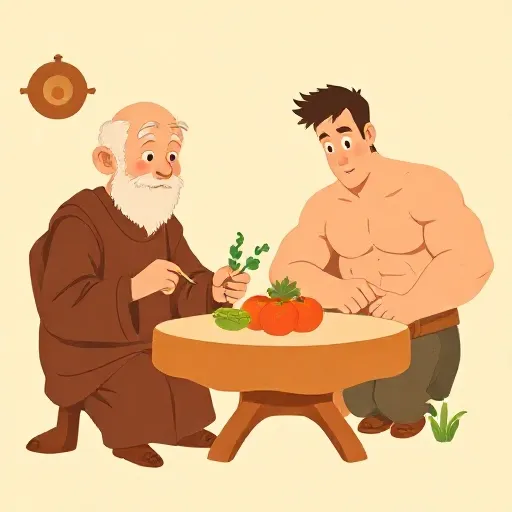
Third, the Similarity Thesis: that all people are alike enough that one moral code fits everyone. Nietzsche pointed to the Italian writer Cornaro, who recommended his own slender diet as a secret to long life. But Cornaro’s long life came from a slow metabolism—he became sick if he ate more. A diet good for him would starve someone with a different body. In the same way, a universal morality is like forcing everyone onto the same diet, harming those with different natures. If people are essentially different types, then one set of rules cannot be good for all.
The Danger of Universal Recipes
Nietzsche’s real target was not the mistaken beliefs about agency; it was what morality actually commands. He saw herd morality as a set of attitudes: praising happiness, selflessness, equality, and pity, while condemning suffering, self-love, and indifference to others. Why was that bad? Because those valuations sabotage the very things that produce human greatness.
Take the value of happiness and the fear of suffering. Nietzsche believed that great achievements—art, philosophy, discovery—require great suffering as a spur. He wrote that “only this discipline has created all enhancements of man so far.” A composer like Beethoven created under immense personal torment. If a culture teaches that suffering must be abolished and happiness is the ultimate goal, a potential genius might waste her energy chasing comfort instead of creating. She will think her pain is a sign something is wrong, not a necessary fire.
You might ask: surely we can make an exception for extraordinary people. Why cannot morality say, “Be kind to everyone, but if you are a genius, suffer if you must”? Nietzsche’s answer: morality works not by explicit rules but by shaping a whole culture’s values. When everyone around you repeats that happiness is good and suffering is bad, even a budding artist internalizes that. She learns to despise her own suffering and seek relief, rather than using it. The concepts themselves become a prison—she is trapped by the vocabulary of good and evil.
He applied the same logic to selflessness. To create something great, you need “severe self-love,” a fierce focus on your own project, not constant concern for others. Yet morality tells you to put others first. So the highest types are taught to feel guilty for the very selfishness they need.
Who Are the “Higher Men”?
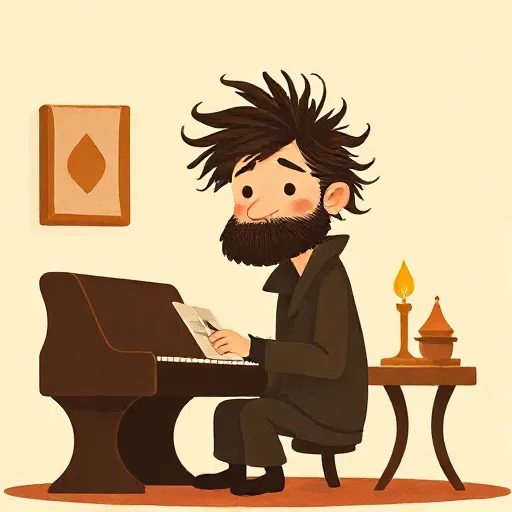
If morality harms the highest types, who exactly are they? Nietzsche’s examples are creative geniuses: Johann Wolfgang von Goethe, Ludwig van Beethoven, Napoleon Bonaparte—and himself. He admired five key traits.
First, higher types are solitary. They deal with others only as tools for their work. “Every choice human being,” Nietzsche said, “strives instinctively for a citadel and a secrecy where he is saved from the crowd.”
Second, they pursue a unifying project with absolute devotion. They have a single “organizing idea” that rules their life, like a long logic. This gives their character style and coherence.
Third, they are healthy—not free of sickness, but resilient. Being sick becomes a stimulus for more life. They instinctively choose what is good for them.
Fourth, they are life-affirming. They would gladly will the eternal repetition of their entire lives, with all their suffering. This Dionysian attitude means no regrets, no wishing away painful parts.
Fifth, they have self-reverence. A noble soul “has reverence for itself”—a fundamental certainty about its own worth that does not need others’ approval. They set their own standards of value, like a god.
Together, these traits paint the picture of the artist as a solitary flame, consumed by creative fire, indifferent to the herd. That is the life Nietzsche thought morality threatened.
Why Nietzsche Did Not Want to Run the World
If Nietzsche valued the few over the many, you might expect him to have a plan for a society that privileges the great. But he had no political philosophy. He called the state “the coldest of all cold monsters” and said that great things happen far from the marketplace of politics. He was an esoteric moralist: he wrote for the very few, hoping to change their consciousness, not to restructure governments.
Underlying this is his anti-realism about values. Nietzsche believed there are no objective moral facts. Good and evil are “names of values” that humans created, not truths about the world. His own preference for higher men is simply his taste, not a claim you must accept. If you said, “I would rather have a world of comfortable, equal last men than a rare Beethoven,” Nietzsche could only shrug—you do not share his evaluative sensibility. His passionate rhetoric was meant to shake you into seeing things his way, not to prove you wrong with logic.
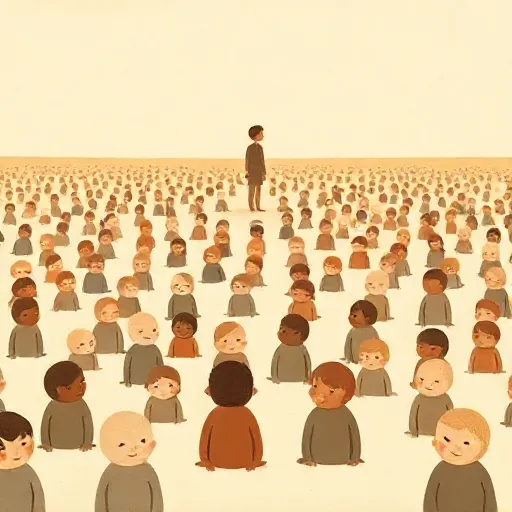
So he does not argue that we should sacrifice the herd for the genius. He simply warns: if we embrace a morality that treats everyone equally and avoids suffering, we may end up with a world where no one starves but no star rises either. The last man—who “has invented happiness” and blinks—values only comfort and safety, making the earth small. The question he leaves us with is whether that trade-off is acceptable.
Think about it
- If you had to choose between a world where everyone is equally happy but no one is exceptionally brilliant, and a world with a few amazing geniuses but much more inequality and suffering, which would you pick? Why?
- Could a person be both deeply kind and a great artist? Or does real greatness always require some selfishness?
- If you discovered that your own deepest values were shaped by the type of person you are—your fixed drives and traits—would that change how you think about right and wrong?