Is 'Goodness' Secret Revenge? Nietzsche’s Startling Answer
A Strange Announcement: “God Is Dead”
Alex helped his elderly neighbor carry groceries, then smiled. But later he felt a twist of annoyance: the neighbor had a nice car, while his own family was struggling. Did his kindness come from a pure heart, or something less generous? Over a century ago, a German philosopher named Friedrich Nietzsche (1844–1900) would have recognized that knot in Alex’s stomach. He thought that much of what we call “goodness” might actually be driven by hidden frustration and a thirst for revenge.
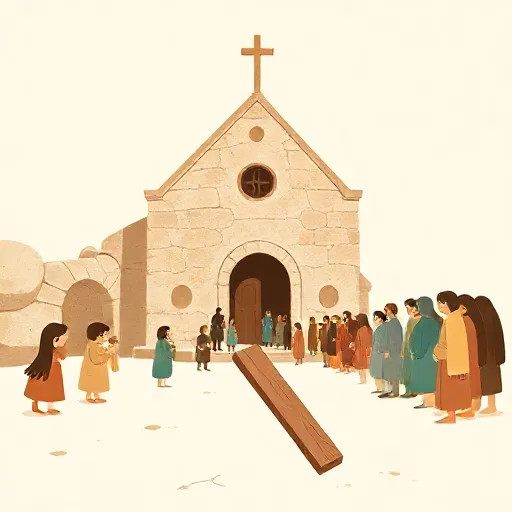
Nietzsche began by looking at religion. For hundreds of years in Europe, the Christian faith provided the foundation for morality: be kind, don’t harm, feel guilty when you do wrong. But by Nietzsche’s time, many educated people had stopped believing in God while still holding onto those moral rules. He famously announced that “God is dead.” He was not celebrating. Instead, he was warning. Without the belief in a divine lawgiver, he argued, the entire structure of traditional morality would eventually collapse, because everything built on that faith—including the whole of European morality—was “destined for collapse.” People would lose their reason to be good, and that could lead to despair.
But Nietzsche went much further. He thought that even before Christianity lost its grip, the morality it promoted was already unhealthy and built on secret resentment. The quiet annoyance Alex felt might just be a tiny echo of something ancient and explosive.
The Slave Revolt in Morality
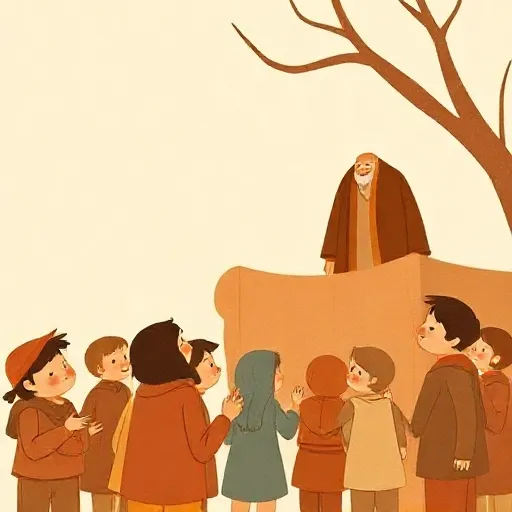
To make his case, Nietzsche peered into history and found two very different ways of calling something “good.” In ancient Greece and Rome, good simply meant excellent, noble, powerful. The “good” people were the warriors and the wealthy—anyone who stood out. That pattern, which Nietzsche called the good/bad system, had no room for the idea that everyone should be equally virtuous. To be good was to be exceptional; the ordinary run of people were merely “bad” (meaning lowly, not wicked).
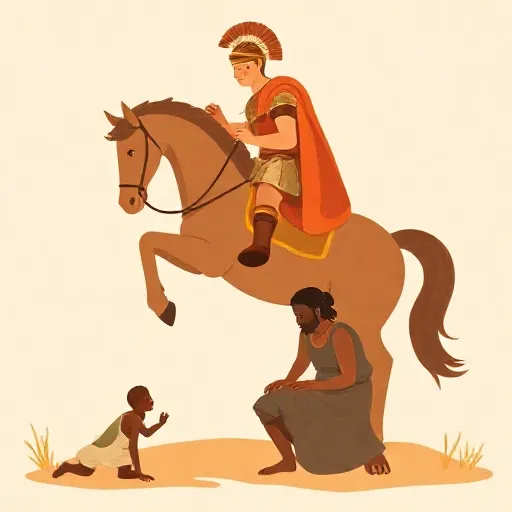
Then, he argued, something revolutionary happened. Those who suffered under the rule of the strong and proud—the enslaved, the powerless—could not fight back openly. Instead, they developed a deep, smoldering hatred that had no healthy outlet. Nietzsche gave this emotion a special name: ressentiment, a French word for a long-lasting, bitter resentment that festers inside. From that hidden rage, they created a new way of judging. They flipped the old values upside down. In this new good/evil pattern, the powerful were now called “evil” precisely for their strength, while being meek, humble, and suffering became “good.”
Nietzsche called this the slave revolt in morality. It was a brilliant, invisible act of revenge. By spreading this new moral code—especially through religion—the weak managed to make even the strong feel ashamed of their own power. The revolt succeeded without a single sword being drawn. Nietzsche pointed to fiery sermons that gleefully described the torture of the damned as a disguised revenge fantasy, and he noted how even today, moral outrage can feel less like a calm concern for fairness and more like a free-floating desire to punish.
Guilt: An Unpayable Debt
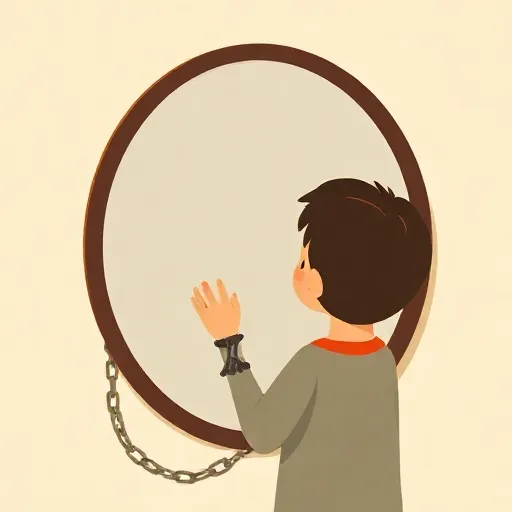
How does this morality work inside us? Nietzsche used the idea of a debt. Long ago, if you hurt someone, you literally owed them something that could be paid back through punishment. Over time, this idea was internalized—it moved inside the mind. Guilt became the feeling that you owe a debt to the moral order itself, and that you are a bad person at your very core.
The problem, Nietzsche saw, is that once guilt is purified like that, it doesn’t need an actual victim. You can feel guilty for forbidden thoughts or for simply having human desires. Even worse, this guilt can be weaponized against yourself. He examined how religious and philosophical teachers—whom he called “ascetic priests”—tell people that their suffering is their own fault. The message is: You are to blame for your misery, and you deserve it. This turns a person’s own pain into a tool of self-punishment, crushing their sense of self-worth. Nietzsche believed that this kind of psychological sickness was not just ancient history; it could seep into anyone’s life, leaving them exhausted by inner conflict.
Creating Your Own Values: Becoming a Yes-Sayer

Nietzsche did not just want to tear down old values; he wanted to build new ones. He thought each person should create their own values, like an artist crafting a painting. One of his key ideas was the will to power. But this wasn’t about bullying others or grabbing control. For Nietzsche, power meant overcoming resistance and growing stronger through effort—like an athlete training not to crush opponents, but to become the best version of themselves. He also prized truthfulness, the courage to see the world as it really is without comforting lies. Yet he knew that too much honesty could be crushing, so he valued art and illusion—the skill of making life beautiful even when it is not perfect.
Most of all, he wanted people to say “yes” to life. He called this amor fati—love of fate. Instead of wishing things were different, you embrace everything that has happened as an essential part of your story. This does not mean pretending every bad event is good. It means refusing to let suffering make you curse your existence. You become, in his words, a “Yes-sayer.” The goal is not to follow a rulebook handed to you, but to “give style to your character,” shaping your life into something you can be proud of.
The Eternal Recurrence: Would You Live Your Life Again?

To test whether you truly affirm your life, Nietzsche invented the scariest thought experiment in philosophy: the eternal recurrence. Imagine a demon appears in your loneliest moment and says, that this life, as you now live it, you will have to live once more and innumerable times more, and every pain and every joy and every thought must return to you, all in the same succession and sequence. If you would clench your teeth and curse the demon, then your life has not been worth it; you are a “No-sayer.” But if you could honestly reply, “You are a god, and never have I heard anything more divine!” then you have fully affirmed your life.
Most philosophers today think Nietzsche meant this not as a prediction about the universe, but as a mirror. The thought experiment strips away any comforting lie that your suffering will be wiped away by an afterlife or a future reward. It forces you to ask: Am I living in a way I could sincerely want to repeat forever? The eternal recurrence pushes you to take responsibility for your choices and to find meaning right now, in the life you actually have.
Why Nietzsche Still Gets Under Our Skin

Nietzsche’s ideas remain unsettling because they make us suspicious of our own motives. When you feel a pang of guilt over something small, is it because you really did wrong, or because you’ve been trained to punish yourself? When you call someone a bad person, is it a genuine moral insight, or a bit of secret envy? Nietzsche doesn’t give easy answers, but he forces you to examine whether your values make you stronger or weaker, and whether you are truly free or just following the herd.
He reminds us that morality is not a fixed, timeless truth handed down from heaven. It has a history, and it might be shaped by very unflattering psychological forces. That doesn’t mean kindness is always fake. But it does mean we should be honest with ourselves. So next time you’re about to judge someone—or yourself—pause and ask: Is this about justice, or is there a little ressentiment hiding behind my righteousness?
Think about it
- Think of a time you felt really good after helping someone but also felt a slight sense of superiority. Could that feeling reveal something less than pure kindness? Why might that matter?
- If the weak really did invent morality as a secret revenge, does that make morality itself wrong, or could it still be valuable?
- Imagine a friend tells you that everything in your life—every mistake and every triumph—would repeat forever exactly as it happened. Would you truly want that? What would your answer reveal about how you are living right now?