
Is Goodness Real, or Just a Fancy Way of Saying ‘I Like It’?
Did You Catch That Sting?

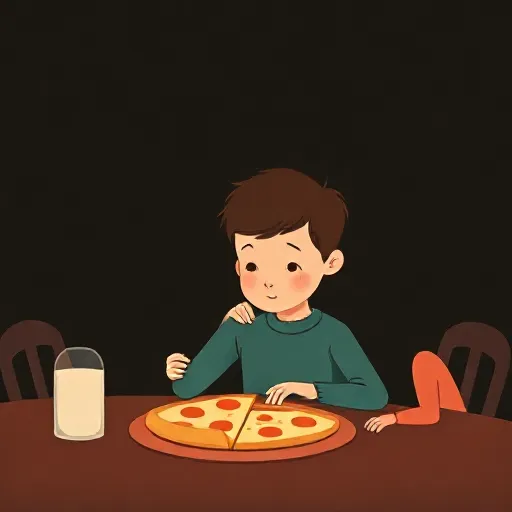
You’re sitting at dinner, and someone says, “Pizza is good.” Your cousin fires back, “That’s just your opinion.” You feel a sting. Isn’t pizza actually good? Doesn’t saying “good” mean more than just “I like it”? For centuries, philosophers have wrestled with exactly this sting. Two of the cleverest thinkers of the 20th century — G. E. Moore (1873–1958) and Bertrand Russell (1872–1970) — changed their minds about it so often that their story still ripples through debates today.
Moore’s Open Question: Can You Define “Good”?

Many philosophers have tried to define moral words. They said “good” just means something natural — a feature you can point to, like pleasure, happiness, or satisfying desires. This is called naturalism. Moore had a devastating reply. He asked a single question that, he believed, floored every natural definition.
Take pleasure. A naturalist says, “‘Good’ just means ‘pleasant’.” Now ask yourself: “Is pleasure good?” Is that a pointless question, like asking “Are bachelors unmarried?” No — you can wonder about it. You can imagine a pleasure (say, from bullying) and doubt whether it’s good. The question is open, not a tautology. Moore called this the Open Question Argument. If “good” meant exactly the same as “pleasant,” “pleasure is good” would be a boring repetition, like “thing is thing.” Because it isn’t, “good” must pick out a different property — a non-natural property you can’t describe with ordinary words. Goodness, Moore insisted, is simple, sui generis, and you either see it or you don’t.
Russell’s Quest: Can You Mine “Good” from Desire?

Before Moore’s book Principia Ethica (1903), the young Bertrand Russell tried to build ethics out of desire. He wanted “good” to be both real and tied to what moves us to act. He tried three definitions, each getting closer to the mark.
- First attempt: “X is good” means “X will satisfy my desires.” Problem: you can want things that don’t satisfy you. And it turns goodness into a future fact about your own pleasure — not a moral anchor.
- Second: “X is good” means “I want X for its own sake.” This collapses into crude subjectivism — whatever you happen to want is automatically good. You could never want something bad, which feels ridiculous.
- Third (the ingenious one): “X is good” means “X is what I desire to desire.” Think of a sweets lover who wishes they wanted broccoli instead. Their first-order desire (candy) is what they desire not to desire; their second-order desire (broccoli) is what they desire to desire. This captures something: you can have base desires you disown, and noble ones you aspire to. It also links “good” to motivation, because you often act on what you desire to desire. However, it still reduces “good” to a psychological state and violates the rule (which Russell shared with Moore) that an ought cannot be defined from what merely is.
Moore’s Open Question sliced through all three attempts. “Are things that I desire to desire good?” feels like a real question, not a tautology. Russell, impressed, accepted Moore’s conclusion: goodness is a simple, non-natural property that can’t be boiled down to any set of natural facts. For years, he was a follower.
When Good Became a Wish
By 1913, Russell made a dramatic U-turn. He stopped believing in Moore’s non-natural property. If goodness wasn’t a natural feature like pleasure or a desire, and it also wasn’t some ghostly non-natural quality, then what was left? Russell concluded that moral judgments don’t describe facts at all. They express attitudes, desires, or commands. This family of views is now called non-cognitivism or emotivism.
Russell’s specific version: when you say “Helping others is good,” you aren’t making a claim that could be true or false. You’re using a sentence in the optative mood — a wish. That sentence really means something like: “Would that everyone desired to help others!” It’s like saying “Hooray for helpfulness!” or “Oh to be a kinder world!” It reveals your inner wants, but it doesn’t state them as facts.
This explained something puzzling. People argue endlessly about what’s good, yet nobody can prove it the way you prove water boils at 100°C. If “good” is just a disguised wish, that makes sense. Desires don’t need proof; they need expression. Russell also saw a practical benefit: if people accepted that values are subjective, they might become less fanatical and more tolerant. But Russell never felt comfortable.
“Surely Cruelty Is More Than Just Not Liking It”

Russell admitted, “I cannot see how to refute the arguments for the subjectivity of ethical values, but I find myself incapable of believing that all that is wrong with wanton cruelty is that I don’t like it.” He felt a deep tension: his head said emotivism must be right, but his heart insisted otherwise.
Philosophers have raised sharper weapons. The Disappearing Dispute problem: if I say “charity is good” and you say “charity is bad,” we seem to contradict each other. But if each of us is only expressing a wish (“Would that everyone desired charity!” vs. “Would that nobody desired it!”), there’s no logical contradiction, just two incompatible desires. We still feel like we’re disagreeing about a fact, not merely clashing over what to cheer for.
Even tougher is the embedding problem. In arguments like “If charity is good, then we should donate” and “Charity is good, therefore we should donate,” “good” has to mean the same thing in both spots. But if the first “good” is a wish and the second is… something else, the inference breaks. And as the “duck” point reminds us: moral language swims, walks, and quacks like truth-apt talk. We say “I know hitting is wrong,” “You’re mistaken about kindness,” or “It’s true that honesty matters.” If it looks like a proposition, behaves like a proposition, and is used like one, maybe it really is one.
Why the Sting Still Matters

Russell’s roller‑coaster journey leaves us with a live question: can moral opinions be true or false, or are they just emotional howls? Most philosophers today reject simple emotivism, but the debate hasn’t settled. Even if you think there’s no spooky property of goodness, you might still believe that moral claims are answerable to reality in some other way. Or you might lean toward an error theory — the idea that while we try to talk about objective good, there’s nothing there, so our statements are all false.
Back at your dinner table, when you feel that sting, you’re not just being stubborn. You’re touching a puzzle that vexed the greatest minds. Russell’s life shows that you can hold a view uneasily and still use it to argue fiercely for kindness, peace, and justice. Even if ultimate good is a wish, we can still reason together about what actions best fulfill our shared wishes. Russell spent decades campaigning against war and cruelty, using cool-headed reasoning about which policies bring about the welfare people already care about. That practical work didn’t require a magic goodness ingredient — only a clear head and a warm heart. And that, maybe, is enough to change the world.
Think about it
- If saying “stealing is wrong” really just means “I wish nobody stole,” can you still argue with someone who says “stealing is fine”? What would that argument look like?
- Think of something you believe is truly good (like saving a life). If someone else sincerely felt it was bad, would you say they’re wrong? If so, what makes your belief better than theirs?
- If moral statements cannot be true or false, does that make it harder to stand up against injustice? Or does it still give you a reason to fight?