
Is 'Good' Just Another Word for 'I Like This'?
When a “Good” Movie Starts a Fight

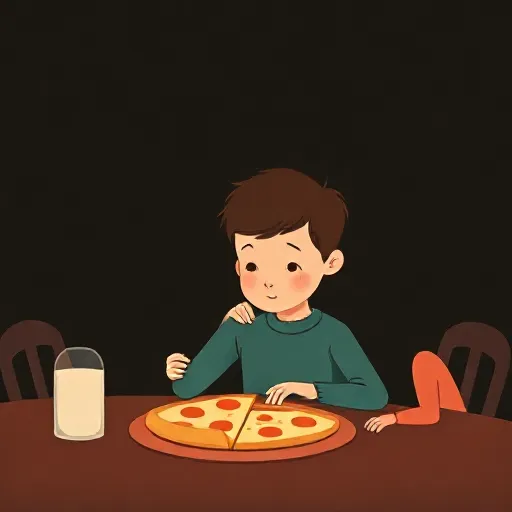
You and a friend just watched the same superhero movie. You agree on the plot, the acting, the special effects. But one of you insists it was a great film, while the other calls it terrible. You aren’t fighting about facts—you’re clashing over how you feel about it. This is exactly the kind of puzzle that fascinated the philosopher C. L. Stevenson (1908–1979).
Stevenson loved music, poetry, and anything that stirred strong emotions. He became convinced that words like “good,” “bad,” “right,” and “wrong” work very differently from words like “tall” or “made of wood.” They have emotive meaning—they don’t just describe things; they express the speaker’s feelings and try to make other people share those feelings. This view is called emotivism, and Stevenson’s book Ethics and Language (1944) became one of the most famous defenses of it. According to Stevenson, when you say “That movie was good,” you’re really doing two things: you’re revealing your own approval, and you’re inviting your friend to approve too.
Heads vs. Hearts: Two Kinds of Disagreement
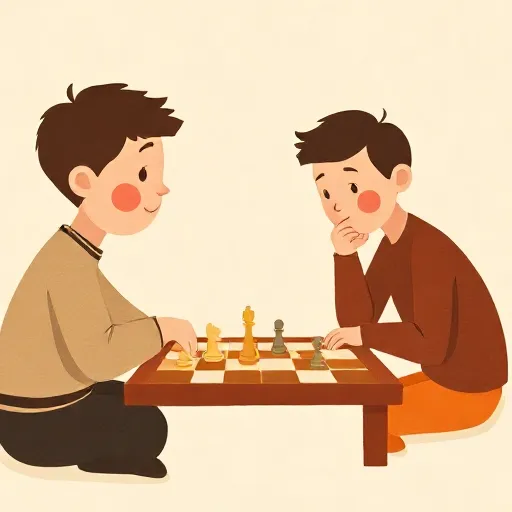
Stevenson noticed that people disagree in two very different ways. A disagreement in belief happens when two people hold beliefs that can’t both be true—like one person thinking an anniversary is in June and another thinking it’s in July. A disagreement in attitude happens when people have desires, plans, or feelings that can’t all be satisfied at the same time. For instance, two friends want to eat dinner together, but one craves a restaurant with loud music and the other needs a quiet spot. Their disagreement isn’t about facts; it’s a clash of what they want.
To see the difference clearly, Stevenson imagined a chess expert playing a weak opening move. Is he making that move because he believes it’s a strong one, or because he wants to go easy on a beginner? The first would be a mistaken belief; the second would be a generous attitude. We can tell them apart in daily life, and Stevenson insisted that attitudes—states of being for or against something—are just as real as beliefs, even though they’re not about describing the world.
For Stevenson, moral disagreements—about whether stealing is wrong, or whether a wage raise is fair—are always, at their heart, disagreements in attitude. Two people might argue over a company’s profits or the cost of living, but even if they agree on every single fact, they might still have opposing attitudes. If they end up sharing the same attitude, the moral problem is solved, even if some facts remain unsettled. That’s why Stevenson thought ethical language needs to move attitudes, not just report them.
Why Saying “Courageous” Does More Than Describe
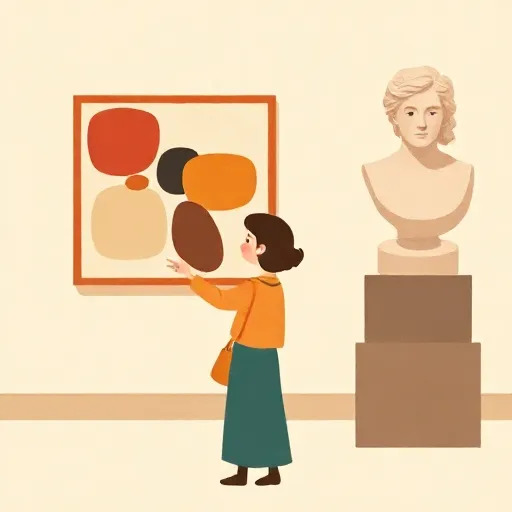
If moral words mainly work on our attitudes, how do they pull it off? Stevenson said they have both descriptive meaning (the power to make us think of certain facts) and emotive meaning (the power to express or stir up feelings). Take the word “courageous.” Its descriptive meaning points to acting in spite of fear. Its emotive meaning adds a glow of admiration. The two kinds of meaning can mix together, and the balance can shift depending on the word and the situation.
To make this clearer, Stevenson built simple models. In one early model, saying “This is good” works like saying “I approve of this; do so as well.” The first half reports your attitude; the second half is an invitation. That model is too blunt—it makes moral talk sound bossy—so Stevenson offered a richer one: “This has certain qualities (like being kind and fair), and I express my approval of it.” The descriptive part can be very detailed; the emotive part adds a stamp of feeling.
This blend makes moral language a powerful tool for changing people’s minds—sometimes without them noticing. Stevenson described persuasive definitions: someone redefines a word that already carries a strong emotional charge in order to redirect our admiration. For example, a person might say, “A truly cultured person isn’t someone who knows fancy grammar—it’s someone with creative imagination.” The word “cultured” keeps its positive glow, but suddenly we’re being nudged to admire a different set of qualities. Stevenson put it simply: in moral arguments, words are like prizes—each side tries to attach the brightest labels to the qualities they want others to value.
Facts, Feelings, and the Art of Changing Minds
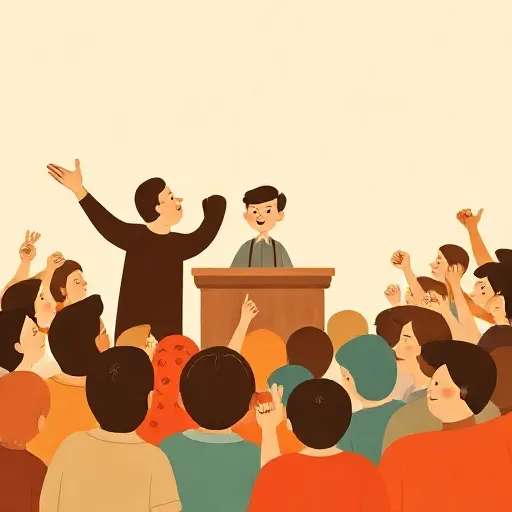
If moral talk is about shaping attitudes, what are the actual tools for doing that? Stevenson divided them into two groups. Rational methods use language to give reasons—factual statements that might alter someone’s feelings. Suppose you want to convince someone that a new policy is bad. You might point out that it puts a heavy burden on poor families while barely helping the rich. If they believe that fact, it could change their attitude.
But we often use nonrational persuasion too. This means appealing directly to emotion through repetition, metaphors, tone of voice, or the sheer emotive power of words. Stevenson noted that Martin Luther King Jr.’s “I Have a Dream” speech works powerfully through repeated phrases like “Let freedom ring,” which stir deep feelings without introducing any new factual claim. Such methods aren’t dishonest; they’re a natural part of how human beings communicate about what matters.
Persuasive definitions are a particularly sneaky form of persuasion. By quietly shifting the descriptive meaning of a word while keeping its emotive charge, you can redirect people’s admiration without an open fight. Stevenson didn’t think persuasion was always bad—it’s just one of the ways we try to bring our attitudes into alignment. But it does mean that not all moral disagreements can be settled by calm, logical debate. Sometimes, what moves us isn’t a new fact but a new way of feeling about the same old facts.
But Is It Really All About Feelings? Two Big Worries

Stevenson’s ideas stirred up plenty of debate. One of the toughest challenges is usually called the Frege-Geach problem. If “stealing is wrong” just expresses disapproval, what happens when it’s embedded in a larger sentence like “If stealing is wrong, then getting your brother to steal is wrong”? In that conditional sentence, the first part isn’t expressing disapproval—you’re not actually against stealing in that moment; you’re just considering a hypothetical. So it seems the word “wrong” must carry something more stable than a burst of feeling. Stevenson’s reply was that words have stable dispositions to evoke attitudes, even when the feeling isn’t active. But many philosophers find that answer incomplete.
A second worry is simpler. Can’t you think something is morally wrong without feeling any strong emotion? You might calmly judge that a forgotten historical injustice was terrible, even though it stirs no anger in you right now. Stevenson would say that moral meaning is a disposition—a tendency or power—not a constant inner storm. You can be disposed to disapprove while remaining perfectly calm. Still, some critics feel that this makes attitudes too ghostly to do the work Stevenson wants them to do. These debates remain very much alive.
Why Your Arguments About Pizza Toppings (and Justice) Still Matter
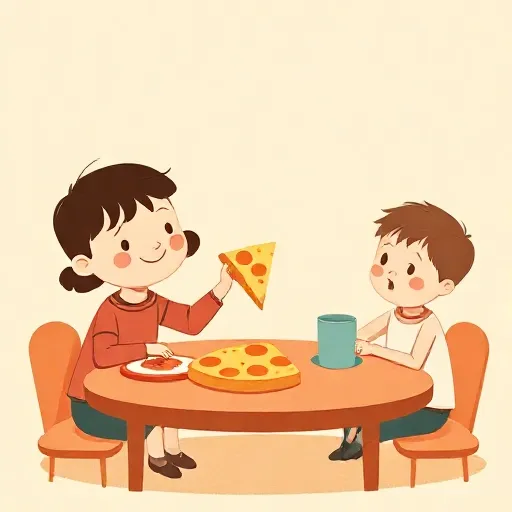
Stevenson’s work matters because it changes how you hear the arguments happening all around you. When a friend says “Pineapple on pizza is just wrong,” are they stating a fact they could prove? If Stevenson is right, they’re mostly expressing their own distaste and inviting you to share it—and maybe piling on some facts about texture and flavor to try to shift your attitude. That explains why these debates can feel so personal and why people often don’t budge, even after hearing a stack of facts.
His ideas also remind us that good moral communication often needs more than cold logic. If you really want to change someone’s mind about fairness or kindness, you might need to tell a story, choose words with emotional weight, or appeal to feelings you know they already have. Stevenson believed that understanding how moral language actually works—its mix of reason and emotion—could make us clearer thinkers and better communicators. His view launched a huge conversation about whether moral judgments are ultimately beliefs, attitudes, or some hybrid, and that conversation is still shaping philosophy today.
Think about it
- If saying “cheating on a test is wrong” is mainly about expressing your feeling, could you ever prove to someone that cheating is wrong using only facts? Why or why not?
- Imagine you want to convince a friend that sharing is good. Would you rely more on factual reasons or emotional stories? Which approach would be more effective—and if one is more effective, does that make it the better way to argue?
- If moral disagreements are really clashes of attitudes, can there ever be a truly “wrong” moral opinion, or is it all just different personal preferences?