
How Many Ways Can Something Be Good?
A Fork in Every Path
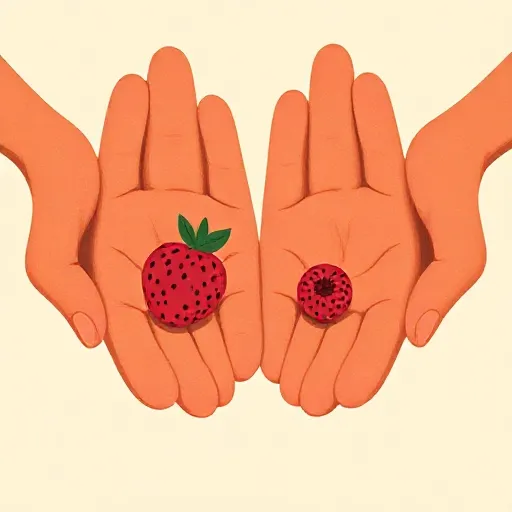
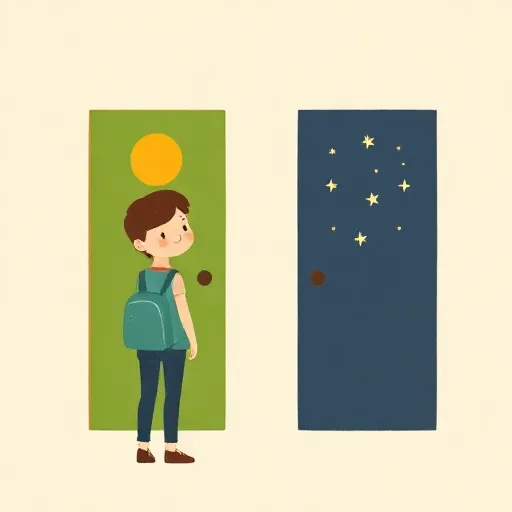
Imagine standing in the middle of a field with two paths ahead. Down one path, you see a table piled with your favorite snacks. Down the other, a friend waves you over to play a game you both love. You can only walk one way. Most people would say both options are good, but are they good in the same way? That simple question is the heart of value theory, the branch of philosophy that asks what “good” really means and whether all good things share something in common. For thousands of years, thinkers have argued about what makes a choice the right one, and their answers shape how we understand our own lives.
Four Flavors of “Good”

The word “good” shows up in so many different kinds of sentences that philosophers often sort them into four main families. Saying “pleasure is good” is a value claim — it names a kind of stuff (like pleasure or knowledge) and stamps it with goodness. Saying “it would be good if you went to bed early” is a claim about what’s good simpliciter — just plain good, full stop. Saying “that salad is good for you” is a claim about good for someone — what helps a person’s well‑being. And saying “that’s a good pocketknife” is an attributive use of good — it means the thing is good as something (a knife, a dancer, a thief).
These families create puzzles. Can we explain good simpliciter in terms of good for? Some philosophers, like Philippa Foot (1920–2010), argued that when we say something is good period, we might really mean it’s good for some person, even if we don’t say who. Others, like G.E. Moore (1873–1958), struggled to make sense of good‑for at all, thinking it might reduce to something being good and belonging to someone. Modern theorists like Stephen Finlay argue all goodness is relative to ends or purposes: a knife is good for cutting, a talk is good for making someone happy. On that view, even plain “good” sneaks in a purpose — we just don’t say it out loud.
Good for What? The Chain of Why
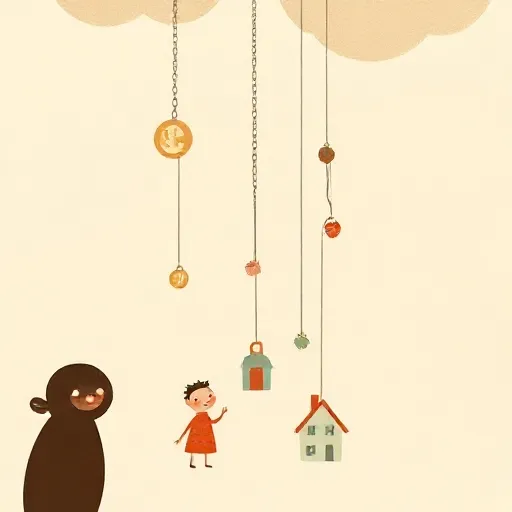
Take a coin. Is a coin good? Sure, but not because of the metal itself. It’s good because you can trade it for something else you want — a video game, a cozy blanket. Those things, in turn, are often good because they lead to other things: excitement, warmth, comfort. The coin is instrumentally good: it’s a useful link in a chain. But if every good thing were only good for the sake of something else, the chain would never end. Eventually, philosophers argue, something must be good in itself — not a stepping stone to anything further. That’s what they call intrinsic value.
John Stuart Mill (1806–1873) thought pleasure was the one thing with intrinsic value. Knowledge, friendships, art — all were valuable only because they brought pleasure. G.E. Moore disagreed. He thought knowledge was intrinsically good too, even if it didn’t lead to a single smile. Moore introduced a way to test: imagine a world containing only one thing — say, beauty with no one to see it. If it still seems good, maybe it has intrinsic value. The debate between instrumental and intrinsic value pushes us to ask what’s really worth wanting for its own sake.
One True Good, or a Crowd?
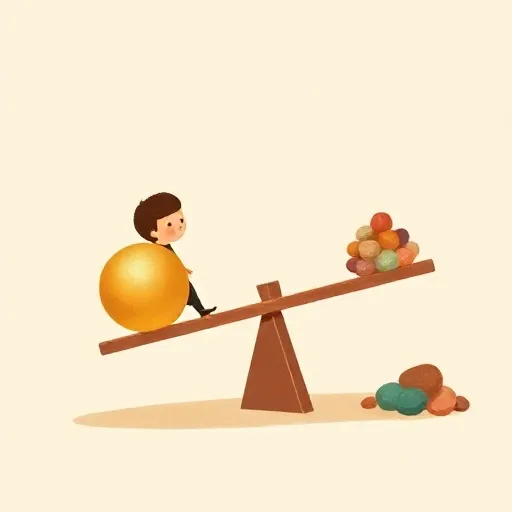
If pleasure and knowledge are both intrinsically good, we have value pluralism — the view that there’s more than one basic kind of good. Monists, by contrast, insist on a single master value. This isn’t just a counting game; it changes what we can say about hard choices. Imagine you must pick between a world with more pleasure and a world with more knowledge. If there’s only one scale (say, pleasure), you just compare amounts. But with two different scales, you might face a genuine clash — where no rule can neatly say which world is better.
This leads to the idea of incommensurability: the possibility that some goods can’t be put on the same measurement stick. Think of the sculptor Rodin and the composer Mozart. Is Rodin a better artist? Is Mozart? Are they exactly equal? Many people feel none of these answers is right — they’re simply good in ways that don’t stack. Pluralists think such examples show that real life has more texture than a single‑value theory can capture. Monists reply that even a single value, like happiness, can come in many flavors (Mill talked about higher and lower pleasures), so we don’t need many values to get complex trade‑offs. The argument is alive because it’s really about how we make sense of the pulls we feel in our own hearts when two good things pull in opposite directions.
When Goodness Tells You What to Do
For centuries, some philosophers believed that if you know what’s good, you automatically know what you ought to do. Consequentialism is the most famous version of this idea: you should always do the action that leads to the best overall outcome. But this gets tangled when we think about actions like murder. Suppose you could prevent two murders by committing one yourself. Most people feel you still shouldn’t kill the innocent person, even if the math says two lives saved outweighs one lost. That’s an agent‑centered constraint: the fact that you would be doing the killing matters more to what you should do than just the total badness.
To explain this, some philosophers propose agent‑relative value — the idea that outcomes can be better or worse relative to a particular person. From your perspective, your own murders are worse than someone else’s, so the ranking of outcomes changes depending on who is choosing. Others reject that idea, thinking “good” is not the kind of word that secretly changes meaning from person to person. Another camp, inspired by T.M. Scanlon (b. 1940), flips the equation: instead of starting with goodness to explain what you should do, start with reasons. To call something good is really to say there are reasons to respond to it in certain ways — to admire it, to choose it, to protect it. On this fitting attitudes view, goodness doesn’t command action; it’s built out of the same reasons that guide our decisions.
Your Choices, Their Echoes

Why does this dusty debate matter when you’re just trying to decide between homework and hanging out? Because every tough choice is a clash of different kinds of goodness. Finishing your project might be good for your future self, while spending time with your friend is good for your relationship and your mood right now. These aren’t the same kind of good, and there’s no universal calculator that says “one hour of study equals seven laughs with a friend.” You’re already living the pluralist’s world, navigating incommensurable pulls every time you weigh kindness against honesty, or safety against adventure.
The philosophers don’t hand you a cheat sheet. Instead, they map the territory. They show you that when you feel torn, it’s not because you’re bad at deciding — it’s because the world contains real and sometimes irreconcilable goods. Understanding the different shapes of “good” doesn’t make choices easy, but it helps you see why they matter. And it reminds you that the person you become is built, day after day, out of the kinds of goods you choose to chase.
Think about it
- If you could be extremely happy but know almost nothing, or know a huge amount but feel ordinary happiness, which life would you pick? Why?
- Can something be truly good if no one — not a single person, animal, or alien — ever gets anything out of it?
- When two things are good in completely different ways, like a loyal friend and a delicious cake, is there ever a fact about which one is “better”? If not, how should you choose between them?