
Are There Many Ways to Be Good, or Only One?
A Choice Between Two Rights

Imagine you saw your best friend scribble notes on her wrist before a test. The teacher asked if anyone saw cheating. You could speak up, because you value honesty. But you could stay quiet, because you value loyalty. Honesty feels right. Loyalty feels right. Yet you can’t do both.
What’s going on inside that choice? Are honesty and loyalty just two paths toward one big, simple thing — goodness — and you’re measuring which path has more of it? Or are they two completely different kinds of goodness, like apples and oranges, that can’t be melted down into one “super-good”? That question is the heart of a long-running argument in moral philosophy.
On one side stand moral monists. They think that whenever something is good, it’s good because it shares one basic property — one single ingredient of goodness. On the other side are moral pluralists. They think that goodness comes in many irreducibly different forms, and there is no one ingredient that makes all good things good.
The One-Ingredient Recipe: Moral Monism

The English philosopher G.E. Moore (1873–1958) was a famous monist. He argued that “good” is a simple, non-natural property — something you can’t see or touch, but that all good actions and things have in common, in varying amounts. For Moore, saying a joke is good is like saying a bowl of soup is warm. Warm is one property, even though a radiator and a mug of cocoa have it. Goodness, he insisted, is one thing.
Moore’s view is foundational monism: at the very bottom, there’s only one value. But he didn’t deny life is complex. He agreed that different things — friendship, art, knowledge — are all valuable in different ways. They are different bearers of value, like different envelopes carrying the same letter. The letter inside is always the same: goodness. When we choose between helping a friend and telling the truth, we’re really choosing which action will deliver more of that single goodness.
This idea has a kind of elegance. If all good things share one core, then comparing them is like weighing different stacks of coins in the same currency. But does it match what your choices actually feel like?
A Salad, Not a Soup: Moral Pluralism

Judith Jarvis Thomson (1929–2020) thought Moore’s picture was absurd. She pointed out that when we call something “good,” we always mean good in a particular way. A fountain pen is good for writing smoothly. A logic book is good for learning reasoning. A film is good for moving or entertaining you. There’s no mysterious property of “plain goodness” floating behind these. Thomson was a foundational pluralist: she believed there is no one property of value at the most basic level. Goodness is always and only goodness-in-a-way.
The Scottish philosopher W.D. Ross (1877–1971) gave pluralism another shape. He argued we have several prima facie duties — basic moral pushes that are each real and not reducible to one another. For example, we have duties to keep promises, to help others, and to make up for harm we’ve caused. None of these is more fundamental than the others; they are genuinely different moral ingredients. When two duties clash — say, a promise to a friend versus helping a stranger — we have to figure out what to do without a single rule telling us which duty always wins.
Pluralism says that moral life is more like a salad than a soup. The ingredients keep their own flavors; you can’t cook them into one uniform broth.
Why Pluralism Feels Right
Pluralists aren’t just making a philosophical point — they think their view fits what real moral choices feel like. Here are three experiences they say monism can’t easily explain.
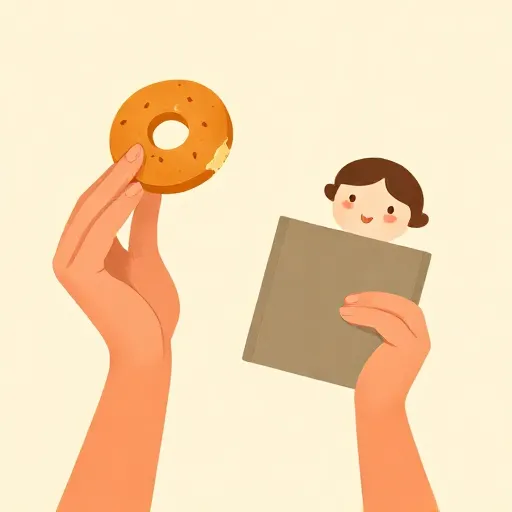
First, sometimes we hit discontinuities in value. John Stuart Mill (1806–1873) argued that pleasures come in higher and lower kinds. The pleasure of reading a poem is not just “more pleasure” than eating a donut; it’s a different quality of pleasure. Mill famously said it’s better to be an unhappy human than a happy pig — meaning that no amount of lower pleasure can outweigh even a little of the higher kind. If all pleasure were the same stuff, eventually a mountain of donuts should beat a sonnet. But that’s not how we rank things.
Second, we often feel rational regret even when we make the right choice. Suppose you promise to attend your cousin’s recital, then your best friend gets sick and needs your help. You break the promise and go to your friend. Even if that was the right call, you probably still feel a pang about the broken promise. Philosophers Bernard Williams (1929–2003) and Michael Stocker (born 1942) argued that such regret makes sense only if values are truly different. If you had simply chosen More Goodness over Less Goodness, there would be nothing to regret — you got more of the exact same thing. The lingering sting suggests a genuine value remainder: something real was lost.
Third, we respond to values in many ways that aren’t just “promote more of it.” Elizabeth Anderson (born 1959) pointed out that parents don’t love their children by treating them as parts of an “aggregate child collective” and maximizing total good. They give each child their due. Pluralism, she thinks, better captures how we honor, respect, nurture, and love different goods, rather than just cranking up a single dial.
How Monists Fight Back
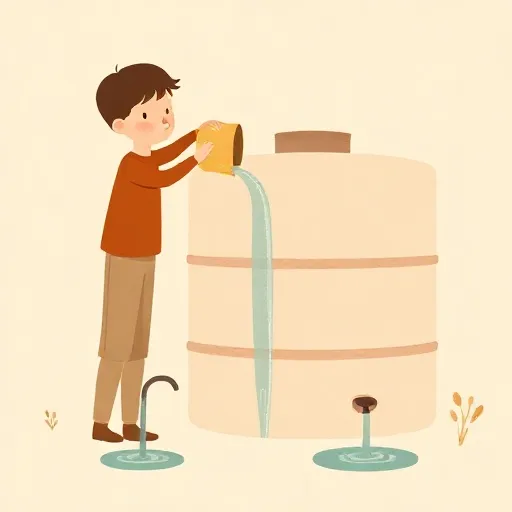
Monists have clever replies. They don’t deny that moral life feels complex. They just argue that complexity doesn’t prove many fundamental values exist.
One strategy is to point to different bearers of value. Thomas Hurka (born 1952) said that even if goodness is one thing, choices can still feel painful because the bearer matters. Imagine you have ten units of pleasure to give either to person A or person B, but you can give all ten only to one. If you choose B, A gets nothing. You might regret A’s loss — not as a moral loss (morally, more pleasure is more pleasure), but as a human one. Monism can explain why you feel bad without admitting a second kind of goodness.
Another tactic involves diminishing marginal value. The first slice of pizza brings huge pleasure; the tenth slice, much less. So if you switch from pizza to reading a book, you’re not choosing between two kinds of value — you’re choosing two sources that contribute different amounts to the same value because one source is temporarily “tapped out.” This lets monists make sense of why we seek variety without multiplying values.
Finally, monists appeal to theoretical virtues. All else being equal, a simpler theory is better than a more complicated one. If monism can explain most of our moral experience with just one basic value, why add more? Pluralists, they say, leave us with a list of values and no explanation for why those things are valuable in the first place. A monist can answer: knowledge and friendship are good because they ultimately contribute to well-being (or pleasure, or desire-satisfaction). Pluralism just has to shrug.
Can You Compare Apples and Oranges?
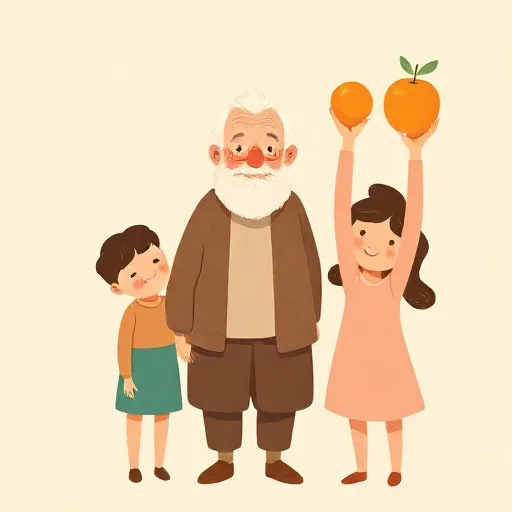
The toughest challenge for pluralists is about incommensurability — the idea that different kinds of value have no common measuring stick. If honesty and loyalty are two distinct things, how can we ever rationally decide that one matters more right now? Without a common unit, some fear, any choice would be random.
Pluralists don’t panic. Many point to practical wisdom, the kind of good judgment Aristotle described. A wise person doesn’t need a formula; she sees what the situation demands. As philosopher Thomas Nagel (born 1937) put it, judgment reveals itself over time in individual decisions — not in a list of universal rules. This isn’t magic; it’s a skill, like knowing when a joke lands or when a friend needs silence rather than advice.
Others try to build a super scale without a supervalue. James Griffin (1933–2019) argued that we can rank different goods by asking how much they contribute to the worth of a life, without claiming that “worth to a life” is itself a new underlying value. Ruth Chang (born 1963) suggests that a covering value — like “a good day” or “a just outcome” — can frame the comparison while keeping the original values distinct. The covering value doesn’t reduce them; it organizes how they weigh up in a particular context.
Some philosophers, like Isaiah Berlin (1909–1997) and Bernard Williams, simply accept that sometimes values really do clash without a single right answer. That doesn’t mean anything goes. It means that being a mature moral agent involves acknowledging tragic choices, not pretending every conflict has a neat resolution. Pluralism, they think, makes us more honest about the messiness of real life.
Your Two Feet in the Hallway

So was that moment in the hallway a collision of two different moral forces, or a wobbly calculation of one? The debate between monism and pluralism doesn’t hand you a simple rule for deciding. But it changes how you see your own hesitation.
If monism is right, there’s always a single answer — the option with more goodness — and your job is to get better at measuring it. If pluralism is right, some of your hardest choices aren’t failures of your brain; they’re encounters with genuinely different values that can’t be reduced to a single score. That doesn’t make the choice less important. It makes it more human.
Pluralism also helps explain why thoughtful people disagree. When someone makes a different trade-off than you would — loyalty over honesty, say — it might not be because they’re careless or wicked. They might just be responding to a real value that you’ve downplayed. Seeing that can make your arguments richer and your listening braver.
Next time you’re frozen between two “rights,” ask yourself: am I weighing amounts of the same thing, or honoring two things that each demand their own kind of respect? The question has no easy answer. But it’s a question philosophers have been sharpening for over a century — and it’s now yours, too.
Think about it
- Think of a time you couldn’t decide between two good options. Did it feel like you were comparing amounts of the same thing, or choosing between two different kinds of value? Why?
- If all good things really share one basic ingredient, should a machine be able to calculate the right choice for you? What would be gained, and what would be lost?
- Suppose your friend and you face the same dilemma and make opposite choices. How would a pluralist explain your disagreement differently than a monist? Whose explanation seems more respectful?