Can You Find Goodness Under a Microscope?
The Case of the Invisible Wrongness
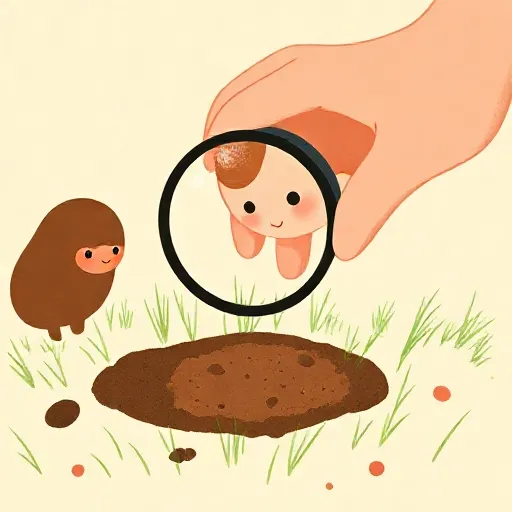
It’s a sunny afternoon at the park. You see a bigger kid shove a smaller one off the swings, laughing. Your stomach tightens. You know it’s wrong. But what is wrongness? You can’t see it under a magnifying glass. You can’t weigh it or put it in a test tube. Yet it feels real, almost like a hidden property of the situation.
Philosophers have spent more than a century arguing about exactly this. Some think moral properties — rightness, wrongness, goodness — belong to the ordinary natural world, just like being tall or being made of water. This view is called naturalism. Others think morality is something extra, a different kind of thing that isn’t made of atoms and can’t be detected by science. That’s non-naturalism. The fight isn’t over whether morality is real; it’s over what kind of reality it has.
Moore’s Question That Never Shuts Up

The non-naturalist argument that lit the fire came from G.E. Moore (1873–1958). Moore believed that goodness is a simple, irreducible property — you can’t break it down into smaller pieces or define it with other words. He accused anyone who tried of committing the naturalistic fallacy.
Here’s the idea. Suppose someone says, “Drinking beer is good because it’s pleasant.” They’ve moved from a natural fact (pleasantness) to an evaluation (goodness) without any extra step. Moore insisted that evaluative conclusions need at least one evaluative premise. You can’t just slide from “X is pleasant” to “X is good” unless you’re already assuming that whatever is pleasant is good. And that assumption is the very thing in dispute.
Moore offered a test: the Open Question Argument. Take any natural property you like — pleasantness, being popular, surviving through evolution. If someone says, “I know this is pleasant, but is it good?” the question feels genuinely open. A thoughtful person could ask it without sounding confused. But if “good” simply meant “pleasant,” the question would be as closed as “I know he’s a bachelor, but is he unmarried?” Because the open question always lingers, Moore concluded that goodness cannot be identical to any natural property. It’s a different kind of property altogether.
But Wait — Is It Even a Fallacy?
Moore’s arguments excited many readers, but later thinkers spotted cracks. First, the naturalistic fallacy is a misleading name. As W.K. Frankena (1908–1994) pointed out, it’s not really a logical mistake. Someone who says “Pleasant things are good” isn’t committing a blunder in reasoning; they’re just asserting a substantive claim that might be true or false. If Moore is right, the real problem is a mistaken belief about whether “good” means “pleasant,” not a howler in logic.
Second, the Open Question Argument may not prove as much as Moore hoped. Think about water. Before modern chemistry, a person could easily say, “I know this liquid is H₂O, but is it really water?” The question would feel open, because the speaker didn’t yet know that water just is H₂O. The meaning of “water” isn’t perfectly transparent to every competent speaker. Could the same be true of “good”? Some naturalists argue that moral terms work like natural-kind words — we discover their true nature through investigation, not by staring at our own concepts. So an open question in someone’s head doesn’t prove that a proposed definition is wrong.
Non-naturalists reply that morality seems different. Even when we agree on all the natural facts, we can still have deep moral disagreements. Two people can watch the same act of bullying, understand every physical detail, and still argue about whether it’s wrong. That makes it harder to accept that goodness is just a hidden natural property we haven’t yet discovered.
The Spookiness of Moral Magnets

John Mackie (1917–1981) worried about a different puzzle. If moral properties are non-natural, he argued, they would be spooky. Ordinary properties don’t reach out and grab your will. But morality seems to have a “magnetism” — recognizing that something is wrong usually gives you at least a little push not to do it. Mackie thought that non-natural moral properties would need a built-in power to motivate anyone who merely perceived them, like a rock that, just by being seen, makes you want to help old ladies. That sounds like magic, and Mackie concluded we shouldn’t believe in such things.
Non-naturalists have several ways to answer. One is simply to deny that moral judgments always motivate. Plenty of people clearly see that an action is cruel and still don’t care. If you can honestly say, “I know it’s wrong, but I just don’t feel like avoiding it,” then moral perception doesn’t come with a guaranteed motivational zap. The magnet isn’t as strong as Mackie imagined.
Another reply leans on rationality. Someone who judges that an action is right but remains entirely unmoved might be guilty of a kind of irrationality, not a failure of magic. Being practically rational, some argue, just means being motivated by what you believe to be right. That connection doesn’t require a weird supernatural force — it’s built into the concept of a rational person. But this move raises new questions: if “rational” is itself a normative notion, using it to explain moral motivation might look circular. The debate over motivation remains very much alive.
The Puzzle of the Twin Worlds
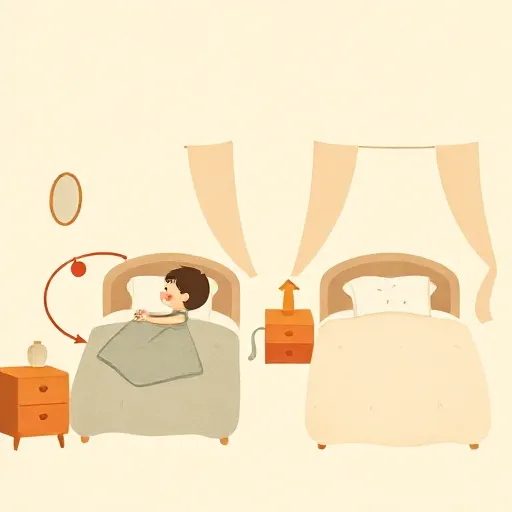
Here’s an idea almost everyone finds hard to resist: two situations that are exactly alike in every natural respect — the same atoms, the same brains, the same feelings — cannot differ in their moral properties. If Hitler’s actions were physically and psychologically identical in another possible world, they would still be wrong. Moral facts seem to depend completely on natural facts. Philosophers call this relationship supervenience: the moral supervenes on the natural — no moral difference without a natural difference.
For naturalists, explaining supervenience is easy. If wrongness just is a certain natural property (or set of them), then of course it can’t vary independently. Every property supervenes on itself. But non-naturalists face a tougher job. If moral properties are distinct from natural ones, why can’t they float differently? Why must they always match?
Some non-naturalists try to bridge the gap. Russ Shafer-Landau (born 1963) has argued that while moral properties are distinct types, every individual instance of a moral property is fully constituted by a cluster of natural properties — much as a statue is made of clay without being identical to the clay. This kind of constitution, he suggests, guarantees that the moral facts can’t detach and wander off. Critics, however, point out that constitution alone doesn’t explain why the dependence is necessary — why it couldn’t have been otherwise. The puzzle remains one of the stiffest challenges to non-naturalism.
What’s at Stake When You Call Something Wrong
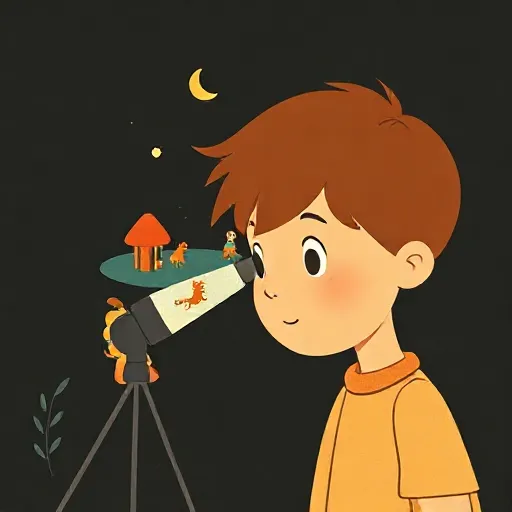
Why should a 12-year-old care about any of this? The debate changes how we think about moral arguments in everyday life. If morality is natural, then science and careful observation might gradually settle moral questions — perhaps we can measure well-being, spot harm, and build a picture of the good life from the ground up. If morality is non-natural, then no amount of microscope-watching will ever reveal wrongness directly. Instead, we might need to rely on moral intuition, a kind of perception that isn’t made of atoms but still tells us something real.
Back to that moment at the park. The gut-punch of seeing a bully might be your own biology reacting, a natural signal shaped by evolution. Or it might be a window into a world of values that doesn’t fit under a microscope. Philosophers still argue both sides, and neither side has knocked the other out. The next time you feel a flash of right or wrong, you’ll be holding a question that has puzzled the sharpest minds for generations — and no one has yet put it fully to rest.
Think about it
- If you built a robot that acted exactly like a kind human, could it ever be genuinely good, or would it just be performing actions without real goodness? Why?
- Imagine a world where everyone agrees that stealing is fine and no one ever gets hurt from it. Would stealing still be wrong in that world?
- If scientists someday found a “goodness molecule” in the brain that fires whenever we judge something right, would that settle what goodness really is, or would the deeper question stay open?