Why Would Anyone Want to Look at a Massacre? The Abbé Du Bos’s Answer
A Painting That Makes You Feel Awful — and You Can’t Look Away
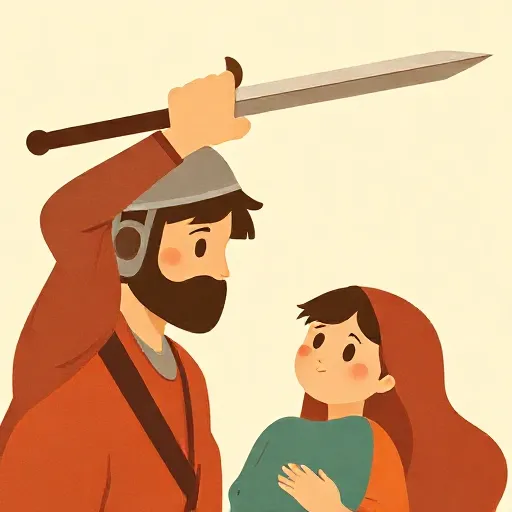
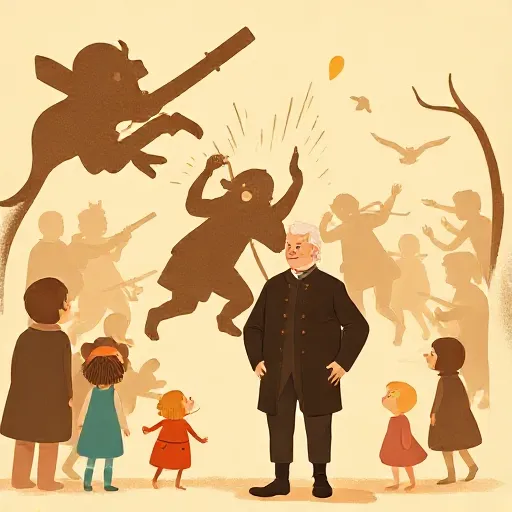
It is 1719 in Paris. A quiet man in an abbé’s collar, who cares far more about paintings than prayers, stops before a huge canvas by Charles Le Brun. The painting is titled Massacre of the Innocents, and it shows soldiers tearing infants from their mothers’ arms. The abbé’s face tightens. He feels a knot in his stomach. Yet he doesn’t blink or walk away. Instead, he leans closer, studying the very thing that upsets him. His name is Jean-Baptiste Du Bos (1670–1742), and that knot in the stomach is exactly what interests him.
Du Bos was a diplomat, a friend of the philosopher John Locke (1632–1704), and a man who loved art so much that he wanted to crack its biggest riddle. Why do paintings, poems, and plays make us feel so powerfully — even when what they show is painful? That year, he published a book with a long title: Critical Reflections on Poetry and Painting. It didn’t just describe what art is. It tried to explain why art gets under our skin. The book’s opening question haunts anyone who has ever wept at a movie or felt a lump in the throat while staring at a sad photograph: why do we seek out imitations that make us feel terrible?
Fake Feelings, Real Relief: Du Bos’s Puzzle-Solving Idea
Du Bos began with a deceptively simple thought: every art is an imitation. A painting imitates a battle, a poem imitates a hero’s despair, a piece of music imitates the rhythm of a racing heart. When you experience that imitation, your mind conjures up the same kind of sentiments — the word Du Bos used for feelings or emotions — that the real event would spark. But here is the key: the sentiments you get from art are fainter copies. They are like the original emotion, only quieter and safer. You feel a shadow of fear, a ghost of grief.
That alone, however, does not solve the puzzle. If the imitation gives you a misery-copy, however faint, why not avoid it? Du Bos saw that people aren’t just willing to look at a massacre — they flock to it. Philosophers later called this riddle the paradox of tragedy: we seem to enjoy art that causes us distress. Du Bos had a two-layered answer. First, the copied emotions really are less intense and shorter-lived than the real thing — so the cost is low. Second, and more surprising, human beings suffer from a deep, dull ache that he called ennui. This is not ordinary boredom. It’s a heavy weariness of simply being alive with nothing to occupy the heart. Any genuine feeling, even a sad one, is better than that hollow emptiness. The Scottish philosopher David Hume later agreed, noting that Du Bos had put his finger on something true: a painful passion is still preferable to “insipid languor.”
Later in his book, Du Bos offered a different twist influenced by ancient Greek ideas about purging emotions. Watching a character like Medea consumed by vengeance, he suggested, can horrify us so much that we feel a new resolve to avoid that same passion in our own lives. The two explanations don’t perfectly fit together, but both rest on the same gut-level insight: feeling something through art is nearly always better than feeling nothing.
The Taster’s Court: Why Your Gut Decides What Art Is Good
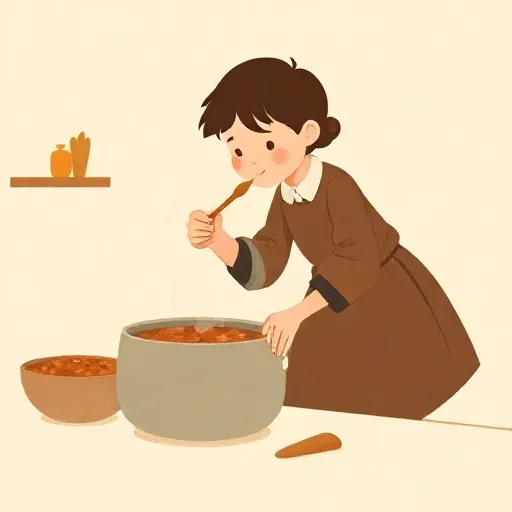
In Du Bos’s Paris, plenty of critics wanted to turn art evaluation into a branch of mathematics. They believed that reason, operating by clear rules, should pronounce a poem or painting good or bad — as if you could measure beauty with a geometry set. Du Bos found this absurd. He called these thinkers “geometrical critics” and refused to let them turn galleries into courtrooms run by logic. Instead, he insisted that the only competent judge of an artwork is sentiment — the feeling that rises in you when you stand before it. To explain, he reached for the kitchen: you would never decide whether a stew tastes good by pulling out a ruler and analyzing the chemical proportions of salt and herbs. You taste it. Art works the same way. We have, Du Bos thought, an inner gauge for the value of an imitation — a kind of “sixth sense” that responds directly, without a chain of arguments.
That bold move opened a new problem. If the value of an artwork depends entirely on the feeling it stirs in a particular person, then nothing stops one person’s taste from being just as good as anyone else’s. Du Bos was a subjectivist: beauty, in his view, was not a property baked into the painting but a relationship between the work and the viewer. He even admitted that trying to change someone’s taste made as little sense as persuading a person whose palate prefers champagne to like Spanish wine instead.
Yet Du Bos didn’t think this meant all taste is equal. He believed that most people’s sentiments run in the same channels, and that the general public — precisely because its taste isn’t twisted by scholarly pretension — makes the most reliable judge. He also proposed the test of time. When a work of art continues to stir pleasure in audiences century after century, that stubborn survival becomes the strongest evidence that it is genuinely excellent. The ancient Greek and Roman poets, he noted, kept winning hearts long after their own world had crumbled. That settled the matter more firmly than any geometric proof could.
Sunlight, Stew, and Genius: The Weird Causes of Brilliance
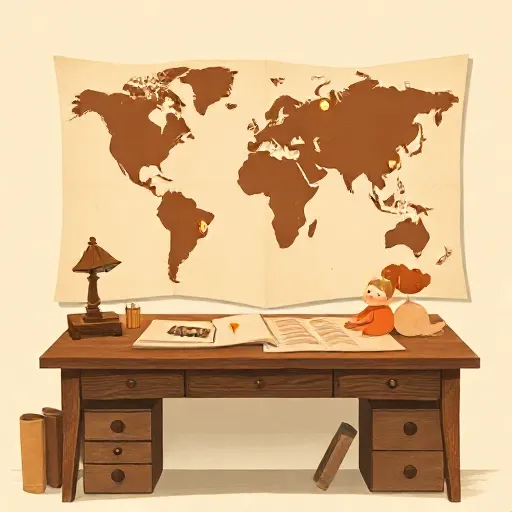
Du Bos didn’t stop with individual works of art. He wanted to know why whole eras suddenly explode with genius while others stay quiet. Why did golden ages bloom in ancient Athens, Renaissance Italy, and the France of Louis XIV? The easy answer — that rich patrons make great art — didn’t satisfy him. He listed periods where money flowed freely and still no genius appeared. Following his empiricist training, he looked for physical causes he could observe and compare.
His conclusion struck readers as both imaginative and a little bit off. A great artist, he argued, needs a well-formed brain, but that brain is shaped by environment. Things like climate, air quality, soil, and diet matter. England, for instance, was supposedly too cold to produce first-rank painters. The argument was not a stray thought; Du Bos treated it as a scientific hypothesis, tested by looking at correlations across geography and history. He even applied this empirical habit — the conviction that knowledge comes from experience, not from sitting in an armchair deducing truths — to other sciences, praising the discovery of blood circulation not because it followed elegant reasoning but because it was demonstrated by direct observation.
Most of Du Bos’s climate theories have been abandoned. Yet his ambition is worth noticing. Three hundred years before modern psychologists began studying the conditions that spark creativity, this French diplomat was trying to build a natural science of genius. He approached the arts with the same spirit a biologist brings to a strange species.
Why It Still Matters: Your Sad Playlist and the Boredom Monster
You don’t need an 18th-century painting gallery to meet Du Bos’s question. It finds you on the bus, when you deliberately put on a song that tightens your chest. It’s there when you queue up a movie you know will make you cry, or when you play a video game with a wrenching storyline. Why do we open our hearts to make-believe sorrow? Du Bos’s hunch — that even an artificial ache is better than the gray weight of doing nothing — still resonates. His critics would push back: maybe we don’t enjoy sadness itself, but we value understanding a character’s world, or the beauty of the storytelling. The debate hasn’t ended.
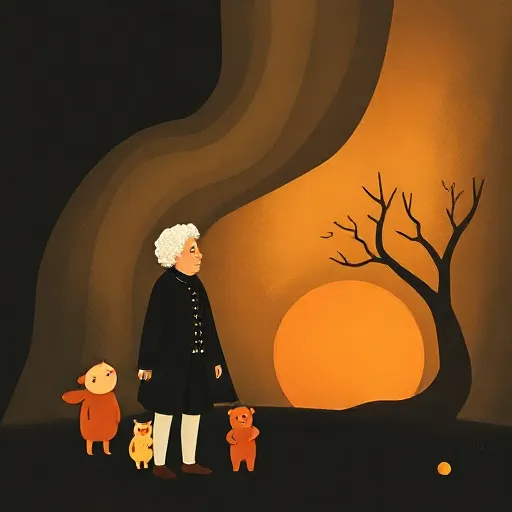
Du Bos also left us a permanent challenge about judgment. If a piece of art moves you deeply, is it good? What if it moves everyone for centuries? His instinct that our sentiments are the final court — not a list of rational rules — still shapes how we talk about music, films, and books. We argue, but we rarely “prove” that one novel outranks another. We trust the taste test. So the next time you reach for a weepy track on purpose, remember that a man in a powdered wig, staring at a painted massacre in 1719, felt the same pull and tried to put it into words. The question belongs as much to you as it did to him.
Think about it
- If a friend says a movie is boring because nothing happy happens, how could you use Du Bos’s idea to argue that the movie can still be great?
- Some people claim we should judge art with our brains, not our hearts. Do you think you could prove to someone that a painting is beautiful the way you can prove a math problem? Why or why not?
- Imagine a future where scientists can predict exactly which climate, diet, and life conditions produce great artists. Would that change how special a favourite musician’s work feels to you? Why?