Can a Painting Be Great Art If It Wants to Arouse You?
A Strange Question at the Museum

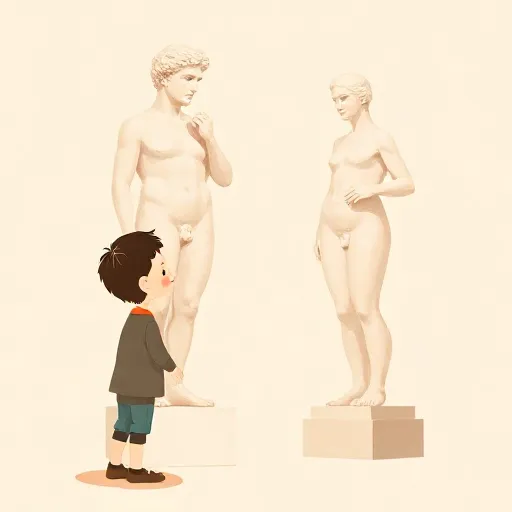
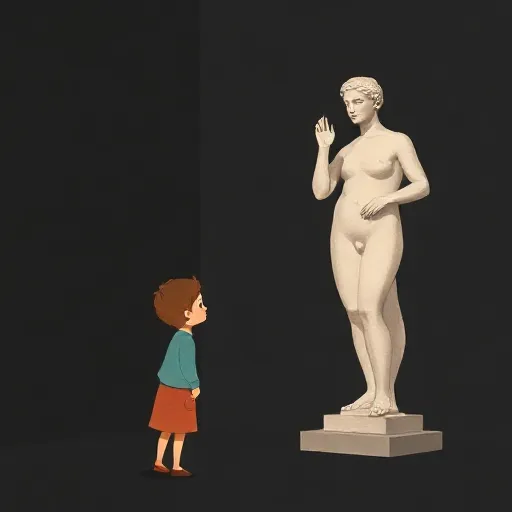
Imagine you’re at a museum and you stop in front of a sculpture of a person with no clothes on. Maybe you think, This is art — it’s beautiful, it’s old, it’s educional. But maybe you also feel something else: a tingling, a fluttering, a strange shiver that’s not just about “beauty.” Is that still an art experience? Or is it something that doesn’t belong in a gallery at all?
For most of art history, works that aim to cause sexual feelings — what we call erotic art — have been around. Think of Greek vases showing lovers, Indian temple carvings, or famous nudes by Titian and Goya. Philosophers define erotic art as art that is made with the intention of sexually stimulating its audience and that succeeds, at least to some degree, in doing so. It doesn’t have to be explicit. A photograph of a tilted eye that hints at something else can be deeply erotic without showing any body parts at all.
But for a long time, many thinkers insisted that erotic art couldn’t really be art — or at least, not good art. Their reasoning led to a centuries-long battle about what art is for, what beauty does to us, and whether our bodies can ever be a proper part of appreciating a painting or a poem. That fight matters not just for museums. It shapes how we think about the images we see every day — in music videos, ads, films, and on our phones — and where we draw the line between what inspires us and what harms us.
The Wall Between Beauty and Desire
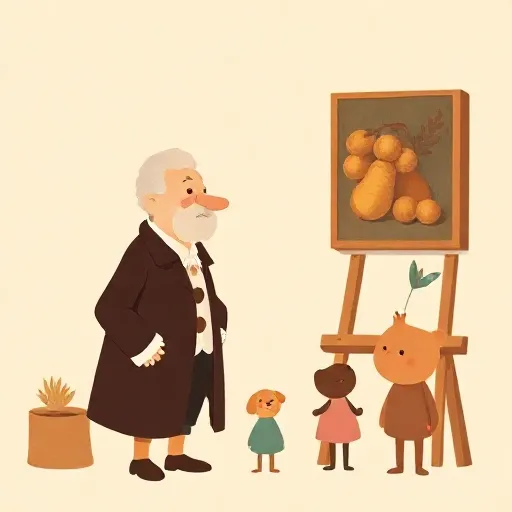
The strongest early critics of erotic art came out of modern aesthetics, the period from roughly 1700 to 1900 when philosophers started to ask what makes an experience of beauty special. Anthony Ashley Cooper, the Earl of Shaftesbury (1671–1713), put the idea bluntly: the pleasure we get from true beauty is a calm, rational delight, far removed from the crude pleasures we receive through our senses. A piece of fruit might look pretty, he said, but a hungry animal only cares about the tasty flesh beneath the skin. Humans can appreciate the fruit’s form without drooling — that’s the aesthetic attitude. So if a painting makes you feel bodily desire, you aren’t really experiencing it as art.
Immanuel Kant (1724–1804) built a huge wall between what he called a pure aesthetic judgment and a judgment based on mere bodily interest. When we judge something beautiful, Kant argued, we feel disinterested pleasure — a pleasure that doesn’t depend on wanting to own, eat, or touch the thing. That’s why aesthetic judgments can seem to ask for everyone’s agreement: we think others ought to find the same sunset beautiful, no matter their personal taste. But sexual desire is private and depends on your particular preferences. So a work that is designed to turn you on cannot, Kant thought, be the object of a shared aesthetic experience at all. It is merely agreeable, like a favorite flavor of ice cream, not beautiful.
Arthur Schopenhauer (1788–1860) took the idea even further. He claimed that art’s whole job is to help us escape our own wanting, scheming, hungry selves and slip into a state of will-less contemplation. Anything that deliberately stirs up physical appetite — what he called the stimulating — ruins that. Schopenhauer explicitly pointed to paintings of nude figures whose poses are “calculated to excite lustful feeling.” Interestingly, he didn’t object to nudes as such, only to the kind that aim at arousal. He also railed against Dutch still lifes that paint oysters, wine, and bread with such tempting realism that they make you salivate. Both kinds of image yank you out of aesthetic contemplation and turn you back into a needy animal. For Schopenhauer, that disqualified them from being serious art.
These thinkers effectively built a wall between the aesthetic and the erotic. Real art had to be about the mind, not the body. On one side were cool, calm experiences of beauty; on the other, hot, interested pleasures of the senses. And if that wall held, erotic art didn’t have much of a home.
Nietzsche Knocks Down the Wall

Not everyone accepted this tidy separation. Friedrich Nietzsche (1844–1900) found the whole idea of “immaculate perception” — a gaze pure of any desire — absurd. In a famous passage, he laughed at the aestheticians who praised Kant for showing how we can view nude female statues “disinterestedly.” Artists, Nietzsche pointed out, knew better. The mythical sculptor Pygmalion fell in love with his own statue, and that wasn’t a failure of aesthetic feeling; it showed that beauty and desire are deeply tangled. Nietzsche insisted that all art “increases strength, inflames desire,” and that the attraction we feel toward a beautiful person or a beautiful painting is not a different kind of pleasure but part of the same current.
For Nietzsche, far from being a wall, the connection between the aesthetic and the sexual is so strong that our drive for art is “an indirect demand for the ecstasies of sexuality.” Both experiences involve rapture, a heightened vitality, and a sense of overflowing life. So there’s no puzzle about how erotic art could exist: it’s simply art that does openly what all art does to some extent.
Many contemporary philosophers have followed Nietzsche in welcoming desire back into the gallery. Alexander Nehamas argues that the real response to beauty is eros — a longing to possess it, to know it more fully. He points to Édouard Manet’s Olympia (1863), a painting of a naked prostitute staring directly at the viewer. It wasn’t a formal exercise in shapes and colors; it was meant to jolt male viewers into realizing they weren’t just looking at a safe, idealized goddess but at a real woman of their own time. The painting’s erotic charge is part of its artistic power. Richard Shusterman goes further, proposing that we treat sexual experience itself as an aesthetic experience — both are deeply felt, structured, and valued for their own sake. In this view, erotic art isn’t an embarrassing relative; it’s a window into what makes art matter.
Thanks to this pushback, most aestheticians today accept that erotic art can be genuine art. But the fight didn’t end. It simply shifted to a new boundary line: the one separating erotic art from pornography.
The New Fight: Erotic Art vs. Pornography

Even if erotic art deserves a place in the museum, many philosophers argue that pornography — images or films intended purely for sexual arousal — does not. Roger Scruton (1944–2020) claimed that erotic art, like Titian’s Venus of Urbino, focuses on the face and personality, treating a person as a subject, while pornography turns people into objects and “disenchants” them, destroying the source of their beauty. Scruton insisted that when an image arouses you, it becomes an “aesthetic defect,” a fall out of the proper artistic attitude.
Jerrold Levinson offered a sharper argument. He said that erotic art asks you to attend to the way the work is made — its style, its form, its brushstrokes — because the goal is aesthetic delight. Pornography, on the other hand, asks you to look through the image, ignoring the artfulness, to get to the sexual content as directly as possible. In technical terms, erotic art treats the representation as at least partly opaque (you notice the surface), while pornography treats it as wholly transparent (you just want to see what’s shown). These two kinds of attention, Levinson argued, are incompatible. You can’t fully enjoy a work as erotic art and as pornography at the same moment.
But many philosophers push back. They point out that some material we call “pornography” is layered, witty, and even philosophical. In 18th-century France, pornographic novels carried the word “philosophy” in their titles and were used to criticize political and religious authorities. Works like Thérèse Philosophe (1748) used explicit scenes to communicate ideas about materialism and human machinery. Today, feminist pornographers create films that center on mutual pleasure, consent, and emotional connection — undercutting the idea that pornography must be simple or dehumanizing. And then there’s work like the Japanese hidden shunga: postcards that looked like peaceful landscapes until held up to light, when they revealed lovers. Such images seem to be both artful and arousing. So if a single work can be clever, visually beautiful, and sexually stimulating, the hard line between erotic art and pornography becomes blurry.
What Feminists Saw: Bodies and Power
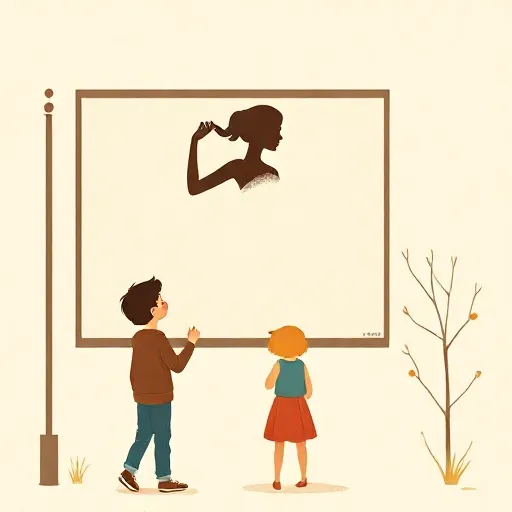
Feminist thinkers added a moral dimension to the debate. Gloria Steinem described what she called “a clear and present difference” between erotica and pornography. Erotic images, she thought, show warmth, touch, and equal partners; pornography shows force, inequality, and conquest. Many feminists have argued that mainstream pornography is harmful because it objectifies (treats a person as a thing to be used) and can shape real-life attitudes in damaging ways.
But this doesn’t let erotic art off the hook. Philosophers like Anne Eaton have shown that some celebrated erotic paintings — including Titian’s Rape of Europa — also portray unequal power and invite viewers to see women primarily as sex objects. The concept of the male gaze describes how many works in the Western tradition assume a male viewer who is meant to take pleasure in looking at a woman’s body as an object. If the moral problem is objectification or eroticizing inequality, then plenty of high-art nudes share that problem with pornography.
At the same time, a wave of feminist pornography has tried to create sexually explicit material that is respectful, diverse, and even consciousness-raising — confusing the neat moral division. The lesson many philosophers now draw is that we can’t simply sort images into a good “erotic art” pile and a bad “pornography” pile. Both categories contain works that celebrate genuine connection and works that treat people poorly. What matters is the specific attitudes and effects of each piece, not just which label we stick on it.
Why This Old Question Feels So New

You might think all these dusty fights about old paintings don’t have much to do with you. But they do. Every day you swim through a sea of images that are designed to grab your attention and stir your feelings — TikTok dances, music videos, billboards, video game characters, even the way your phone organizes photos. Some of those images are meant to be artistic; others are meant only to sell you something or to get a reaction. Many deliberately play with desire and attraction.
The question that troubled Kant, delighted Nietzsche, and still divides philosophers today is really this: can something that arouses strong bodily feelings also be worthy of our deepest thought and admiration? If a song makes you want to move or a film makes your heart race in a romantic way, does that heighten or cheapen your experience of it? And when does an image cross from exciting into harmful — treating someone as less than a full person?
There’s no single right answer. That’s what makes the topic so alive. But by paying attention to how images work on us, and by asking what attitudes they encourage, we stop being passive sponges and start becoming thoughtful viewers. That shift — from just reacting to really seeing — is at the heart of both art and philosophy.
Think about it
- If a song makes you feel romantic or want to dance, does that make it less artistic? Why or why not?
- Suppose a friend shows you a drawing that you find offensive because of how it portrays people. If your friend says, “It’s just art,” how do you decide whether it’s okay?
- Do you think museums should show works that some visitors find sexually shocking, or should they avoid them? What would you choose to put on display?