Is That Art? The Science of Taste and Controversy
The Red Dot on a White Wall
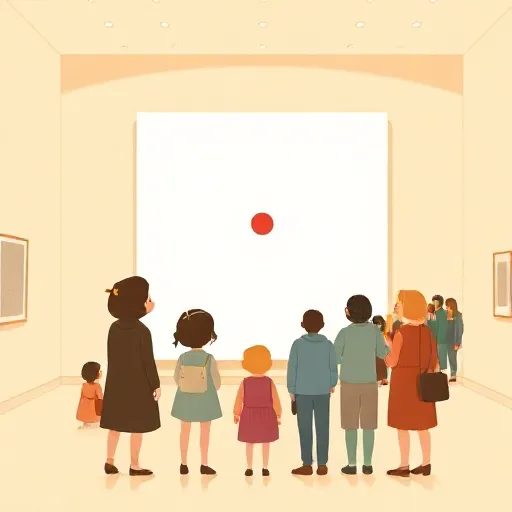
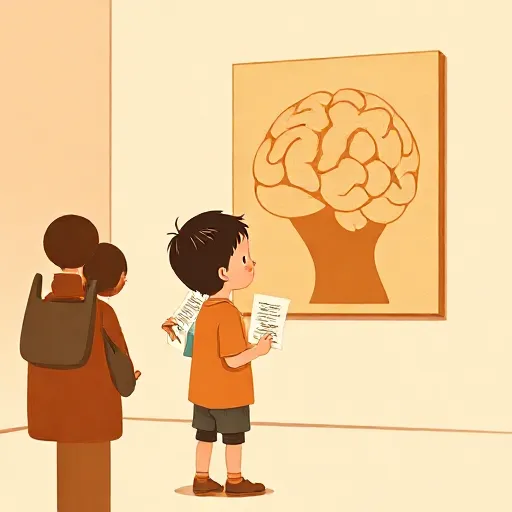
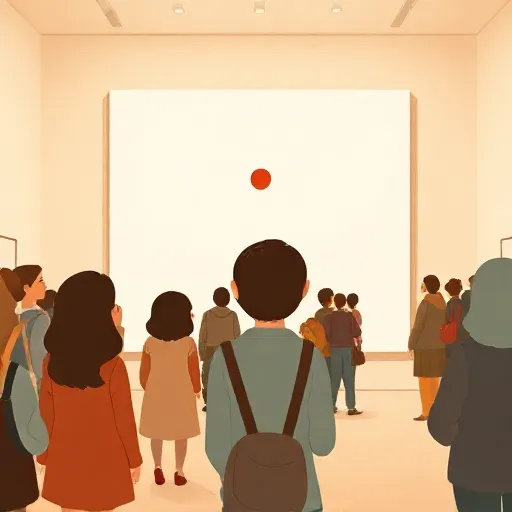
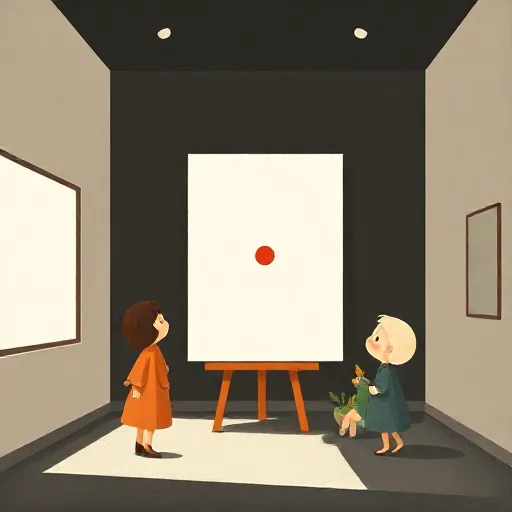
You’re at a modern art museum. In front of you hangs a huge white canvas. Right in the middle is a single, perfect red dot. Is this art? Maybe you think, “I could do that!” or “What’s the point?” Or maybe you feel strangely calm. These reactions are exactly what philosophers and scientists have been studying for over a century. They want to know: what makes something art? And why do we disagree so much about beauty?
The Science of Art Begins
In the late 1800s, a German professor named Gustav Fechner (1801–1887) decided to apply science to art. He showed people simple things — rectangles of different proportions, patches of color, arrangements of lines — and asked them what they preferred. He called this “bottom-up aesthetics”: instead of asking philosophers to decide what makes art beautiful, you start by looking at what regular people actually like. This was one of the earliest attempts at empirical aesthetics, the science of how we respond to art and beauty.
In the mid‑20th century, an American art historian named Thomas Munro (1897–1974) pushed for philosophy and science to work together. He thought questions like “Why do some artworks please people across centuries?” were partly scientific. But not everyone agreed. The philosopher George Dickie (1926–2020) argued that philosophy and science were totally separate. Philosophy, he said, should only examine the concepts we use — like “art” and “beauty” — not run experiments. For decades, many philosophers agreed.
Can We Define Art? Tests and More Tests
Philosophers have long tried to define art. Some say art is anything created to give people an aesthetic experience — to make them feel something or appreciate its beauty. Others say art is whatever the “art world” (museums, critics, artists) accepts as art. A third group says art must connect to earlier artworks. In 2011, philosopher Richard Kamber put these definitions to the test. He showed people descriptions and images of objects that challenge definitions — things like ordinary tools or simple patterns — and asked, “Is this art?” He found that no single definition perfectly matched what people thought. The aesthetic definition (art is made to provide an aesthetic experience) came closest, but still didn’t fit every case.
Other researchers discovered something odd: even if people don’t require art to be beautiful, they are more likely to label something art if they like it. In one experiment, participants looked at abstract paintings and ready‑made sculptures; the more they liked an image, the more likely they were to call it art. So our feelings influence our judgments about what counts as art.
Some philosophers, like Elzė Mikalonytė and Markus Kneer, asked whether everyday people think art can be defined by necessary conditions — like “must be created on purpose.” Surprisingly, many participants said yes, an object can be art even if it was made accidentally, such as a beautiful pattern created by a spilled paint can. Their studies also included AI‑generated paintings, and people accepted them as art, though they hesitated to call the AI an “artist.” Still, when pressed for reasons, people often emphasized the creator’s intentions. This messy picture suggests our concept of art is a cluster concept — a loose bundle of features, none of which is strictly necessary.
Another clever approach comes from the philosopher Shen‑yi Liao and his colleagues. They noticed that people happily say, “That is not good, but it is true art,” but it sounds weird to say, “That masterpiece is not good.” They argue that “art” is a dual character concept — it has a descriptive side (what something actually is) and a hidden value that sets a standard (what it should be). So when we call a scribble “true art,” we aren’t just describing it; we are judging it against an ideal.
Is Beauty in the Eye of the Beholder?
One of the biggest questions in aesthetics is whether beauty is objective (like a fact) or subjective (just personal taste). David Hume (1711–1776) suggested that true beauty stands the test of time: great artworks are appreciated across cultures and centuries because they have real good‑making features. Immanuel Kant (1724–1804) argued that when we say “This rose is beautiful,” we expect everyone to agree — so it’s not merely a private preference.
To test what ordinary people really think, the philosopher Florian Cova presented disagreements about beauty. For instance, one person says a sunset is beautiful, another says it isn’t. He then asked, “Is one person correct, both, or neither?” Across many countries, most chose “neither is correct.” This suggests that deep down, people treat aesthetic judgments as opinions, not facts. Yet when Cova later asked whether one person said something true, many thought only one did — though not nearly as many as for factual disagreements (like whether a metal is steel). So the everyday view is mixed: we feel taste is personal, but we still talk as if some judgments are better than others.
Some critics, like Filippo Contesi, point out that our explicit answers might not capture what we really believe. We might say “beauty is in the eye of the beholder” while still arguing as if there were real standards. There’s also evidence that repeated exposure shapes taste. James Cutting found that simply seeing a painting more often makes you like it more. This could explain why famous works become famous: not because they’re inherently better, but because they’re everywhere. Other researchers showed that repeated exposure to “bad” art (like sentimental kitsch) makes people like it less, while exposure to “good” art makes them like it more. So time might filter out works that lack real aesthetic value.
Why Sad Songs Feel Good
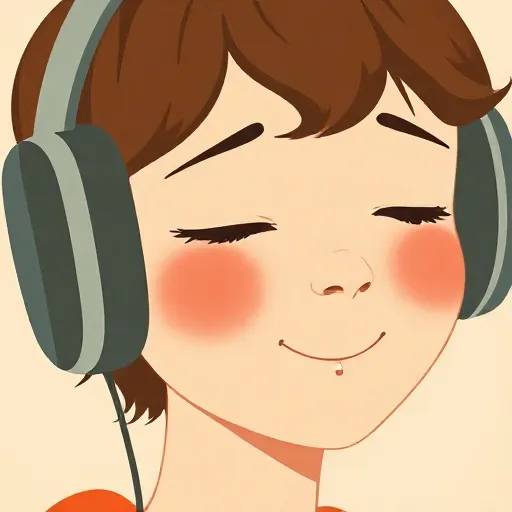
Another puzzle: why do we enjoy art that makes us feel negative emotions? You might avoid sadness in life, but you might seek out a tearjerker movie or a melancholy song. Philosophers call this the paradox of negative emotion. In a recent study, Mario Attie‑Picker and colleagues asked people about music. They found that emotional expressiveness — how much a song conveys an emotion — matters more to people than technical skill. And the emotions that music expresses, like sadness or longing, are the same ones that help us feel connected to others in conversation. So listening to sad music might satisfy a deep need: to feel understood and less alone.
Cross‑cultural studies add another layer. Constant Bonard’s work in Switzerland and India showed that recognizing emotion in music depends on knowing its “grammar” — the set of rules in a musical culture. People are better at detecting sadness or joy in music from their own culture. This hints that the emotional power of art is both universal and deeply shaped by the particular world we grow up in.
Why This Matters: The Art of Arguing About Art
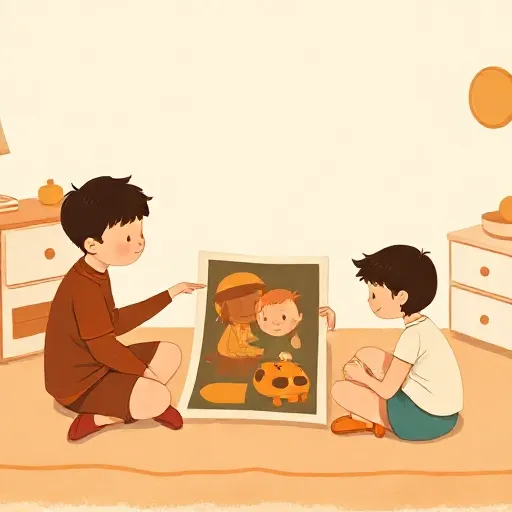
You and your friend will probably never stop arguing about whether that red dot is art. But experimental philosophy of art shows that these arguments aren’t just noise. They reveal how our minds work. When you say “That’s not art,” you might be hinting that it lacks intention, or that it doesn’t give you an aesthetic experience. When you claim “Everyone should see the beauty in this song,” you’re acting like a mini‑philosopher, assuming there’s a standard beyond your own taste.
By bringing together philosophy and science, researchers are uncovering the hidden rules our brains use when we judge art and beauty. So next time you’re in a museum (or scrolling through a playlist), pay attention to your own reactions. Are you calling something art because of how it looks, or because someone told you it is? Are you moved by a sad song because of the melody or the memories it stirs? These are questions that make life richer — and they’re exactly the ones philosophers and scientists are still trying to answer.
Think about it
- If a robot splashes paint randomly and produces a canvas that looks just like a famous abstract painting, is the robot’s canvas art? Why or why not?
- Think of a song that makes you cry. Why do you choose to listen to it again? What would be lost if music could only express happiness?
- Can you imagine a world where everyone agreed on what’s beautiful? Would that world be better or worse than our world of taste disagreements?