Was That Movie Just Entertainment, or Real Art?
The Train That Made People Scream — But Was It Art?
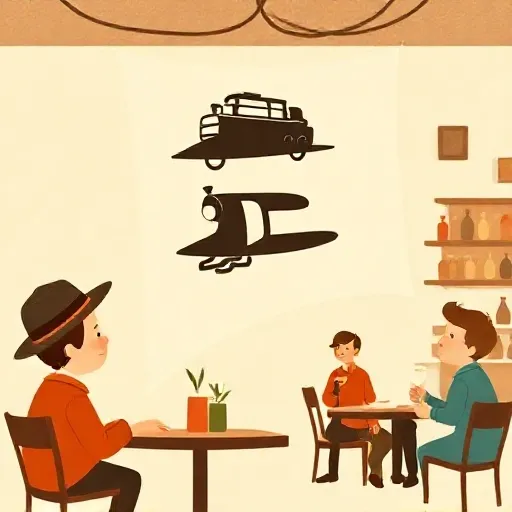
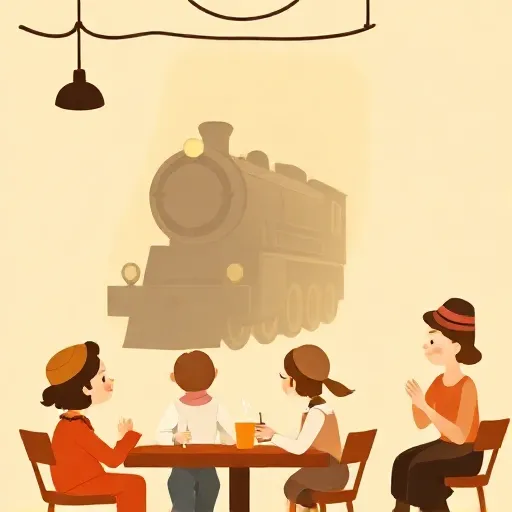
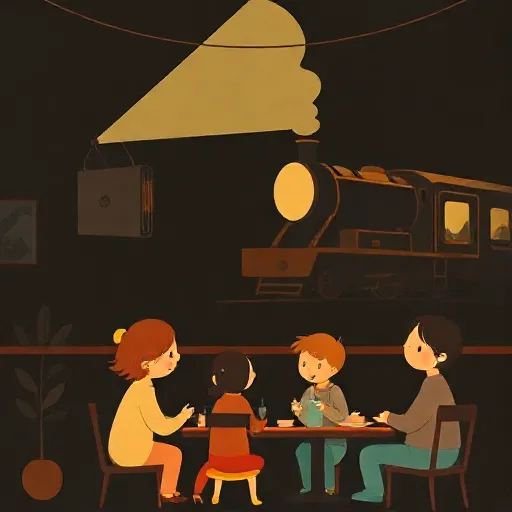
In 1895, a crowd in a Paris café watched light flicker on a wall. When a black-and-white train rushed toward them, people screamed and ducked. The moving picture was thrilling, but was it something more? Could a film ever sit beside painting, music, or theater as genuine art?
At first, the answer was a loud no. Movies were shown in side-shows and peep shows — not exactly high culture. They seemed like cheap recordings of stage plays or everyday life, lacking the personal touch of an artist. So philosophers and theorists set out to prove that film was a distinct art form.
One of the first was the German psychologist Hugo Münsterberg (1863–1916). He argued that film told stories in a brand-new way, using tricks no play could copy: close-ups, flashbacks, and quick cuts. Münsterberg thought these devices were like mental processes made visible. A close-up is the visual version of paying attention. Because we all know what it feels like to focus on something, we instantly understand these shots. Film, he said, had its own language.
When sound arrived in the late 1920s, not everyone cheered. The art psychologist Rudolf Arnheim (1904–2007) insisted that silent cinema was the real art. It showed moving bodies in abstract patterns, free from theatrical dialogue. Adding synchronized speech, he complained, mashed two different art forms into a messy compromise — a step backward, not forward.
The French critic André Bazin (1918–1958) thought the whole sound-vs-silence debate missed the point. He focused on how the camera, descended from the photograph, could capture reality with brutal honesty. Instead of flashy editing, he championed long takes and deep focus — styles that let the world just unfold. In his view, the greatest films were those that showed us the world frozen in time. Film became art not by copying theater, but by revealing reality like no other medium could.
These early tussles set the stage. Even though later philosophers, such as Noël Carroll, argued that the classic theorists sometimes confused a personal style with the very nature of film, the question was now wide open: what makes film special?
A Magic Window or a Lie?
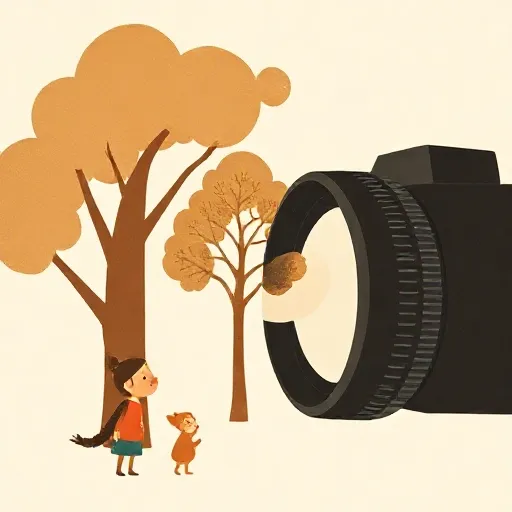
Bazin’s love of realism took a startling turn in 1984. The philosopher Kendall Walton (born 1939) made a bold claim: when you look at a photograph, you literally see the object — not just a picture of it. He called this the transparency thesis. A camera is like a mechanical telescope. Because light from a real object stamps itself onto the film, viewing the image lets you peer through time and see the thing itself. Movies, made of moving photographs, inherit this transparency: you watch the actual actors, not a copy.
Not everyone bought the ticket. The philosopher Gregory Currie objected that our brains do recognize photographed faces using the same systems we use for real faces, but that doesn’t mean we see through the photo. It only shows that photographs trigger our recognitional capacities — they fool our brains into treating them as the real thing. So film is powerfully realistic, but not truly transparent.
Digital filmmaking makes the puzzle even stickier. In a computer-generated movie, no dragon ever stood before a lens. If the image is built pixel by pixel, what could it possibly be transparent to? Yet digital movies can still make our hearts pound just as hard. The realism debate is far from over, but it pushes us to ask: what kind of “real” are we chasing when the lights go down?
Why a Fake Monster Gives You Real Goosebumps
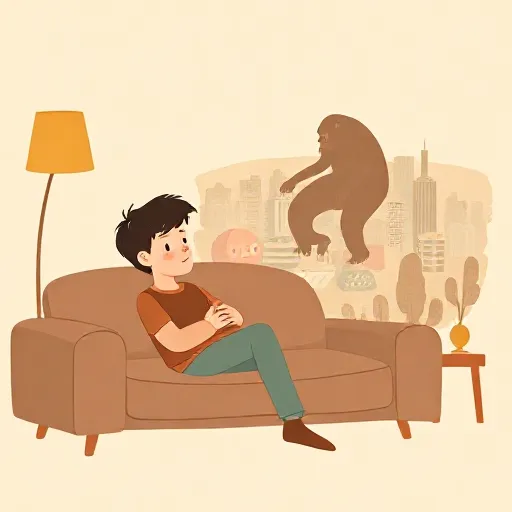
You know the giant ape on screen is pure fiction. Yet your palms sweat, your pulse races. Why do made-up dangers hit us so hard?
An early idea was identification: we see ourselves in the heroic character and feel what they feel. Feminist thinkers used this to explain how movies could make sexist stories enjoyable — male viewers identified with idealized heroes and took pleasure in seeing female characters objectified. But philosopher Murray Smith and others argued that identification is too crude. You don’t identify with the villain, yet you still feel tense when they sneak up. And if identification were the whole story, you’d never care about side characters. A better explanation was needed.
Philosophers proposed two main alternatives. Simulation theory borrows a computer analogy: when you imagine a scene, your everyday emotional system runs off-line. You feel anger or fear, but the urge to act is switched off. So you can shudder at the monster and even enjoy the shiver, because your brain knows the fright is bottled safely inside a simulation. This explains why horror fans love what would be terrifying in real life.
Thought theory takes a simpler path. It says the mere thought of something can stir real emotion. If you hear that a friend was treated unfairly, just thinking about it can make you angry. In a movie, the nasty villain tying someone to train tracks gives you the thought of an innocent person in danger — and that thought alone triggers genuine fear. No need for off-line emotions.
Both theories face hard questions. What does “off-line” really mean? And why would a thought, without a full belief, shake us so deeply? The puzzle remains one of film’s most gripping mysteries.
Can a Movie Change Your Mind About Big Ideas?
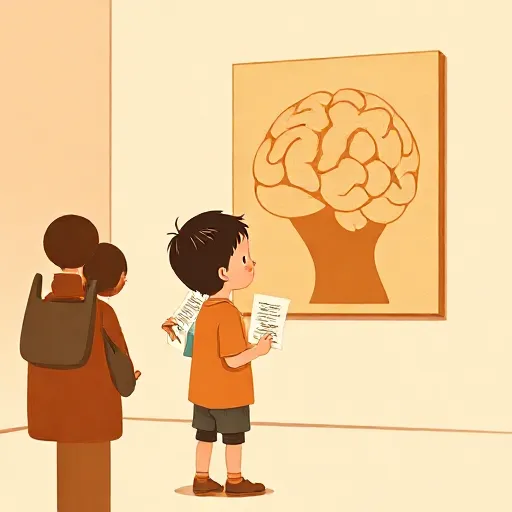
Philosophers and art have had a rocky relationship. Plato wanted poets banished from his ideal city, worried that stories stirred feelings, not reason. For centuries, many thinkers treated art as a rival for truth. But in the 20th century, the philosopher Stanley Cavell (1926–2018) argued that movies could do real philosophical work — wrestling with skepticism, the fear that we can never truly know the world.
Skeptics shot back. A movie tells a specific story; philosophy seeks general, argument-based truth. How could a fairy tale prove anything universal? At best, films might illustrate a ready-made idea, like a handy teaching tool.
But defenders of film-as-philosophy point to thought experiments — imaginary scenarios philosophers have always used to test ideas. A film, they say, is just a richly detailed thought experiment you can see. The Matrix (1999) plunges you into a world where everything you experience is a computer simulation, forcing you to wonder whether you might be dreaming. Memento (2000) scrambles time to make you puzzle over memory and self-knowledge. Eternal Sunshine of the Spotless Mind (2004) asks what would happen if you could erase painful memories. Even strange avant-garde “structural films,” like The Flicker (1995), which flashes black and white frames to test the bare minimum of what counts as a movie, have been seen as doing philosophy — not arguing with words, but showing necessary conditions.
Today many philosophers accept that film can be genuinely philosophical, even if it works differently than a textbook. And even if a movie doesn’t do philosophy, it brings philosophical questions to millions of people — a pretty good trade for two hours in the dark.
Why It Still Matters When You Press Play
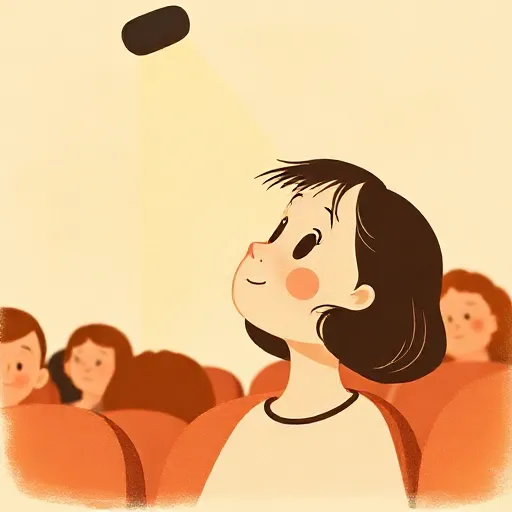
That train in the Paris café started a conversation that hasn’t stopped. Every close-up, every jump scare, every unreliable narrator is part of it. The next time a movie makes your heart race or plants a thought that won’t leave, you’re not just entertained. You’re standing in a century-old debate about what film really is — and what it can do to your mind.
Think about it
- If a movie uses only computer animation and no real actors, is it still “realistic” in the way film philosophers debated? Why or why not?
- Sometimes we root for a character we’d probably dislike in real life. Can a movie make you feel sympathy for someone without making you agree with their choices? How?
- Could a horror movie teach you something important about fear that a textbook couldn’t? Give an example.