Are You Watching a Play — or Is It Real Life?
When the Audience Doesn’t Know They’re an Audience
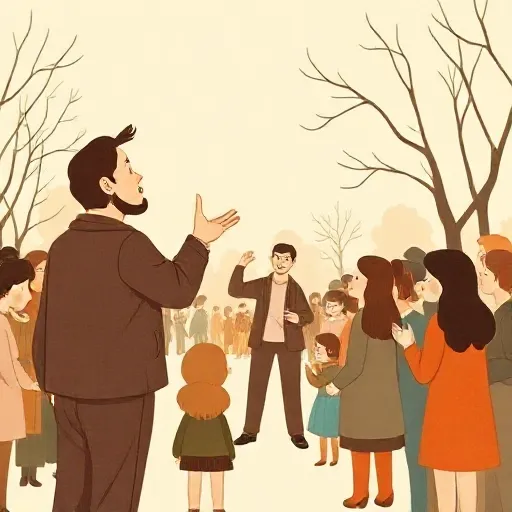
Picture a crowded park at lunchtime. A man suddenly cries out, clutching his jacket as if something precious has been stolen. Strangers rush over. Voices rise. A conversation about money, fairness, and trust erupts among people who have never met. But two people in the crowd know something the others don’t: the whole crisis was scripted. They were actors. They have just performed a piece of invisible theatre.
The Brazilian director Augusto Boal invented this technique in the twentieth century. He wanted to spark real debates about class and injustice, so he sent actors into public spaces to act out short scripted scenes without anyone recognising them as actors. The people who stopped to watch — and even joined in — had no idea they were part of a play. So was this theatre? The actors had lines, the situation had been rehearsed, and a kind of audience gathered around. But that audience never framed the event as a performance. They simply saw a man in trouble.
This puzzle cuts to the heart of what theatre actually is. If we can’t always tell when we’re watching a performance, what makes anything count as theatre at all?
The Suspicious View: Why Philosophers Once Hated the Stage
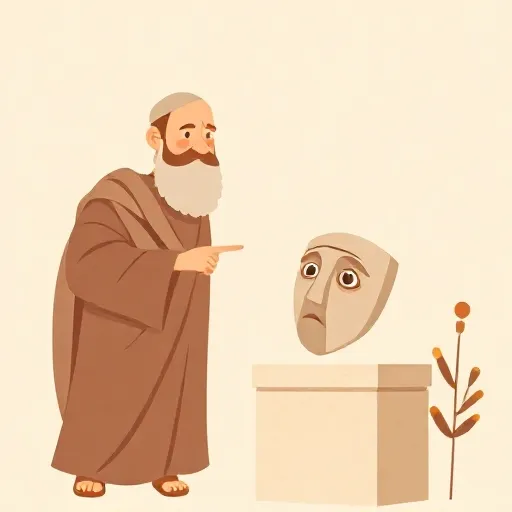
For over two thousand years, many philosophers didn’t just ask what theatre was — they wondered whether it was dangerous. The ancient Greek thinker Plato (427–347 BCE) distrusted theatrical performances because they work through mimesis, the Greek word for imitation or copying. An actor imitates a king, a soldier, or a weeping mother, and the audience responds with real feelings, even though what they are watching is not real. Plato feared that this habit of feeling deeply for fakes would weaken people’s character and teach them to imitate bad behaviour.
Aristotle (384–322 BCE), a student of Plato, disagreed. He thought imitation was natural and that watching tragedy could even be healthy — it gave people a safe way to process powerful emotions. But suspicion didn’t disappear. Early Christian leaders warned that theatre rewarded lying and stirred up lust. In the eighteenth century, Jean-Jacques Rousseau argued that playacting corrupted citizens. The twentieth-century scholar Jonas Barish named this long-standing distrust “the anti-theatrical prejudice”.
Yet even people who breathe this suspicious air are often making a philosophical point: theatre is a kind of deception. That claim leads directly to the modern puzzle. If a performance can hide in plain sight, is it still theatre? And if it is, does that mean an audience sets the line, or does something else?
Does the Audience Have to Know?
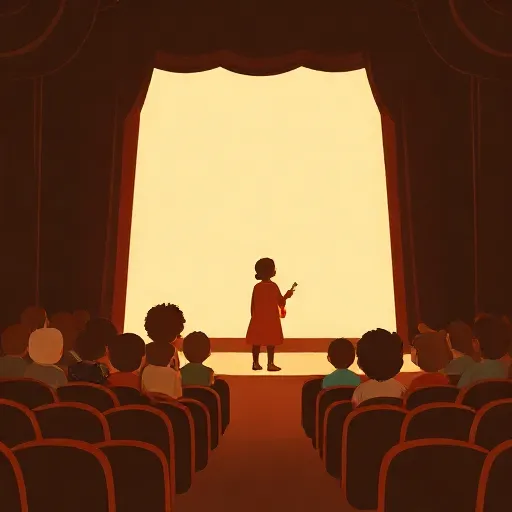
Normally, we recognise theatre because of a clear social frame: a curtain, a spotlight, a stage. Sit in a darkened hall facing a lit platform, and you know you are an audience. For the American philosopher Paul Woodruff, that frame is essential. He says a theatrical event happens only when somebody makes something worth watching, and that there must actually be a watcher. Without an audience present, you might have a rehearsal or an idea for a play, but you don’t have full-blown theatre.
Other philosophers double down on this requirement. Paul Thom argues that theatre addresses its audience — it silently commands, “Pay attention to me.” David Osipovich points out that performers constantly respond to the people watching. They feel the crowd’s heat or chill and adjust their delivery. A performance shaped by live feedback isn’t the same twice; the audience is part of the event.
But invisible theatre tramples all these conditions. The audience does not know it is an audience. Nobody is commanded to pay attention in the usual way. So Boal’s case forces a choice: either his scenes are not really theatre, or the presence of a knowing audience is not always required. Some philosophers, including James Hamilton and David Davies, argue the second option. On their view, a theatrical performance is a prepared routine — a display of actions that was designed with an audience in mind, even if nobody ends up watching it. The routine exists as long as the performers carry it out. So you can have theatre in an empty room. This dispute is still alive, and it shows how hard it is to pin down a single ingredient that makes an event theatrical.
Cracking the Code: How You Make Sense of a Performance

Once a performance starts, whether you know it’s a show or not, you have to figure out what is going on. When you watch a play, your brain is constantly guessing what will happen next. You receive signals from the performers — a gesture, a tone of voice, a sudden silence — and you update your expectations moment by moment. Philosophers sometimes describe this using signaling theory: a sender (the performer) transmits a content that the receiver (you) cannot fully see yet, and your next reactions show whether the signal landed.
But theatre, unlike a film, doesn’t force your eyes to a chosen detail. No camera zooms in on a trembling hand or a suspicious glance. You have to decide where to look, and that decision shapes what you understand. Researchers who study perception suggest we use both “bottom-up” cues (the raw sights and sounds hitting your senses) and “top-down” knowledge (what you already know about genres, styles, or the reputation of the actors). When the lights rise on a silent, slow-moving figure in white makeup, you might immediately switch into a Butoh-style expectation — you anticipate abstract movement, strange imagery, maybe a political challenge — because top-down knowledge has primed you.
This up‑to‑the‑moment guessing game is one reason watching theatre can feel so electric. You are not a passive recorder; you are actively building the meaning of the show, and you risk getting it wrong.
Good, Bad, and Just Plain Fun: Judging a Performance
When the curtain falls (or the invisible scene unwinds), you might say, “I loved it” or “It was boring.” Those remarks point to aesthetic value — how much pleasure the experience gave you. But philosophers draw a second kind of value, artistic value, which is about whether the performers achieved what they set out to do. Liking a show and judging it as a strong artistic achievement are two different things. A friend’s magic trick might make you laugh even though the coin drops, but you can still recognise that a flawless sleight-of-hand is a rarer accomplishment.
Philosopher Gwen Bradford argues that an achievement has two features: a process that leads to a product, and a process that is difficult — something that requires real effort and skill. A theatre company makes thousands of tiny choices: what to say and how to say it, how to move, when to look at another actor or at the audience, how to direct attention through timing and spacing. Coordinating all those choices, moment by moment, over an entire performance is genuinely hard. When you notice a missed cue or a muddled style, you are spotting a failure of achievement — the performers didn’t pull off the goal they seemed to be aiming at.
To judge those achievements fairly, you need some understanding of the performance’s aims and conventions. A spectator who has never seen a pantomime might think the exaggerated gestures are simply clumsy. But someone who knows the style sees the precision. That is why artistic criticism is never just a matter of personal taste; it is supported by reasons that anyone could, in principle, check.
The Theatre of Everyday Life

You don’t need a stage to be a performer. When you give a class presentation, calm a worried friend with a steady voice, or pretend to be confident before a big test, you are shaping your behaviour for an effect. The ancient suspicion that theatre was dangerous rested partly on a fear that we cannot always tell where acting stops and our real selves begin. But that very slipperiness is worth noticing, not fearing. The skills you use to read a play — catching tiny signals, guessing what someone intends, updating your picture of a situation — are the same skills you use every day to understand classmates, teachers, and family. Thinking about what makes something theatre is really thinking about how we read one another.
Think about it
- If you saw a friend pretending to be extra cheerful after failing a test, is that a performance? Does knowing their true feelings change what you see?
- Can you judge a dance or theatre piece fairly if you don’t know what the performers were trying to do? How could you find out?
- Invisible theatre tries to spark real conversations about injustice without the audience knowing they’re watching a scene. Is that a good way to make a point, or is it a kind of trick? Should the audience always be told?