Is That a Good Play? Aristotle’s Guide to Judging Poetry
A Night at the Theater
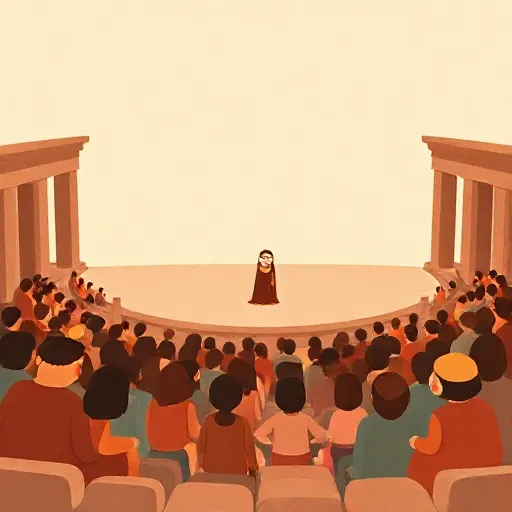
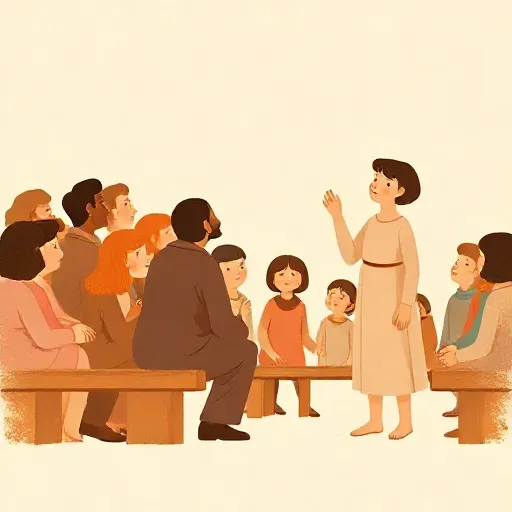
It is a warm evening in Athens, around 340 BCE. You are sitting on a hard stone bench under the stars, shoulder to shoulder with thousands of other people. Down on the wide stage, actors in painted masks and heavy robes are acting out a grim story of murder, revenge, and fate. The crowd gasps. People weep openly. At a sudden joke, a roar of laughter shakes the night air.
After the show, you and your friends walk home arguing. Was that a good play? What made it work — or fall flat? One person loved the clever twists. Another says a mistake in a costume spoiled the whole thing. How do you decide who is right?
That is exactly the question Aristotle (384–322 BCE) set out to answer. He wrote several books that tried to teach anyone — not just poets — how to become a smart, fair judge of poetry. He wanted you to enjoy a play more deeply by understanding why it made you feel the way it did. To do that, he started with the most basic ingredient of any artwork: mimesis.
The Heart of Art: Mimesis, Not Just Rhymes
A lot of people in Aristotle’s time thought you could spot a poem just by looking for verse and meter — the rhythm of the words. If it had a steady beat, it was poetry. If it didn’t, it was something else.
Aristotle disagreed. He pointed to a thinker named Empedocles, who wrote about nature in the same rolling verses that Homer used. But nobody called Empedocles a poet — they called him a natural philosopher. What made Homer’s work real poetry was something deeper: it was a mimesis.
The Greek word mimesis is hard to translate. It means something like “representation” or “enactment.” It has two sides. The “picture” side: you look at a painting or a statue and recognize “that man is so-and-so.” The “performance” side: someone mimics a voice or acts out a scene. In poetry and theater, both sides usually work together. A play is an enactment of actions, and you also recognize those actions as belonging to certain kinds of people.
Aristotle even argued that stories written in plain prose could be mimesis. He mentioned the mimes of Sophron — short written scenes of everyday life — and the early dialogues of Alexamenus, which were prose but represented conversations that might have happened. Those, he said, counted as poetry too. What mattered was not the meter but the art of making a believable, complete representation of people doing things.
If you can’t tell what a mimesis is meant to represent, you can’t enjoy it as a representation. But once you recognize it, your mind starts working — and that gives you a small, basic pleasure. That recognition-pleasure is just the starter, though. The real question is what each kind of poetry should make you feel, and how well it does it.
Spotting the One Sandal That Ruins Everything
Aristotle thought being a good watcher or reader meant learning to notice where a poet went wrong. In a now-lost book called On Poets, he collected examples of mistakes that even famous playwrights made. One story comes from a later Roman author who quoted Aristotle’s own words.
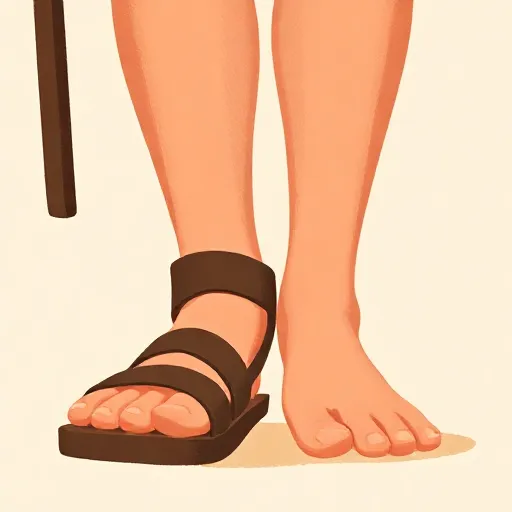
In a play by Euripides, a character says that Aetolian warriors fought without sandals on their left foot. But everyone knew those warriors actually went barefoot on the right foot. It sounds like a tiny, geeky detail. Yet Aristotle argued it was a deep flaw. Imagine a theater full of people: someone recognizes the mistake and starts laughing. Suddenly the tragic spell is broken. The scene becomes ridiculous instead of heartbreaking.
This was not just nitpicking. Aristotle believed that being able to judge the good bits from the bad bits was part of a proper education. A famous teacher named Protagoras once said (half mockingly, in Plato’s dialogue) that the most important part of a man’s education is knowing which poems are correctly made and which are not. Aristotle took that idea seriously. He wrote On Poets as a kind of public handbook, so that any educated person could go to the theater and come away with a sharper opinion.
And that mission of helping you become a critic — someone who can tell good work from mediocre — leads straight into his boldest defense of the greatest poet of all: Homer.
Defending Homer: Wrong Gods, Right Art?
Homer’s Iliad and Odyssey were the foundation of Greek culture. But philosophers had long complained that Homer showed the gods lying, cheating, and behaving badly. Xenophanes and Heraclitus attacked him for giving people a false, immoral picture of the divine. Plato agreed: if gods and heroes are our moral role models, many passages in Homer ought to be rewritten, or removed entirely.
Aristotle’s response, in a work called Homeric Problems, was startlingly cool. He refused to defend Homer on ethical grounds. Instead, he insisted that poetry must be judged by the standards of poetry — not politics, not biology, not psychology. If Homer showed the gods acting like flawed human beings, that was not a moral error; it was a practical choice. Most people imagined the gods that way. If Homer had written them as perfectly good, the audience would have found the story strange and lost interest.
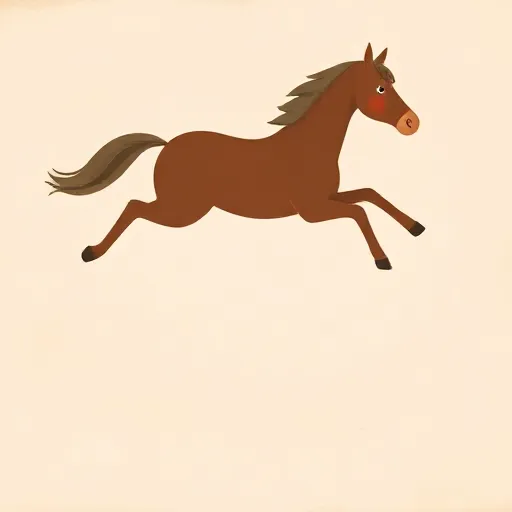
The same logic applied to impossible events. In one scene, Achilles stops an entire army with just a nod — which makes no psychological sense. But Aristotle said that if the impossible feels more amazing and adds to our pleasure, then it is the right thing to do. He gave the example of a painter drawing a horse with both right legs stretched forward — physically wrong, but if it makes the gallop look stronger and more thrilling, it is a success.
The rule was simple: poetry’s aim is its own kind of effect. As Aristotle later summed up in the Poetics, “It is not the same criterion of correctness that applies in poetry and in politics.” The only mistake that truly matters is one that weakens the experience the audience is supposed to have.
Tragedy’s Secret Engine: Plot, Pity, and Fear
Aristotle’s most famous work on art is the Poetics, and most of it is about tragedy. He wanted to lay out what makes the best possible tragedy — not as a recipe for poets, but as a guide for watchers. If you understand how a tragedy is built, you will be much better at judging it.
The heart of a tragedy, he said, is the plot — the arrangement of events. A poet could write brilliant speeches and beautiful descriptions, but if the plot is weak, the play will not do its job. And what is that job? To produce the pleasure that comes from pity and fear.
Pity and fear sound like painful emotions — and they are. So how can they be pleasurable? Aristotle’s answer rests on mimesis. When you watch a story that grips you, you really do feel those emotions. You may shudder, or cry. But the whole experience happens inside an imaginary world. There is no real danger to you. That distance lets you feel the fear as something intense and moving, rather than terrifying. The pain and the pleasure mix.
For a plot to create that effect, it needs to meet certain rules. It must be just the right size — not too long to remember, not too short to feel weighty. Every event must follow from the one before it in a way that seems plausible, or “likely.” Even if something is historically true, the poet must make it feel as though it had to happen. Aristotle loved an example: when a statue of a murdered man, Mitys, fell on his killer at a festival, it was a freak coincidence — but a poet would make the audience sense a kind of divine justice, so the event appears to have a cause.
The strongest moments are a reversal (a sudden change of fortune) and a recognition (a character realizing the truth about someone they love or hate), ideally happening at the same time. When Oedipus discovers that the man he killed was his father and the woman he married is his mother, pity and fear hit the audience like a wave. That is the goal.
And then there is that mysterious word: katharsis. In the definition of tragedy, Aristotle says it “brings about a katharsis of such emotions.” The word normally means purification or purging — like cleaning a wound or releasing something that has been pent up. Scholars still argue about exactly what he meant. One minimal and helpful idea is that a good tragedy gives you a safe outlet to fully express your pity and fear. You cry, you shudder, and afterward you feel a kind of relief — the pleasure of having gone through something powerful alongside the rest of the theater.
Comedy’s Secret: Laughing with Style, Not Just Noise
The second part of the Poetics dealt with comedy, but it has been lost. Still, from scattered remarks we can see what Aristotle cared about.
Comedy is a mimesis of people who are “inferior” — not wicked, but ridiculous. The laughter comes from a kind of error or ugliness that does not cause real pain. If a character slips on a banana peel and breaks his neck, it stops being funny. But if an arrogant person slips and merely looks foolish, we laugh. The pleasure proper to comedy is amusement, which often bursts out as laughter.
Aristotle made a sharp distinction between crude joking and clever comedy. In the Nicomachean Ethics, he compared old comedies full of obscene language with newer ones that used innuendo — hints and double meanings. The later style, he thought, was more “elegant” and fitting for educated people.
He even gave a joke of his own to show what he meant. In a book on rhetoric, he poked fun at a playwright named Cleophon by saying some of his grand speeches sounded like “august fig tree.” The humor comes from a jarring mismatch: the word “august” belongs to a goddess or queen, while fig wood was cheap and common. Good comedy, for Aristotle, thrives on incongruity — putting together things that don’t belong together in a way that surprises you into laughing.
Just as with tragedy, the standard is internal to the art. A joke works if it gives the right kind of amusement, not because it teaches a lesson or obeys good manners. You can learn to spot a clever joke from a lazy one — and that, too, is part of becoming a judge of poetry.
Why Art Matters: A Free Life and a Good Ear

So far, it might seem like Aristotle only cared about technical rules. But he also had a big idea about why art is valuable in a human life.
In his Politics, he argued that music — and by extension, poetry — should not just be used to relax tired workers or to teach children moral lessons. There is a third use: leisure (scholē). Leisure is not laziness. It is time spent on activities you do just for their own sake, because they engage your mind and your senses in the best way.
Aristotle said that free citizens should learn to play an instrument and draw as children, so that as adults they could become excellent judges of beautiful songs and images. A connoisseur enjoys not only the sounds and colors, but also the intelligence behind how a piece is put together. This kind of enjoyment, he believed, is a central part of living a full, flourishing human life.
He never says this directly in the Poetics, but his whole project points that way. By reading his works on poetry — whether the detailed Poetics or the more accessible On Poets — you could train yourself to appreciate tragedy and comedy the way a trained listener appreciates music. You could go to the theater not just to be entertained, but to truly see how a playwright made you feel pity and fear, or laugh with surprise.
In a world where people often treat art as either a pretty distraction or a lesson in disguise, Aristotle’s message still matters. You have the capacity to become a sharp, careful judge of the stories, shows, and songs you love — and that kind of understanding can turn an ordinary evening into something that genuinely makes your life richer.
Think about it
- When you watch a scary movie, you might cover your eyes but also enjoy the rush. Is that feeling the same as the pleasure Aristotle describes? Or is it different because you know the danger isn’t real?
- If a play has a glaring mistake — like a character wearing a modern wristwatch in a story set in ancient Greece — does that ruin the whole experience for you, or can you ignore it? Why?
- Suppose a friend thinks a comedy is hilarious because of non-stop gross-out jokes, but you find it boring and obvious. Is there a fair way to judge who is right about what makes good comedy, or is it all just personal taste?