Can Philosophy Be Scattered Like Seeds? A Young Romantic Thought So.
A Grief That Turned the World into Poetry
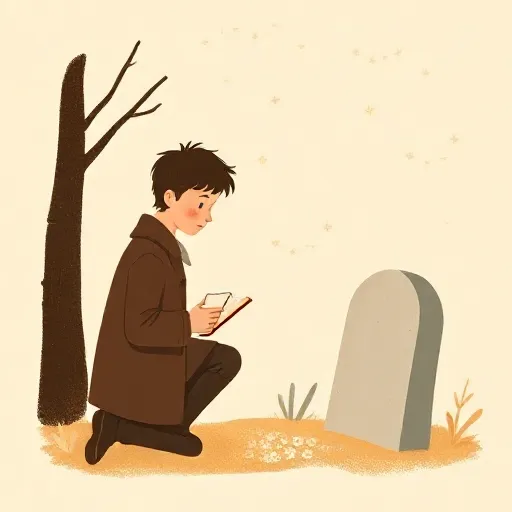
Friedrich von Hardenberg, who called himself Novalis (1772–1801), lived a short life marked by intense love and loss. In 1795, at twenty-two, he secretly became engaged to Sophie von Kühn, a lively thirteen-year-old. Two years later, she died of tuberculosis. Novalis was shattered. He poured his feelings into his most famous poems, Hymns to the Night, where darkness became a doorway to a deeper, almost sacred longing. This wasn’t just sadness; it was a philosophical awakening. Novalis started to think that the deepest truths about life—love, meaning, the infinite—can’t be captured by tidy logical systems. Instead, they show up in fragments, in art, and in the messy adventure of living. For the rest of his short life, he chased a new kind of philosophy: one that felt scattered like seeds, open-ended, and forever growing.
Scattered Seeds: The Fragment as a Philosophical Challenge
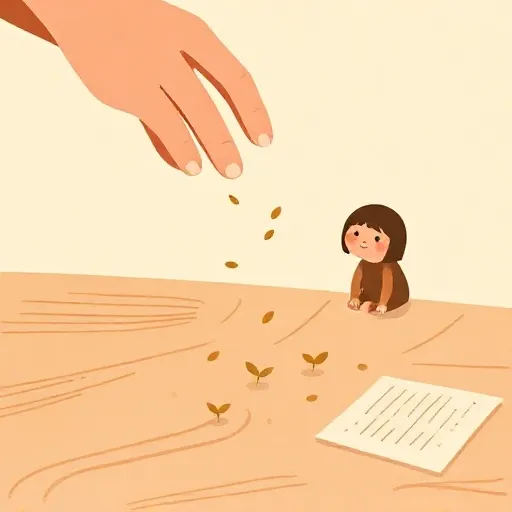
Novalis published only a little during his lifetime. One of his most important works was a collection called Blüthenstaub—Pollen—a set of 114 short fragments. A fragment is a broken piece of writing, a thought that ends before it’s complete. For Novalis, that was the point. He didn’t want to build a huge, perfect system of philosophy. He compared systematic philosophy to a finished machine that can only run one program. A fragment, on the other hand, is like a seed. It doesn’t contain the whole tree, but it can grow into something new if you, the reader, take care of it.
At the time, the most respected philosophers, like Immanuel Kant (1724–1804) and Johann Gottlieb Fichte (1762–1814), tried to create a single, airtight system where every claim followed logically from one first principle. Novalis admired them but thought they were missing something. He believed that reality is too complex, too alive, to be trapped in a system. Life is a conversation, not a machine. So he wrote in fragments on purpose. He called this “philosophizing” rather than “philosophy”—an ongoing activity, not a body of finished truths. The fragment form forced readers to think for themselves, to make connections, and to realize that understanding is never really done.
The Limits of the “I”: Why You Can’t Ride Your Own Thoughts to the Bottom
Novalis was part of a circle of young intellectuals in Jena, Germany, who called themselves romantics. They were buzzing with excitement about Kant’s and Fichte’s newest ideas. Fichte had made a radical claim: the self, the “I,” posits itself. In other words, at the very core of being a person is an immediate act of self-awareness that doesn’t depend on anything outside it. The I is pure freedom, creating itself just by being itself. This was thrilling because it seemed to liberate human beings from being mere parts of nature’s causal machine.
Novalis wasn’t so sure. He studied Fichte’s work carefully and wrote hundreds of notes, later called the Fichte Studies. He asked a tough question: to reflect on yourself, you need to look at yourself as if from the outside. You have to turn yourself into an object of thought. But if your most basic sense of being you is a pure, immediate feeling, a thought about that feeling is already a step removed. You can’t catch your own act of self-awareness in a net of thoughts. Novalis put it bluntly: the borders of feeling are the borders of philosophy.
This meant that even the most brilliant rational system couldn’t ground itself. There is always a leftover—a feeling, a hunch, a sense of being alive—that thoughts can’t digest. Novalis thought that Fichte’s self-positing I was like the fictional character Robinson Crusoe stranded on an island: it had only itself to play with, and that wasn’t enough. True understanding, he argued, needed something other than the self. You need the world, history, other people, and, yes, art.
Philosophy Is Growing Up: The Long Road of Bildung
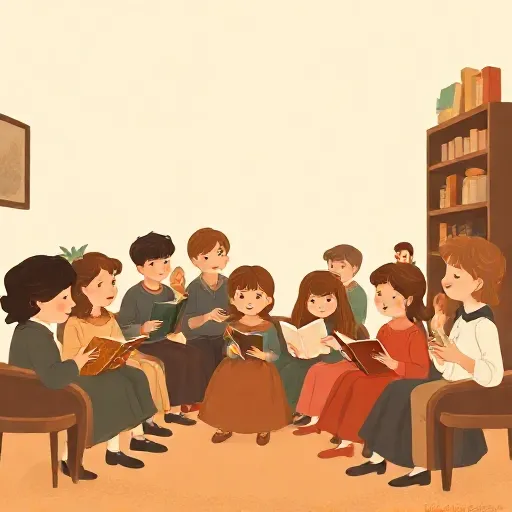
If philosophy couldn’t be a perfect system, what could it be? Novalis’s answer: a process of Bildung—a German word that means education, formation, or even growing up. For him, Bildung wasn’t just about learning facts. It was the lifelong project of shaping yourself into a free, thoughtful person by wrestling with art, history, science, and other people.
Novalis insisted that you can’t understand yourself in isolation. You are shaped by the language you speak, the stories you read, the traditions you were born into. To know yourself, you have to understand all those influences. This is why he said that each human being is a society in miniature. And the flipside: every individual is the center of a system of emanation—your own unique perspective radiates outward, but it only forms because you’re connected to others.
That’s why Novalis was obsessed with philology, the art of reading old texts carefully by trying to see the world through their authors’ eyes. He thought you should treat the past not as a museum of mistakes, but as a conversation partner. Understanding a medieval poem or an ancient myth could challenge your own modern assumptions and help you grow. In this way, history isn’t just behind you; it’s part of your future. Novalis even claimed that the theory of the future belongs to history—you can’t know where you’re going if you don’t know where you’ve been. Bildung makes philosophy practical: it’s not about baking bread, but it might just teach you how to live a meaningful life.
Freedom Needs More Than Slogans: Novalis’s Political Gamble
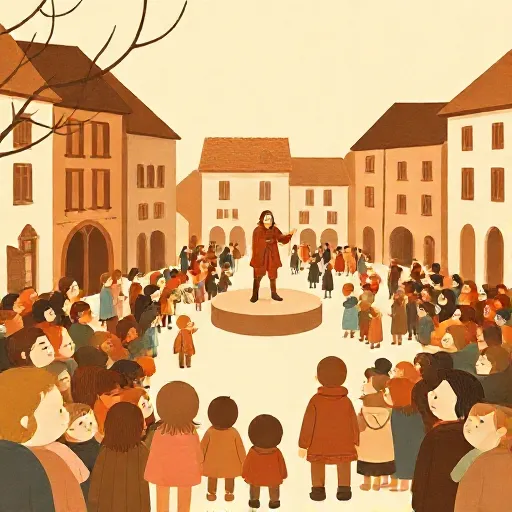
The French Revolution had promised liberty, equality, and brotherhood. Novalis, like many young Europeans, was thrilled at first. But by the late 1790s, the revolution had turned bloody. Novalis started to argue that the problem wasn’t the ideals—they were noble—but that the revolutionaries had tried to force them on a population that wasn’t yet capable of handling them. In his view, you can’t simply declare freedom; people have to grow into it.
His solution was once again Bildung. A healthy democracy, he believed, requires citizens who can think critically, judge impartially, and respect different points of view. That doesn’t happen overnight. It takes generations of education, of art, of public debate. Novalis dreamed of a society that worked like a work of art: a unity made up of diverse, unique individuals, harmonizing without being forced. He even suggested, at one point, that a wise king and queen could model this unity, inspiring the people to educate themselves. Later, he turned toward the idea of a united Christian Europe under a spiritual leader—an idea that upset even his close friends and sounds authoritarian to us today.
But his core insight remains powerful: a free society isn’t a machine you can install; it’s a garden you cultivate. The messy, slow work of Bildung is essential. If you skip it, even the best slogans can collapse into chaos.
Why a Scattered, Unfinished Life Still Matters

Novalis died of tuberculosis at twenty-eight, leaving a trunk full of unfinished manuscripts. His friends edited them and, in doing so, partly created the legend of the dreamy, otherworldly poet. Philosophers like Hegel mocked the romantics for being lost in feeling rather than building solid systems. But Novalis had never said we should abandon reason. He said reason must become more humble, more experimental, and more aware of its own limits.
Today, you might feel pressure to have everything figured out—to be a finished, perfect “product.” Novalis offers a different model. Your mind isn’t a computer running a single program. It’s more like a garden, or a conversation that never ends. You can learn from Kant’s logic and Fichte’s boldness, but you also need the sting of a poem, the shock of a different culture’s story, and the clash of genuine disagreement with a friend. This is what Novalis meant when he said the world must be “romanticized”: not to make it fuzzy, but to help you see that understanding is always in the making.
When you read a scrap of philosophy, write in a journal, or argue about a movie, you’re doing what Novalis did. You’re scattering seeds. Some of them might grow into ideas you can’t yet imagine.
Think about it
- If you had to explain who you are without mentioning your name, your looks, or your family, what would you say—and would any of it be totally original, or borrowed from books, shows, and people you’ve known?
- Novalis left many unfinished thoughts on purpose. Can you think of a time when a half-finished idea turned out to be more valuable than a complete final answer?
- Novalis thought a society needs educated citizens before it can truly be free. Do you agree? What might happen if a country gained freedom overnight, but most people had never learned to debate, listen, or question authorities?