Are You Just a Bunch of Atoms? Think in Layers!
Your Brain, a Tree, and the Mystery of Layers
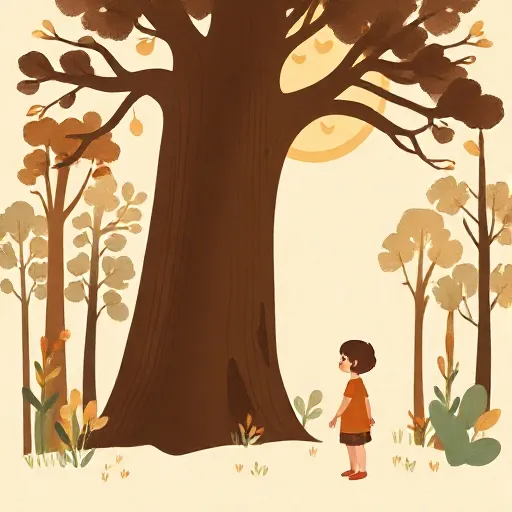
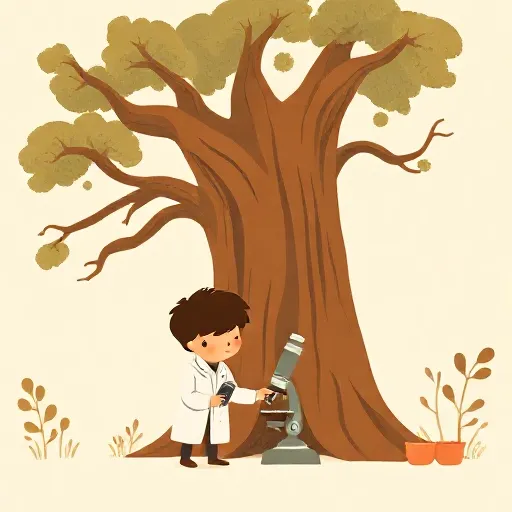
Imagine you are standing in a forest on a summer afternoon. You look at a huge oak tree. A physicist might say it’s just quarks, electrons, empty space. A biologist would talk about cells and photosynthesis. A poet might see a symbol of strength and time. Which one is right? All of them, and more. That’s what Nicolai Hartmann (1882–1950) would tell you. He was a German philosopher who loved music and astronomy as a boy. He spent his life investigating a bold idea: that reality isn’t one flat thing, but a structure of strata, each with its own rules, all depending on each other without reducing to one single story.
Hartmann broke with his Neo‑Kantian teachers in the early twentieth century. They thought our minds shape everything we know. Hartmann saw instead that thinking is a real process that reaches out into a world that isn’t just made by us. He called his approach critical ontology, the careful study of what exists without pretending we have it all figured out. His main works, written between the 1920s and 1940s, cover how thought connects to reality, what makes something valuable, and the layered structure of the real world itself.
Does Your Thinking Touch the World?
Close your eyes and try to “grasp” the tree in your mind. You form an image — maybe its rough bark, its shape against the sky. But here’s the puzzle: does that mental image really match the tree outside your head? For Hartmann, the very fact that you can wonder about this tells you something huge. You are aware of a problem. You know that you don’t know everything about the tree. That problem‑consciousness shows that the real object — the tree itself — is always more than what you’ve captured.
Hartmann argued that all knowing involves a leap. Your mind stretches beyond itself to something transobjective: something real that you haven’t yet understood, but could. Beyond even that, there might be something transintelligible — an aspect of reality that your mind cannot ever completely wrap around, simply because thinking is limited. So cognition isn’t a mirror; it’s a real, active, sometimes clumsy reaching‑out. The tree pushes back. If you get it wrong (imagine a pine when it’s really an oak), that error itself proves the tree isn’t just something your mind invented.
This flipped the standard view. Instead of saying “the world is inside my head,” Hartmann said, “my thinking is inside the world.” His starting point was always that we are beings trying to get our bearings in a vast, often puzzling environment. And this led him to ask: what kinds of things actually exist, and how do they hang together?
The Invisible Value Realm: Is Justice Real?
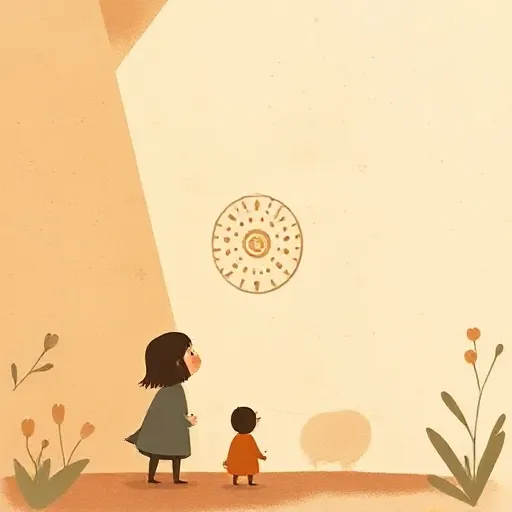
Numbers are odd. You can’t touch them, yet they’re real enough that your math homework doesn’t care about your opinion. Hartmann thought values — like justice, courage, or love — are a similar kind of thing. They exist as ideal entities, timeless and independent of us. But human awareness of them is spotty. At different times and in different cultures, people notice different values, as if a spotlight moves across a vast wall of intricate patterns. Value consciousness cuts out only a little circle of what is seen.
Values follow two surprising principles: strength and height. The lowest values (like respecting life) are the strongest — violating them is really bad. The highest values (like saintly generosity or deep personal freedom) are fragile: offending against them isn’t shameful in the same way, but fulfilling them lifts up life in extraordinary ways. You can’t just leap to the highest and ignore the basics. Loving with distrust or giving with cowardice isn’t genuine. Values conflict all the time — think of justice demanding the same treatment for everyone, while personal love demands special care for one person. Hartmann said no rule book can settle these clashes. We solve them creatively, step by step, in real life.
Here’s the kicker: without us, values stay stuck in the ideal realm. They don’t become real until a person acts on them. Hartmann called human beings the Sachwalter — the trustees — of values in the world. We are the ones who bring fairness, beauty, and compassion into the real, physical, historical world. That’s our cosmic job.
The World’s Strata: From Quarks to Culture
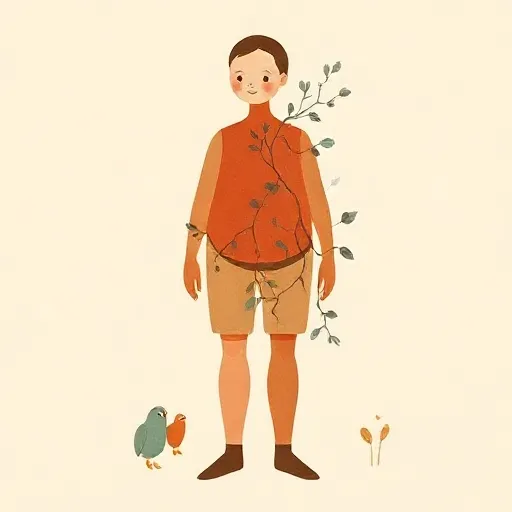
Now we can put the pieces together. Hartmann distinguished four main strata of reality: the inanimate (matter and energy), the biological (life), the psychological (mind), and the spiritual (culture, history, art, law). Each stratum has its own special categories — its own kinds of structure and determination. Physical causality rules the bottom layer. But living things add metabolism, self‑regulation, and purposiveness. Minds add consciousness, emotion, and learning. Spirit adds symbolic meaning, moral evaluation, and personality.
These strata don’t float separately. They obey categorial laws. Lower layers are the fundament — they are stronger and don’t care about the higher ones. Physics works the same whether or not life exists. But when a lower factor gets taken up into a higher stratum, it gets modified. Causality in a living body isn’t just billiard‑ball physics; it serves the whole organism. At the same time, each stratum has its own novelty, something not present below. Consciousness depends on brains, but feeling joy isn’t just neurons firing — it’s a new kind of real event with its own freedom. Finally, there’s a distance between strata, a gap that means the higher is not reducible to the lower. You can explain a cell chemically, but you miss what life is.
This means you are a kind of layer cake. You are atoms (physics), cells (biology), feelings and thoughts (psychology), and a person who belongs to a culture, speaks a language, and cares about what’s right (spirit). None of these are an illusion — they’re just different levels of the same rich reality.
Why This Matters: You Are the Meaning‑Maker
Hartmann lived through two world wars, watching ideologies try to squeeze everything into one explanation — whether it was “only biology” or “only economic forces.” His philosophy pushes back against any single‑story view. It also delivers a quiet, massive responsibility. If the universe isn’t already filled with purpose, then meaning isn’t found ready‑made. It is brought into the world by beings like you who can see what’s valuable and act on it.
That might sound scary, but Hartmann saw it as what makes human life genuinely important. Your ordinary decisions — keeping a promise, making art, standing up for someone — aren’t just personal preferences. They are acts that actualize values in a cosmos that would otherwise be morally silent. The oak tree isn’t just atoms. In your attention, it becomes something beautiful, something scientifically interesting, something that might even stir courage. You help make it so.
Think about it
- If values like fairness exist like mathematical truths, does that mean there are moral rules as rigid as 2+2=4? Or do you get to creatively interpret values in different situations?
- According to Hartmann’s strata view, what would it take for a machine to be a “spiritual” being? Could it ever be?
- Imagine you experience a feeling you’ve never heard anyone name — something like “cosmic gratitude.” Would that value have existed before you felt it, or did you create it by naming and acting on it?