Is Life Really Stacked in Layers?
Zooming In on a Leaf

Hold a leaf up to the light. You see veins, a green surface, maybe a tiny insect. Put it under a microscope and you enter a new world—a honeycomb of cells, each with its own nucleus and chloroplasts. Zoom in even further, and you see the long spirals of DNA molecules.
Biologists describe this as levels of organization: the idea that living things are built in layers, each made up of the layers below. A molecule is part of a cell, a cell is part of a tissue, a tissue is part of an organ, and an organ is part of an organism like you. It feels natural, almost obvious. But philosophers have spent a century asking: are those levels really out there in nature, or are they just a way our brains like to sort things?
The question has deep roots. As far back as medieval Europe, thinkers imagined a “Great Chain of Being”—God at the top, then angels, humans, animals, plants, all arranged in a single ladder. By the 1930s, scientists such as Joseph Woodger and Ludwig von Bertalanffy replaced that ladder with a more flexible idea. A living organism, they said, is a hierarchy of parts: an animal is made of organ-systems, which are made of organs, then tissues, then cells, then cell-parts. Each level has its own rules that can’t be fully understood by looking only at the smaller parts. That way of thinking became the backbone of modern biology.
The Layer-Cake Theory: Six Steps to Everything
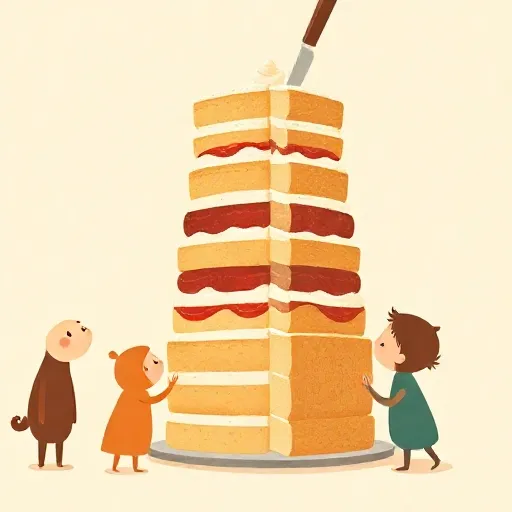
In 1958, two philosophers, Paul Oppenheim and Hilary Putnam, tried to turn the idea of levels into a precise system. They proposed a tidy staircase of six reductive levels: elementary particles at the bottom, then atoms, molecules, cells, multicellular organisms, and finally social groups at the top. Each level is completely made of things at the level just below it, and each level has its own science—physics studies atoms, biology studies organisms, sociology studies groups.
This picture is often called the layer-cake model. It is satisfying and easy to draw. But when philosophers checked it against real science, the cake started to crumble. For one thing, composition isn’t always stepwise. Blood, for instance, is a tissue, but it contains water and vitamin molecules directly—there are no intermediate cell-level building blocks in between. For another, the mapping between sciences and levels doesn’t hold. A field like cognitive neuroscience studies molecules, cells, and whole brains all at once, not just one neat slice of the cake. Worst of all, the model demands that every organism is built the same way, but a blue whale and a yeast cell are both organisms yet have wildly different parts. The layer-cake turned out to be too rigid for a messy living world.
Mechanisms: Levels Where Parts Work Together
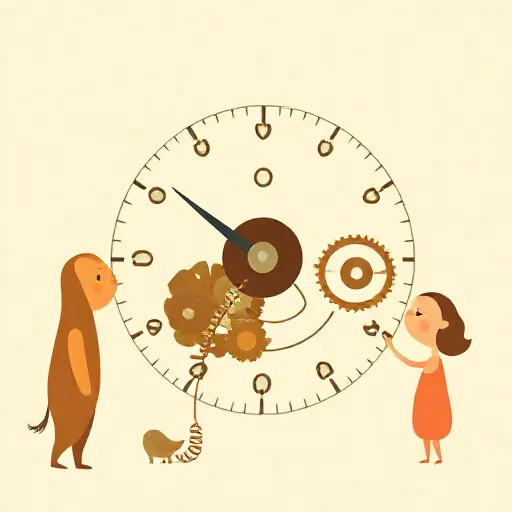
If the layer-cake flattens real biology, maybe levels are much more local. That is the idea behind levels of mechanisms, developed by philosophers William Bechtel and Carl Craver in the early 2000s. They argue that you can only talk about levels inside a specific mechanism—a system of parts whose activities together produce a phenomenon.
Imagine a Rube Goldberg machine that toasts bread. The whole machine is at a higher level than its components: a lever, a spring, a string. The lever itself might be a mechanism made of even smaller parts, which are therefore at a still lower level. But you can’t pull out a universal “level of levers” that applies to every kitchen device in the world. Levels in this view appear only where components work together to do something, and they can vanish as soon as you step outside that particular machine.
This neatly avoids the global layer-cake. A scientist studying spatial memory in a mouse might identify levels like behavior, brain region, cells, and molecules—all within that one memory mechanism. Two different processes, like memory and protein folding, can have completely different level structures. Moreover, in a mechanism, the question “are these two things at the same level?” often has no answer. A glutamate receptor and a synaptic vesicle are both parts of a neuron’s machinery, but they don’t share a ranked shelf. So mechanistic levels are tiny islands, not continent-spanning layers.
The Just-a-Heuristic View: A Map, Not the Territory
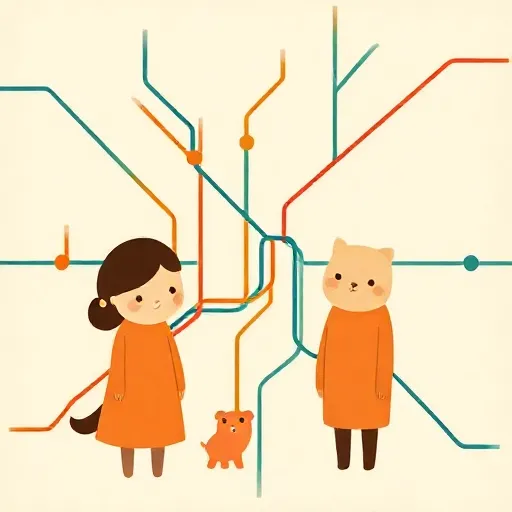
Given all these cracks, some philosophers have become level skeptics. Miriam Thalos calls the notion “the conceit of levels,” and Angela Potochnik argues that the very idea demands a uniformity nature just doesn’t provide. Their worry is that talking about levels tricks us into thinking the world is more structured than it really is. A population of ants, for example, is not composed of “populations” the way atoms compose molecules—yet the layercake would lump them into a single level.
What these skeptics do not deny is that levels are useful. Instead, they suggest we treat levels as a heuristic—a mental shortcut that helps us work with complex systems without needing every detail. Like a subway map, the levels picture distorts reality in useful ways. Your city map isn’t a perfect aerial photograph, but you’d be lost without it.
Even the philosopher William Wimsatt, who famously described levels as “local maxima of regularity and predictability,” packed his account with cautious notes. He imagined plotting how predictable things are against size, and levels would show up as peaks. But he also said that in many messy biological systems—like brains and social groups—the neat peak structure dissolves into what he called a causal thicket, where only rough perspectives remain. The upshot is that many working biologists and philosophers now treat levels as a tool for asking questions, not a final description of reality.
Downward Causation: Can the Whole Boss Its Parts Around?
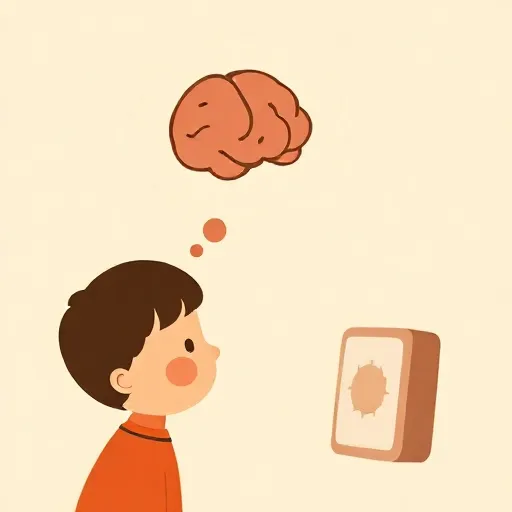
The levels idea pops up in a live debate about downward causation. When you decide to raise your hand, that decision—a mental, higher-level event—seems to cause your arm to lift, which involves lower-level muscle cells and molecules. Is that genuine causation from top to bottom?
Some philosophers say no. Craver and Bechtel argue that what looks like downward causation is actually just normal same-level causal chains, with an appearance of downward influence created by the fact that the mechanism’s parts constitute the whole. Think of a video game: the hero runs and jumps because of lines of computer code. Blinking lights aren’t causing the code; the code just is the blinking pattern. Similarly, when Hal plays tennis and his cells burn more glucose, that isn’t his tennis-playing causing cellular changes in a top-down way. Rather, the cellular changes are components of the whole activity; the causation stays at the cellular level.
Other researchers push back. They point to cases where the structure at a higher scale imposes boundary conditions on the lower scale. For instance, a cell’s membrane potential—a property of the whole cell—constrains how ion channels in the membrane open and close. Change the potential, and you change what the ions do. That sounds awfully like the whole bossing its parts. This argument is still wide open, and the answer depends a lot on what you think “causation” really is.
Why It Matters: From Cancer to Classrooms

The battle over levels isn’t just a philosopher’s puzzle. It shows up in real science. Cancer researchers debate whether cancer is fundamentally a disease of genes, cells, or whole tissues. Experimental biologists deliberately shift between levels in the lab: they take a tissue, break it into single cells, watch them regrow, and use that to understand how organisms build themselves. And every textbook you open in biology class starts with a giant diagram of the levels of organization—a diagram that shapes how future scientists are trained to see the world.
So the next time you see a leaf under a magnifying glass, remember that the layers you seem to see might be nature’s own architecture, or just a powerful way your mind and your science tell a story. The debate is still alive, and asking what “level” something really lives on is one of the most productive questions in the whole of biology and philosophy.
Think about it
- If you could zoom in far enough to see only atoms, you’d never actually see a “cell” sitting there as a neat pile. Do you think levels like “cell” or “organ” are real features of the world, or just labels humans invented to group things together?
- Imagine a video game character. If you, the player, cause the character to jump, does that count as downward causation, or is the jump entirely explained by the console’s code and circuits?
- In school, you learn that living things are organized in levels. Does that way of thinking help you understand life, or might it sometimes make you overlook how messy and interconnected living things really are?