Are Cells Tiny Machines? The 400-Year Debate
A Surprise in a Slice of Cork
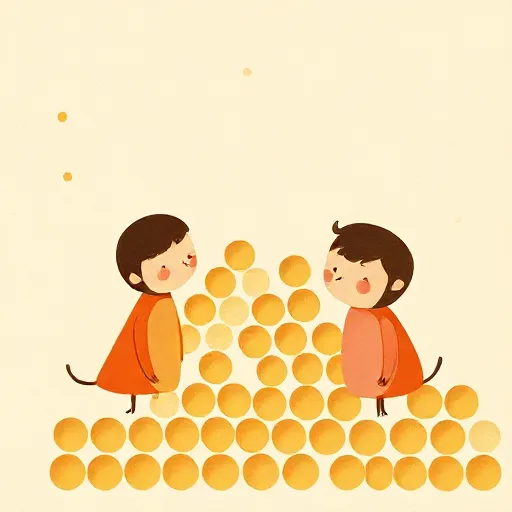
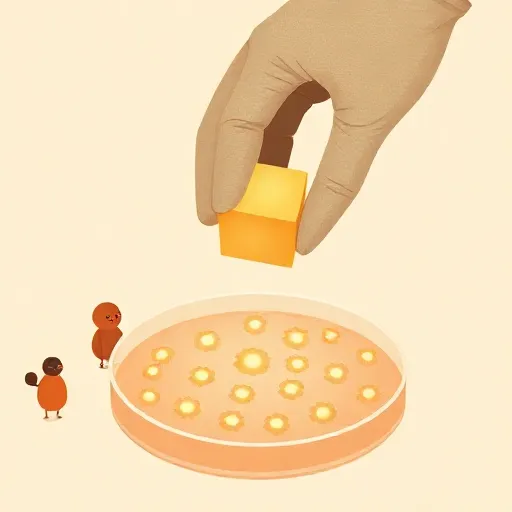
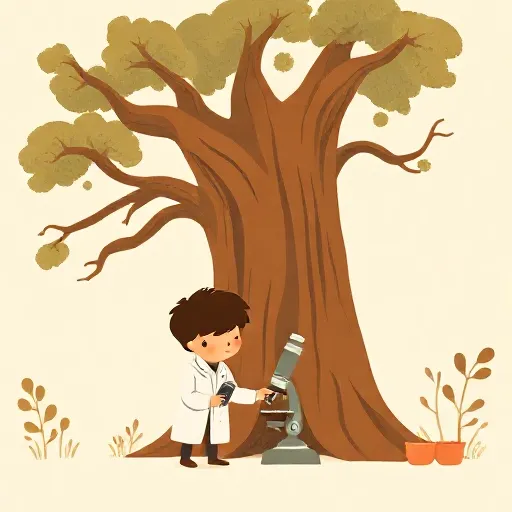
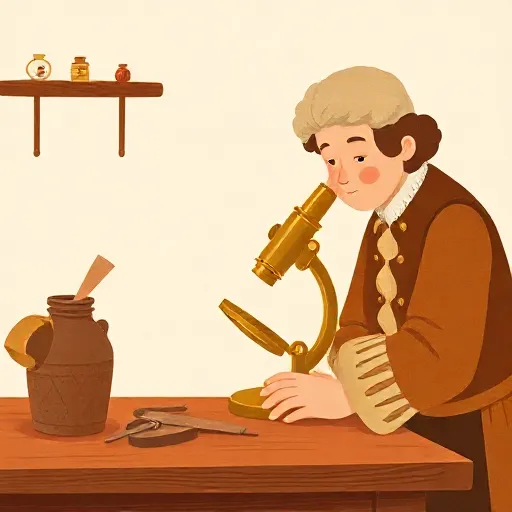
In 1665, English scientist Robert Hooke aimed his homemade microscope at a sliver of cork. He expected to see an ordinary surface, but instead he found a pattern of tiny rectangular compartments, packed together like a honeycomb. Hooke compared them to the small rooms where monks lived and called them cells. The name stuck, even though he thought the spaces were just empty pockets in dead plant tissue. He had no idea he had glimpsed the basic unit of nearly all life on Earth. That chance observation launched a quest that still isn’t over: what, exactly, is a cell?
The Cell Theory: Are Cells Life’s Basic Units?
By the 1830s, improved microscopes let researchers see not just walls but also the living material inside. Botanist Matthias Schleiden (1838) and zoologist Theodor Schwann (1839) proposed a bold idea: all plants and all animals are built from cells. They claimed that cells are independent, living units — the simplest “beings” that make up every larger creature. This became the cell theory. Schwann went further. He argued that the chemical processes of life happen inside cells, and he coined the term metabolism to describe those processes. He even discovered pepsin, a catalyst that helps digest food, and believed that cells brought the right catalysts together so metabolism could occur.
But a rival view soon appeared. Some scientists, like Hugo von Mohl, focused on the jelly-like substance filling cells. They called it protoplasm and declared it the true “physical basis of life” (a phrase made famous by Thomas Huxley in 1869). Protoplasm theorists saw cells as mere containers; life was really the continuous flow of protoplasm. For a while, the two sides clashed: is the cell the fundamental unit, or just a wrapper around the vital stuff? In the end, most biologists settled on a compromise: a cell is a lump of protoplasm containing a nucleus. Yet the deeper question — is a cell more like a brick, or like a tiny organism? — never really went away.
From Juices to Factories: The Machine Metaphor Takes Over
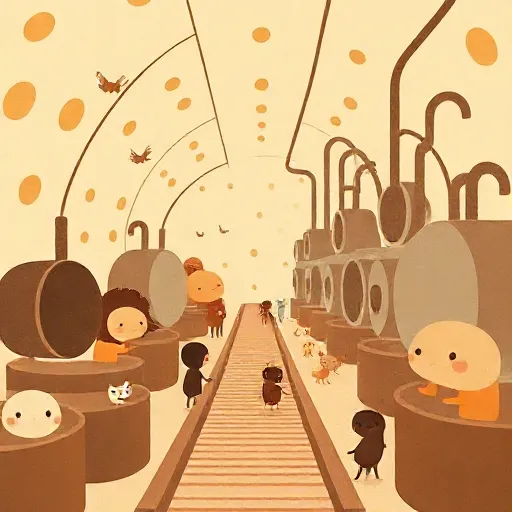
Schwann believed that metabolism depended on the specific materials collected inside each cell. But could those chemical reactions ever be explained as purely physical, like the work of tiny machines? At first, many researchers doubted it. Louis Pasteur showed in the 1860s that fermentation needed whole living yeast cells; he thought life added something that chemistry alone couldn’t provide. That view was shattered in 1897 when Eduard Buchner accidentally made a cell-free extract from yeast. He added sugar to preserve it, but to his surprise the dead liquid bubbled — fermentation was happening without any living cell! Biochemists now raced to isolate the catalysts, called enzymes, and map the chemical assembly lines inside cells.
Meanwhile, new staining techniques and better microscopes revealed structures within the cytoplasm that came to be known as organelles — little organs. Mitochondria, the Golgi apparatus, and the endoplasmic reticulum looked like separate compartments. In the 1940s and 1950s, the invention of the electron microscope and cell fractionation let scientists link each organelle to a specific job, just like machines in a factory. The cytoplasm was no longer a uniform jelly; it was a crowded workshop. Later, researchers discovered that some organelles don’t just sit still: they move. Motor proteins like kinesin and dynein walk along microtubule tracks, hauling cargo through the cell. A new metaphor soon replaced the factory: the cell as a bustling city with heavy traffic.
But Are Cells Just Machines? The Vitalist and Holist Protests

Not everyone was happy with the machine picture. As early as 1800, Xavier Bichat argued that living things behave in ways no mere collection of physical parts ever could. Organisms resist death, adapt, and act unpredictably. Those who held such views were called vitalists. Some proposed a special life force; others simply insisted that different laws operated in living matter. Even Pasteur, a brilliant chemist, maintained that fermentation required whole cells — a position that treated the cell as an irreducibly living unit.
Claude Bernard, working in the 1860s, offered a compromise. He pointed out that organisms have an internal environment kept stable by feedback loops. Because a cell’s machinery adjusts to this inner world, its behavior can look indeterminate from the outside. This explained much of what vitalists found mysterious without adding a special force.
In the early twentieth century, a new group known as holists or organicists took up the fight. Thinkers like J. S. Haldane (the father of biologist J. B. S. Haldane) insisted that “the whole is not just the sum of its parts.” They believed that the organization of components gives cells properties that the parts alone don’t possess. You cannot chop a cell into molecules, study each one separately, and then fully understand what the cell does. This idea, often called emergence, still fuels debates today. Many modern mechanists agree that organization matters enormously; they just think it can be studied scientifically without abandoning the machine view.
The Cell as a Self-Building City
Modern cell biology has uncovered a richness that neither the factory nor the simple brick metaphor can capture. The cell’s skeleton, the cytoskeleton, not only gives shape but also acts as a roadway. Motor proteins constantly shuttle supplies, repair damaged parts, and recycle waste. Instead of a fixed assembly line, the cell is more like a self-governing city where control mechanisms decide when a machine should run, when it should pause, and when it should be scrapped.
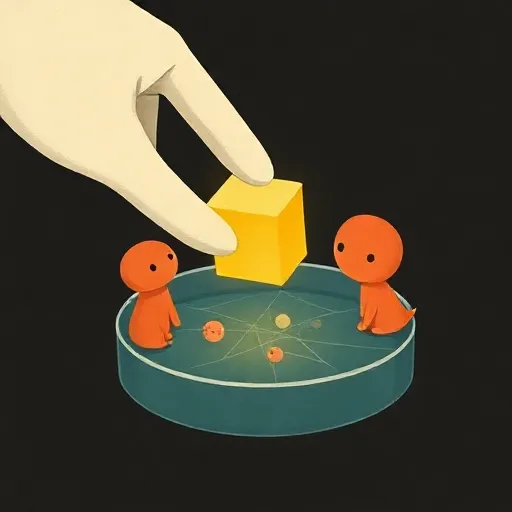
Some philosophers and biologists now describe cells as autopoietic — self-making systems. A cell builds and maintains all the parts it needs, using energy and information from its environment. This doesn’t require a mysterious life force; it does require a special kind of organization in which control systems direct flows of energy and matter. The cell’s constraints — the physical boundaries and connections that limit and enable movement — give it the power to act as an integrated whole. In this picture, a cell is a machine, but a machine organized so cleverly that it can keep itself alive, adapt, and reproduce. The debate between mechanists and their critics hasn’t ended; it has become more precise. The question is now: how much organization does it take to turn a collection of parts into a living, autonomous individual?
Why It Still Matters
This 400-year-old argument isn’t just for textbooks. Cancer happens because a cell’s control mechanisms break down — the cell stops obeying the signals that normally keep division in check. If we think of a cell only as a bag of chemicals, we might miss how its organization makes it healthy or sick. Researchers who design synthetic cells from scratch, hoping to understand the origins of life, quickly discover that just mixing the right molecules isn’t enough. They have to get the organization right. And when you wonder what it means for you to be truly alive, the answer begins with cells. They are not simply bricks or factories or even miniature cities. They are restless, self-building, self-repairing systems — life at its most basic, forever raising the question of how far chemistry and physics can take us.
Think about it
- If scientists could build a living cell from non-living chemicals, would that prove life is just a complex machine, or would it show that organization is what makes the difference?
- Think of a flock of birds or a school of fish. Does the group behave more like a machine, an organism, or something else? What does that tell you about cells?
- When you feel like you’re making a free choice, your brain cells are carrying out chemical reactions. Does that make your choice any less real? Why or why not?