Are You a Good Person, or Do Tiny Situations Decide for You?
A Dime in a Phone Booth: Does It Change Who You Are?

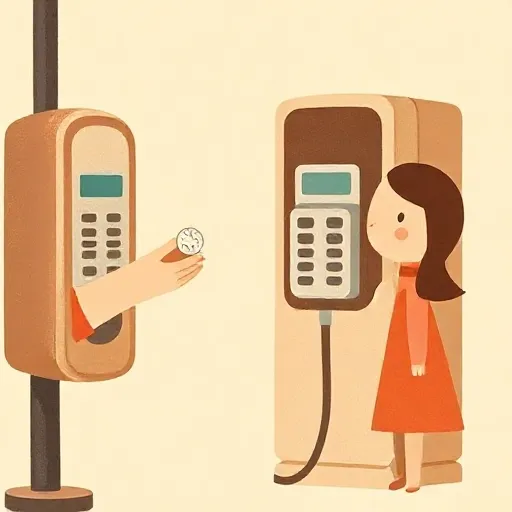
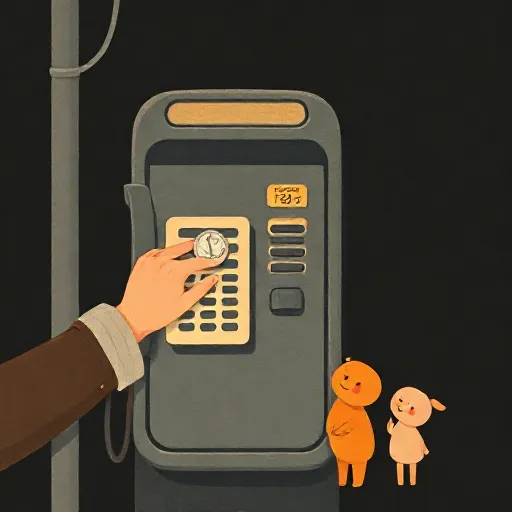
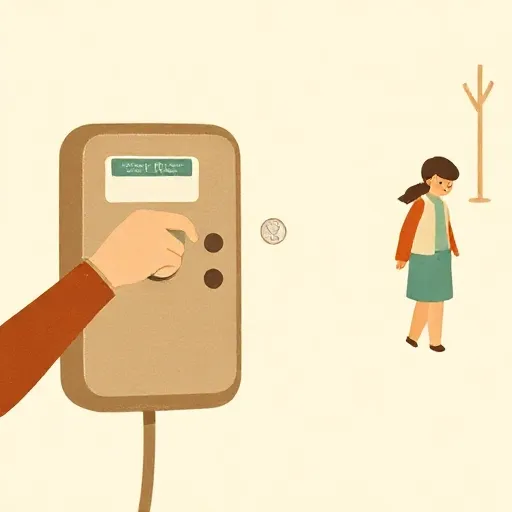
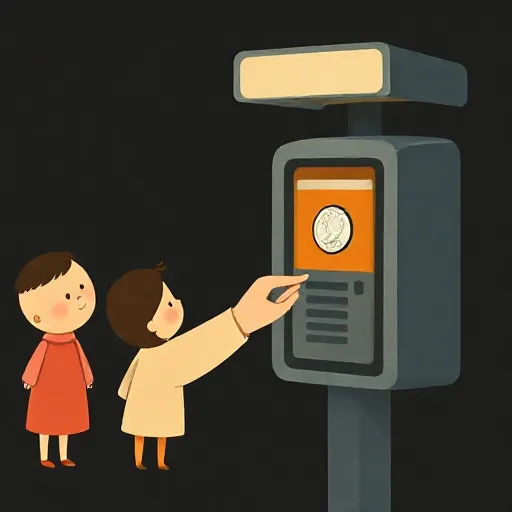
Imagine you are walking down the street and you find a coin — just a dime — in the coin return of a phone booth. A moment later, a stranger drops a bunch of papers all over the sidewalk. Do you stop and help pick them up?
In the early 1970s, two psychologists tested exactly that. One group of people found a dime in the phone booth before the papers fell. Another group found nothing. The results were startling: 88% of those who found a dime helped the stranger. Only 4% of those who didn’t find a dime helped at all. A tiny, lucky moment turned most people from bystanders into helpers.
That experiment set off a storm in psychology and later in philosophy. It suggested that what we do in a given moment depends less on the kind of person we are deep down, and more on tiny features of the situation around us. If that is true, it raises a big question: do we really have stable, lasting character traits — things like compassion, honesty, or courage — or are we just pushed around by whatever happens to be going on?
Global Character Traits: What Would a Truly Compassionate Person Do?

Before we can look at the argument, we need a clear picture of what philosophers mean by a global character trait. They are not talking about being nice only at home, or only when it’s easy. A global trait, like the virtue of compassion, has two important features.
First, cross-situational consistency: a compassionate person acts in a caring, helpful way across many different kinds of situations that call for compassion — not just when a friend is sad, but when a stranger drops papers, when someone is hurt, when a classmate is left out, and so on. The situation might be a noisy cafeteria, a quiet library, or a crowded bus. The disposition to help should be reliably there across all these conditions.
Second, stability: over time, in similar kinds of situations, the person keeps showing the trait. If you are compassionate, you should help today, tomorrow, and a month from now when the same kind of situation comes up.
A person who only helps at home but never at school wouldn’t have a global virtue. They might have a local character trait — a narrow habit that works only in very familiar or safe situations. Philosophers who follow Aristotle (384–322 BCE) have long thought that true virtues are global: they shape your whole life, not just a slice of it.
The dime experiment seems to challenge that. It suggests that most people don’t have the global trait of compassion. Their helping behavior isn’t stable or consistent across situations — it flips on and off depending on tiny, seemingly irrelevant triggers.
The Situationist Argument: Why Some Think Most People Lack Virtues
Two philosophers, Gilbert Harman (1938–2021) and John Doris (born 1963), put the dime experiment and many other psychology studies together to build a two-stage argument. Their main target was Aristotelian virtue ethics — the idea that living a good life requires developing stable virtues like compassion, courage, and honesty.
Stage one: most people don’t have global character traits. Harman and Doris pointed to experiment after experiment where people’s behavior didn’t show the consistency you’d expect from a global virtue. Besides the dime study, they highlighted the famous “Lady in Distress” experiment. Participants heard a loud crash and a woman’s scream in the next room. When a person was alone, 70% rushed to help. But if the same person was in the room with a stranger who did nothing, helping dropped to just 7%. The presence of one inactive bystander almost wiped out compassionate action.
They also drew on Stanley Milgram’s obedience studies. In one version, ordinary people were told by an authority figure to give increasingly strong electric shocks to a test-taker who made mistakes. Even as the test-taker screamed in agony and demanded to stop, 65% of participants kept increasing the shocks all the way to a level marked as lethal. A compassionate person, they argued, would not be so insensitive to someone’s desperate pleas — yet most people were.
Harman and Doris didn’t claim that literally no one has compassion. They left open the possibility that a few rare individuals might. And they didn’t say that compassion as a concept doesn’t exist. Their claim was more measured: based on the evidence, we are justified in believing that most people do not possess the traditional virtues understood as global character traits.
Stage two: this is a problem for Aristotelian virtue ethics. Many forms of virtue ethics appear to assume that ordinary people can and often do develop the virtues. If that empirical assumption is false, then the theory faces serious trouble. At the very least, it would lose its practical relevance for most people, because it would be prescribing a kind of character that almost nobody has.
Defending Virtue: Rarity, Competing Motives, and If‑Then Patterns
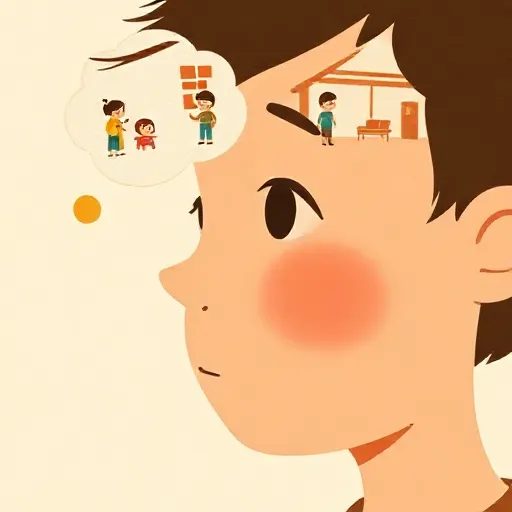
Philosophers have pushed back against this argument in several ways. One of the most common replies is the rarity response. Plato and Aristotle themselves thought that true virtue is extremely rare. Aristotle wrote that most people “live by their feelings” and avoid bad behavior only out of fear of punishment, not because they genuinely love what is good. So the situationist experiments, far from refuting Aristotelian virtue ethics, might simply confirm what Aristotelians have always said: virtue is hard, and most people fall short. If the theory never claimed that most people are virtuous, then data about the majority’s inconsistency doesn’t damage it.
Another response involves competing virtues. In the Lady in Distress experiment, maybe participants weren’t lacking compassion. Instead, their compassion might have been outweighed by another virtue — perhaps trust in the unresponsive stranger’s judgment, or a sense of obedience to social cues. In the Milgram studies, some participants might have had a genuine but misplaced sense of obedience to a legitimate authority. The real picture, on this view, is more complex: we all have multiple virtues that can pull us in different directions, and the situation tips the balance, not our lack of any virtue at all.
Then there is a newer psychological approach called the CAPS model (Cognitive-Affective Personality System). Instead of seeing character as all-or-nothing global traits, CAPS describes personality as a set of if‑then situation‑behavior contingencies. For example, one child might show aggressive behavior if he is teased by a peer, but not if he is warned by an adult. Another child might have the opposite pattern. Each person’s pattern — their intraindividual behavioral signature — can be stable and uniquely theirs, even though the behavior changes from situation to situation.
In CAPS, you can still talk about character traits, but they are built out of these if‑then patterns. A kind person is someone who, across many different kinds of situations that call for kindness, reliably has the thought-and-feeling response that leads to kind action. This is a more flexible, scientifically grounded way of describing how real people actually operate, and some philosophers think it gives Aristotelians a better toolkit for responding to situationism.
Why Does It Still Matter? You, Your Habits, and Your Future Self
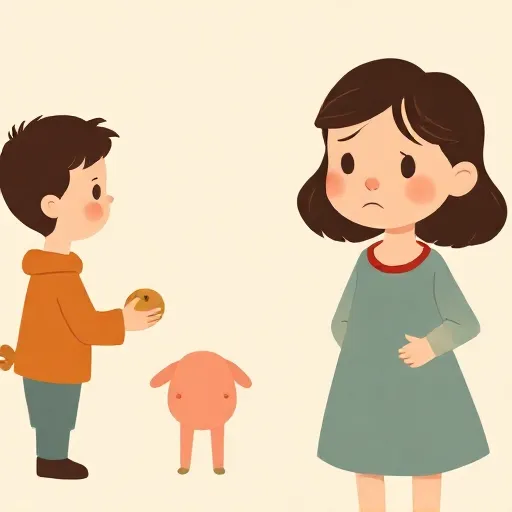
So where does all this leave you — a person trying to be honest, brave, and fair in the middle of lunchtime chaos, stressful tests, and peer pressure?
The situationist experiments teach us something important: situations are powerful. A bad mood, a hurried moment, or the silent example of someone nearby can nudge you toward behavior you wouldn’t normally choose. That doesn’t necessarily mean you lack a good character. It does mean you have to pay attention to the world around you and how it pulls at you.
Philosophers and psychologists who take situationism seriously don’t all conclude that building virtue is hopeless. Many instead say that self-improvement means learning to spot the situations that trip you up, and practicing the thoughts and actions you want to become habits — even when the situation isn’t helping. Modern personality psychologists study broad traits like extraversion and conscientiousness, but those aren’t the same as moral virtues like justice or courage. The deep question is still open: can you shape your own global character over time, or will you always be at the mercy of the next dime, the next bystander, the next impatient urge?
The debate started with a coin in a phone booth. But it ends with you.
Think about it
- If you help a friend one day but ignore them the next because you’re in a hurry, does that mean you’re not really a kind person? Why or why not?
- Can you design a small experiment in your own life — like leaving yourself a reminder or changing your routine — that would make it easier for you to act generously, and what would that tell you about your character?
- Imagine a society where everyone understood exactly which situations make them act worse. Would people be more responsible for their actions, or less?