
Are You a Brave Person, or Just a Brave Action?
What if someone does the right thing for the wrong reason?
Imagine your friend Alex. You think Alex is a kind person because you’ve seen them share snacks, include lonely classmates, and stand up for someone being teased. But then, at a party, Alex pushes someone out of the way to grab the last slice of cake. Does that one shove mean Alex was never kind after all? Or is kindness something deeper — not just a string of nice actions, but a settled part of who Alex is?
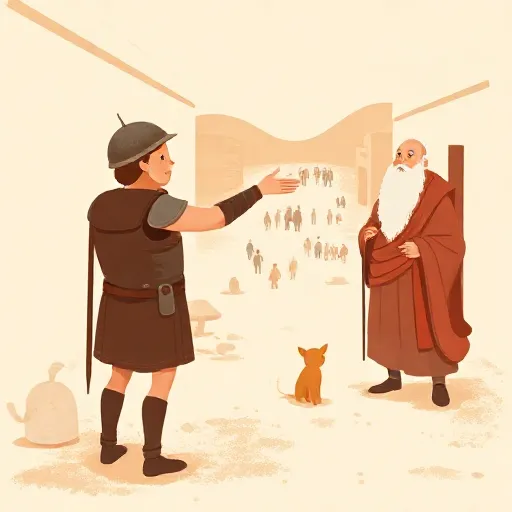
This is the puzzle that got ancient Greek philosophers talking about moral character. They noticed that you can’t define a virtue just by listing the behaviors that go with it. In one of Plato’s dialogues, a soldier named Laches suggests that courage is “standing your ground in battle.” But Socrates (469–399 BCE) points out a problem: sometimes standing your ground is reckless, not brave. If a soldier faces certain death for no strategic benefit, that isn’t courage — it’s foolishness. A truly courageous person recognizes when it’s reasonable to stand firm and when it’s wiser to retreat. So courage — and any virtue — involves more than outward action. It takes good judgment, what Aristotle (384–322 BCE) called practical wisdom (phronēsis). That’s why the Greek moralists turned inward, to character itself, to explain what makes a person excellent.
Aristotle’s recipe: the mean and the harmonious soul
Aristotle put the pieces together in a particularly clear way. He said that a virtue is a state of character that lies in a mean — a middle point between two extremes. Take mildness, the virtue concerning anger. A person with mild character doesn’t never get angry; that would be spineless. Nor do they explode over every small insult; that’s irascible. The mild person feels anger to the right degree, toward the right person, at the right time, for the right reason. The same logic applies to generosity (between stinginess and wastefulness), courage (between cowardice and recklessness), and truthfulness about oneself (between self-deprecation and boastfulness).
Hitting that mean is hard because it’s not a simple arithmetic average. The “right amount” depends on the situation. That’s where practical wisdom comes in: the virtuous person has a trained eye for what’s appropriate. But for Aristotle, virtue is not just good judgment. It’s also about having your emotions in harmony with your reasoning. The non-rational part of your soul (your desires, fears, and feelings) should “speak with the same voice” as the rational part. When you’re truly virtuous, you don’t grit your teeth and force yourself to be generous — you genuinely take pleasure in giving. Your whole self is unified, not torn by inner conflict.
This unity explains why Aristotle thought that genuine self-love — not the selfish kind that grabs for money and status — is the foundation of virtue. A virtuous person enjoys the exercise of their own thinking and deciding powers. That enjoyment makes them want to be the sort of person who acts well, and it helps them see that their own good is tied up with the good of their community. You can’t fully develop or maintain good character alone. You need friendships where you learn to care about others for their own sake, and you need a political community where citizens support each other’s growth.
When reason rules alone: the Stoics and Kant
Not everyone agreed that feelings and reason should harmonize. The Stoics (school founded around 300 BCE) argued that only your thinking matters for virtue. They believed that passions like anger, fear, or jealousy are really just mistaken judgments about what’s good. A truly wise person, the sage, has no passions because they see that health, wealth, even family are not genuine goods — they’re “indifferents.” The only true good is excellent rational activity, which the sage always has. So if you lose everything in a disaster, a Stoic would say it’s no worse than a broken cup. The sage acts kindly toward others only because it accords with the rational order of the universe, not because they feel sympathy.
Centuries later, the German philosopher Immanuel Kant (1724–1804) arrived at a view that sounds a bit like self-mastery rather than harmony. In his Metaphysics of Morals, Kant divided moral duties into two kinds: duties of justice (precise, enforceable) and duties of virtue (imperfect, like helping others or developing your talents). Because our emotions constantly try to pull us away from doing our duty, we need self-mastery, which Kant called a kind of courage. Virtue is reason holding the reins so that feelings don’t take over. The virtuous person still has kind feelings, but those feelings are cultivated to assist reason, not to speak with the same voice. For Kant, character was less about inner harmony and more about a well-disciplined will.
Do we really have stable character? The surprise experiments

So far, the story assumes that people have robust traits — stable, consistent features that show up across many different situations. But what if that assumption is wrong? Some modern philosophers and psychologists, drawing on experimental social psychology, have called this into question.
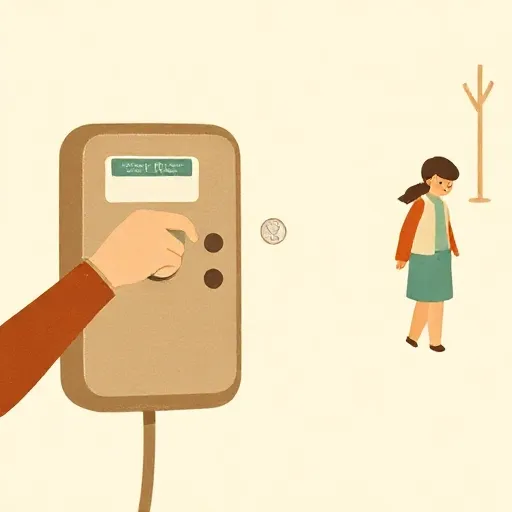
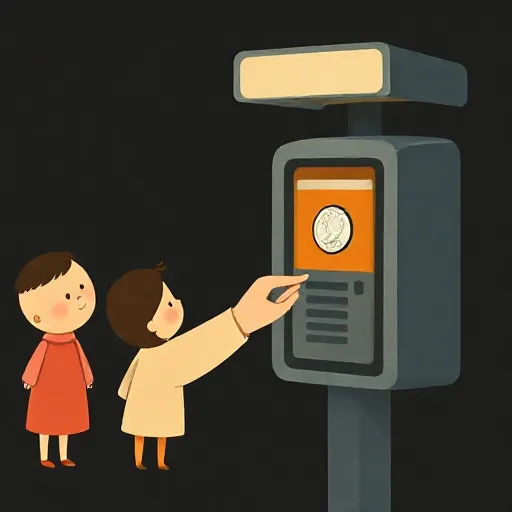
Consider an experiment: people who found a dime in a payphone’s coin return slot were far more likely to help a stranger who dropped some papers moments later than people who didn’t find a dime. In another study, seminary students on their way to give a talk about helping those in need encountered a man slumped over and groaning. Those told they were running late were much less likely to stop and help than those told they had plenty of time. Even more unsettling were the obedience experiments by Stanley Milgram in the 1960s. Ordinary people, when politely but firmly instructed by an authority figure, were willing to administer what they believed were painful electric shocks to a screaming victim. Most subjects did not refuse.
These findings have led philosophers like John Doris to argue that we don’t have the broadly consistent character traits the ancient Greeks imagined. Instead, we have narrow, “local” habits: you might be helpful when in a good mood, but not when in a hurry. If tiny, morally irrelevant features of a situation — a dime, a clock — can sway behavior so strongly, maybe “character” is not a sturdy inner structure but a fragile collection of piecemeal tendencies.
Defenders of the traditional view reply that these experiments treat virtues too simply. Being a helpful person doesn’t mean you must answer every call for help; you have to weigh other important goals. The seminary students might reasonably prioritize keeping their speaking commitment. Moreover, in the Milgram experiments, many subjects protested and showed inner conflict. On Aristotle’s picture, they weren’t vicious — they were incontinent, knowing what’s right but failing to do it because of pressure and fear. That’s a real character condition, just not a virtuous one. The situationist challenge reminds us that character involves practical reasoning and emotional depth, not just knee-jerk behavioral patterns.
Why your character still matters

Even if character is harder to pin down than we might hope, it remains at the heart of how we see ourselves and others. When you decide who to trust, who to befriend, or what kind of adult you want to become, you’re making judgments about character. Philosophers from Aristotle to John Rawls (1921–2002) have argued that our institutions — our schools, workplaces, families, and laws — shape the kind of people we grow into. A society that gives everyone a real chance to develop their thinking and deciding powers, and to cooperate with others on equal terms, makes it possible for more people to form the steady self-esteem and generous concern that mark a good character.
But if our surroundings do so much of the molding, are we ever fully responsible for who we are? That worry has a long history. Yet Aristotle’s insight is that most of us have the ordinary human capacities to take pleasure in using our minds and to respond with warmth when others genuinely help us. Character is not something you either have or lack for good, and it isn’t built in solitude. It grows in friendships, in shared projects, in the slow work of learning what to care about. That means becoming a decent person is a real, though challenging, project — for you, for the people around you, and for the communities you help to shape.
Think about it
- If someone always acts kindly but secretly hates doing it, are they a kind person? Why or why not?
- Imagine a scientist could predict every choice you’ll ever make based on your childhood and your brain. Would it still be fair to praise or blame people for their actions?
- Think of a time you acted out of character — maybe you lost your temper when you’re usually calm. Did that one action change who you really are, or does your character include the reasons you snapped?