How to Be a Good Person (Without a Rulebook)
A Wallet on the Ground

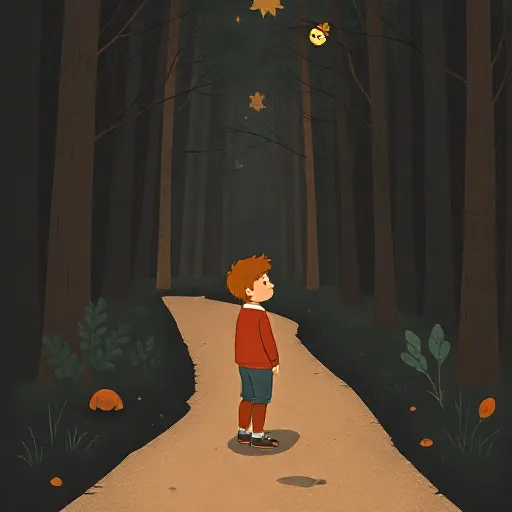
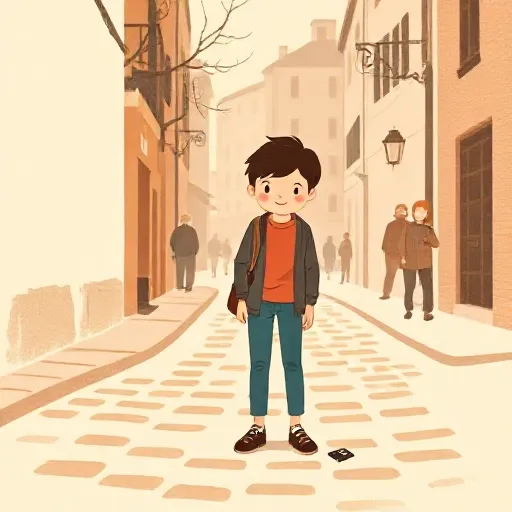
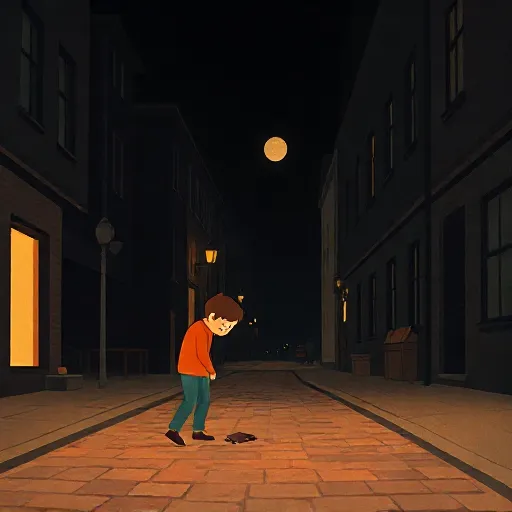
You’re walking through the park and see a wallet on the ground. No one else is around. Inside is cash and an ID. What do you do? You could just keep it, or track down the owner. You might think, “A rule says I should return it,” or calculate what benefits you most. But there’s a different way to answer: What kind of person am I trying to be?
That shift—from rules or consequences to character—is the key move of virtue ethics. It is one of the three big approaches in moral philosophy, alongside deontology (which focuses on duties and rules) and utilitarianism (which focuses on producing the best outcomes). For over two thousand years, from ancient Greece to classical China, virtue ethics was the dominant way of thinking about how to live. It went quiet for a while but roared back in the 1950s, when philosopher Elizabeth Anscombe (1919–2001) argued that modern moral theories had forgotten the most important questions: What sort of person should I be? What does a good life really look like?
What Is a Virtue, Anyway?
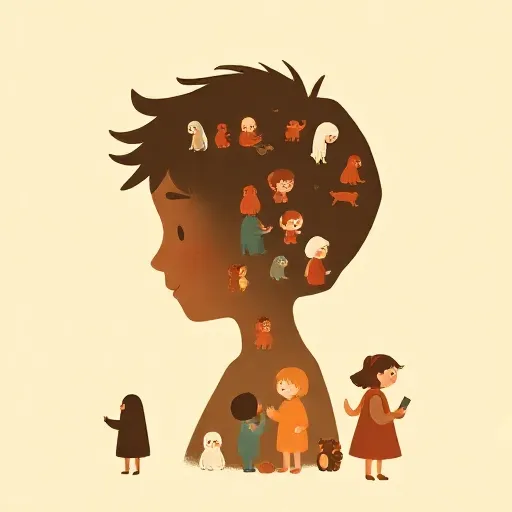
In everyday language, a virtue is a positive trait like honesty, courage, or kindness. But virtue ethicists dig deeper. A virtue is an excellent trait of character—a deeply rooted disposition to notice, feel, choose, and act in certain ways. It is not a one-time action or a shallow habit like drinking tea every morning.
Take honesty. An honest person doesn’t just tell the truth because they fear getting caught or think it’s the best policy. They see “that would be a lie” as a strong reason in itself not to say something. Their honesty shows up not only in words but also in their choices of friends, their disgust at cheating, their admiration when the truth comes out. The same character trait affects thoughts, emotions, and actions across many situations. That’s what philosophers call a multi-track disposition—one virtue runs on many tracks at once.
No one has a virtue perfectly. Most of us are honest most of the time but have blind spots—maybe we are dishonest about small things or less kind to people who seem different. Aristotle (384–322 BCE) drew a line between full virtue and continence (strength of will). A fully virtuous person does the right thing without an inner battle. Someone who is merely continent has to wrestle with temptation. Both are admirable, but the fully virtuous person’s character is more deeply integrated.
The Genius of Practical Wisdom
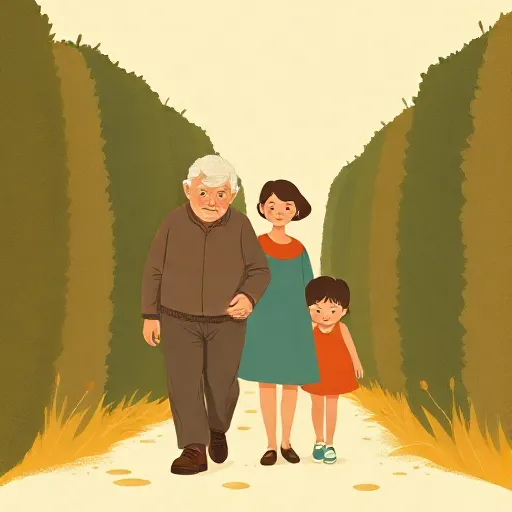
You can be well-intentioned and still mess things up. A child might tell a painful truth because “lying is wrong,” without realizing that kindness sometimes calls for silence. That’s where practical wisdom—or phronesis (pronounced fron-ay-sis)—comes in.
Phronesis is the ability to see what really matters in a situation and know how to act on it. It isn’t just cleverness; it’s a deep understanding of what is truly good for human beings. The practically wise person recognizes which features of a situation are morally important, how to balance conflicting concerns, and what consequences an action is likely to have. They have learned—usually through years of experience—how to make good intentions actually make the world better.
According to Aristotle, without phronesis, virtues remain only “natural virtues,” like the innocent kindness of a nice child. A nice child can still cause harm by being impulsive or failing to see the bigger picture. Practical wisdom turns those raw inclinations into full virtues, allowing a person to handle even complicated, high-stakes dilemmas well.
The Good Life and the Right Action
Virtue ethicists don’t just describe what a good person is like; they also connect virtue to what makes a life worth living. Their word for this is eudaimonia (yoo-dye-moh-nee-ah). Translations such as “happiness” or “flourishing” come close, but each misses something. Eudaimonia is not just a cheerful mood—you could be mistaken about whether your life is truly eudaimon. It is more like the kind of happiness worth seeking, the kind that means you are living well as a human being, not just having a good time.
The dominant version of virtue ethics, the eudaimonist approach, says virtues are good because they are part of a eudaimon life. For Aristotle, virtue is necessary for flourishing, but you also need some external luck—friends, health, a decent society. For the Stoics, virtue alone is enough. Either way, a life spent chasing only money or pleasure is, according to this view, a wasted life.
But if virtue ethics is built around character, how does it tell you what to do right now? Different virtue ethicists answer differently. Some modern exemplarist theorists, like Linda Zagzebski, say we learn right action by looking at exemplars—people whose emotional responses and choices we deeply admire. We don’t start with a definition of goodness; we start by noticing someone and thinking, “I want to be like that.” Over time we build up a richer vocabulary of virtues and vices. Then, to figure out what to do, we can ask: What would a courageous, honest, compassionate person do in my shoes?
Another approach, called target-centered virtue ethics (developed by Christine Swanton), begins with a more detailed map of what each virtue aims at—its “target.” Courage aims to handle danger and control fear; generosity aims to share time and resources to benefit others. A right action hits the target of an appropriate virtue, often balancing several targets at once.
“But Are There Really Such Things as Virtues?”
If you’ve been following, you might have a few doubts. Maybe what counts as a virtue just depends on your culture—ancient Spartans valued warlike fierceness in ways we don’t. Or maybe social psychology shows that character traits are an illusion.
Philosophers call the first worry the cultural relativity objection. Virtue ethicists respond that the list of core virtues—courage, justice, honesty, compassion—shows up in remarkably similar ways across different times and places. And they point out that rival theories face the same problem: ideas about happiness or correct rules also vary across cultures. Some argue that virtue ethics actually handles this better, because understanding local expressions of virtue requires the very practical wisdom that the theory emphasizes.
The second worry is the situationist challenge, inspired by experiments in social psychology that seem to show people’s behaviour is shaped more by small features of their surroundings—like whether they just found a coin in a phone booth—than by any stable character trait. If that’s right, then maybe there are no such things as virtues at all.
Virtue ethicists have pushed back, noting that a virtue, as a multi-track disposition, would never be detected by a single lab experiment. You would need to see how a person thinks, feels, and acts across many different circumstances over time—exactly what one-shot studies can’t do. Some, like philosopher Robert Merrihew Adams, have suggested that character traits can be “frail and fragmentary” and still count as real virtues, even if they don’t live up to the highest Aristotelian ideal. The engagement with psychology has, in fact, made the discussion of character far richer and more precise, and the situationist challenge hasn’t killed virtue ethics—it has made it more careful.
There’s also a simpler confusion: the egoism objection. Critics sometimes say, “If you help someone because you want to be a good person, aren’t you really being selfish?” But the virtuous person doesn’t help in order to check off a virtue box; they help because they see another person’s need—that is their reason. A generous person gives gladly because that’s what generosity involves. They aren’t secretly calculating how to achieve eudaimonia; they are living it.
What Kind of Person Will You Become?
So why does a 2,500-year-old debate about character matter to you? Because every day you face choices that shape who you are. When you decide whether to own up to a mistake, stick up for a friend, or listen to someone whose views you find strange, you are not just picking an action—you are training your character. Virtue ethics argues that these small, repeated decisions build (or erode) the virtues that make a life go well.
Today, philosophers are applying virtue ethics to new problems: environmental responsibility, bioethics, and political life. Teachers around the world are using “character education” inspired by these ancient ideas, not to drill kids with slogans but to help them practice noticing what matters, reflecting on their motives, and striving to become people they can be proud of.
That wallet on the ground was never just about one act. It was about the sort of person you want to be. Aristotle and Confucius didn’t leave us a simple checklist—they left us a harder and much more interesting challenge: to grow in practical wisdom and become fully alive. The question hasn’t changed. What kind of person will you become?
Think about it
- If you help someone because you genuinely care about them, is that more morally valuable than helping them out of duty, even if the result is the same? Why?
- Can you think of a situation where being too honest could make you a worse friend? Where is the line between honesty and cruelty?
- If you could swap your current character for a completely flawless one overnight, would you do it? What might you lose?