Can a Perfect Being Be Perfectly Good?
What would a perfectly good superhero look like?
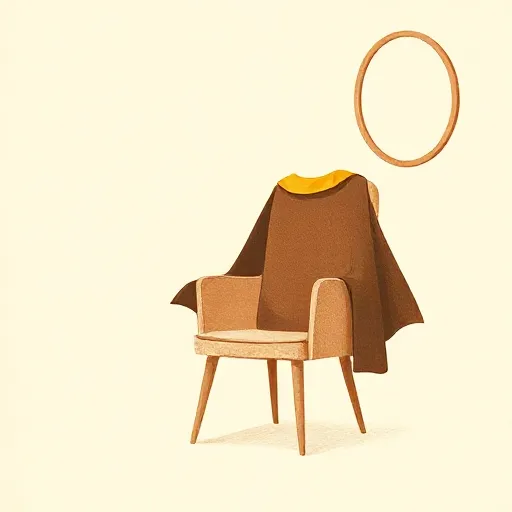
You are designing the ultimate superhero. She can fly, lift mountains, knows everything. But then you pause at the slider labeled “perfect goodness”. What do you even set it to? If she is already unstoppable, what would it mean for her to be perfectly good?
For centuries, philosophers have asked the same sort of question — not about superheroes, but about a being that is absolutely perfect in every way. Many thinkers in philosophy of religion call that being God. But you do not need to believe in a god to wonder: Could anything be perfectly good? And if so, what would that actually look like?
When philosophers say a perfect being is perfectly good, they usually mean moral perfection. That is not about super-strength or knowing all facts. It is about having the best desires, the best character, and doing the best things a being could possibly do. A morally perfect being would never ignore someone’s suffering for no reason, and would always respond to good reasons in the best possible way. The puzzle starts right here. If a being always does the best thing, can it still be free? And is there even a “best thing” available?
The freedom puzzle: Can you be good if you can’t be bad?

Think about a person who never lies, not because they always try hard to tell the truth, but because they are physically incapable of lying. Would you praise their honesty the same way you would praise a friend who struggles to be truthful? Many philosophers, like Alvin Plantinga (born 1932), have argued that being genuinely good requires something called significant freedom — the real possibility of doing wrong.
If a perfect being is so good by nature that it is impossible for it to do evil, then it never faces a genuine choice between right and wrong. Critics say that without that risk, the being’s actions are not morally praiseworthy; they are just automatic. So a perfectly good being might be impossible: you cannot have both perfect moral safety and the kind of freedom that makes goodness meaningful.
But other philosophers push back. Some, like the great medieval thinker Thomas Aquinas (c. 1225–1274), imagined that beings in heaven are so full of love and wisdom that they see no point in sinning. They are not robots — they are hyper-willing to do right, and evil simply does not look like a live option. On this view, freedom does not mean being able to flip randomly between good and bad; it means acting from your own deepest desires without being forced, even if those desires make wrongdoing unthinkable. If that kind of freedom is genuine, then a perfect being could be both perfectly free and perfectly good.
No best world: What if there’s always a better one?

Even if we solve the freedom problem, there is another, stranger challenge. Imagine you are playing a universe-building video game. You can make any world you can think of: every detail is under your control. You love making things good for the creatures in that world. But you notice something unsettling: for every beautiful world you design, a slightly more beautiful one pops into your imagination. There seems to be no absolute best world — just an endless staircase of better and better ones.
This is the no-best-world scenario, made famous in recent times by philosophers like William Rowe (1931–2015). If there is no best possible world, then no matter which one a perfect being creates, there is always a morally better world it could have created instead. The being’s action would always be surpassable — it could have done better. And that seems to mean it is never perfectly good.
One way out is to say that a perfect being’s goodness is not about picking the absolute best world, like scoring points. Maybe the being uses a different, fair rule — for example, it says, “I see that comparing worlds would never end, so I will set aside that game and just pick a world I genuinely love, like an artist choosing a painting.” Some philosophers argue that using second-order reasons — reasons about how to use other reasons — can make a choice perfectly wise even if the outcome is not the maximum possible. On that view, a perfect being could be perfectly good even if an even greater world exists in theory, because the decision-making itself was flawless.
Is moral goodness the same for a perfect being as for us?
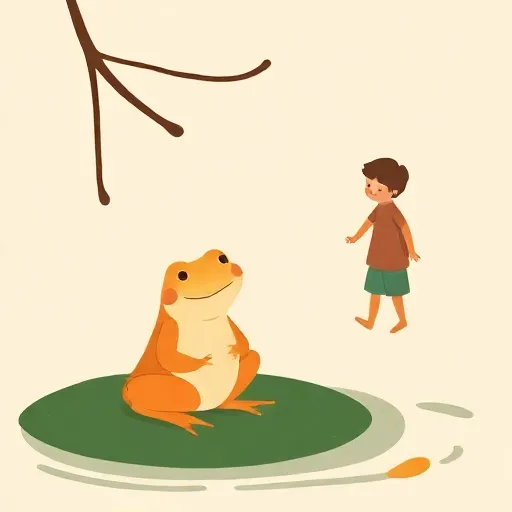
The medieval philosopher John Duns Scotus (c. 1266–1308) made a famous distinction that turns these puzzles upside down. He said some perfections are pure perfections — things it is simply better to have than not to have, like knowledge or power. But other traits are impure perfections — they are perfections only for a certain limited kind of thing. A perfect frog has webbed toes. A perfect absolutely perfect being does not need toes at all, much less webbed ones. So webbed toes are an impure perfection.
What if familiar, warm-hearted moral goodness — the kind that hears a child cry and rushes to help — is also an impure perfection? Maybe it makes sense only for limited beings like us, who share vulnerability and need to cooperate. Perhaps a perfect being’s goodness could look very different, like loving itself perfectly and being never required to care about our wellbeing the way we must care about each other. Some medieval thinkers, including Aquinas, suggested something like this.
But then we face a fierce objection, voiced by John Stuart Mill (1806–1873). Mill argued: if we call God “good” but the word means something totally different from what we mean when we call a person good, then we are not really saying anything meaningful. We are just using a label that has lost all its normal weight. So either the perfect being must be bound by the same kind of moral rules we know — rules that take our pain and joy seriously — or the claim “God is perfectly good” stops being a claim we can even understand.
Why this matters when you try to be good

You are not designing a universe, but you still face a version of these puzzles. Suppose you have a friend who always tells the truth, but you later learn they are simply incapable of feeling the temptation to lie. Do you still call them honest in the same way you call yourself honest, when you struggle to tell the truth? And if being perfectly good meant never even feeling the pull to do something selfish, would you still want to be perfectly good, or would that feel like losing part of your freedom?
The debate about perfect goodness pushes us to ask what goodness itself is. Is it about following a cosmic rulebook, or about the struggle, or about the state of your character? The questions that begin with a superhero sketch end up right inside your own choices — and nobody has settled them yet.
Think about it
- If a scientist could predict every choice you will ever make, would it still be fair to punish people for bad choices?
- Imagine a video game where no matter how high your score, there is always a higher possible score. Can the game still be fun? What does that say about trying to be the “best” person you can be?
- If you found out that being perfectly good meant you could never even feel tempted to cheat on a test, would you still want to be perfectly good? Why or why not?