Can a Dirty Room Change What You Think Is Wrong?
The Dime in the Payphone
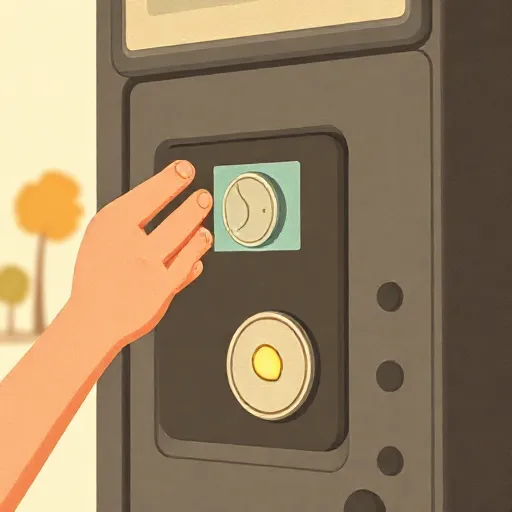
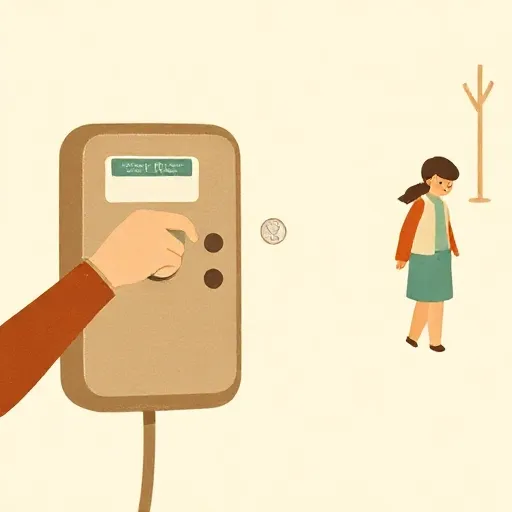
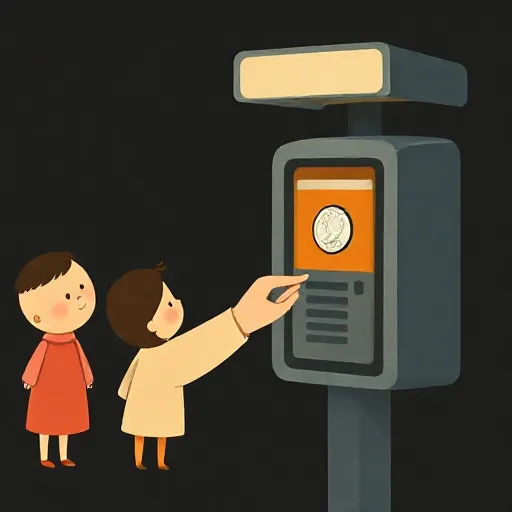
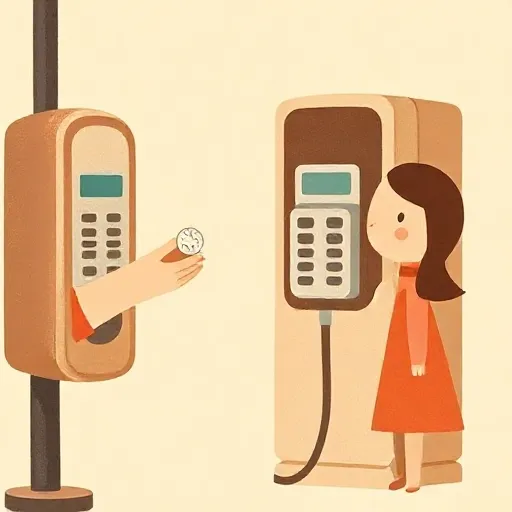
Picture a chilly afternoon in the 1970s. You’re walking along a city sidewalk and spot a payphone. You glance at the coin return slot — and there’s a dime sitting right there. You take it. A moment later a stranger drops an armful of papers right in front of you. Do you help pick them up?
In a real experiment by psychologists Alice Isen and Paula Levin (1972), people who found that dime were far more likely to help the stranger. Finding the coin didn’t change anything about the stranger’s need, their own beliefs about kindness, or their overall character. But it nudged people toward helping anyway. The study was one of the first hints that moral behavior — what we actually do — can be tugged around by tiny things we barely notice.
This is the sort of puzzle that drives experimental moral philosophy. Instead of just sitting back and imagining what people ought to do, philosophers now run real experiments. They test our moral judgments and actions under different conditions to see how they shift. The results have shaken up some old assumptions about how steady and reliable our moral minds really are.
The Chairman and the Environment

In the early 2000s, philosopher Joshua Knobe (born 1974) ran an experiment that became a landmark. He gave people a simple story:
A company chairman has to decide whether to start a new program that will boost profits. The program will have a side effect: it will either harm the environment or help the environment. The chairman says that he doesn’t care about the environment at all and just wants to make as much profit as possible. He starts the program, and the side effect happens exactly as forecast.
Then Knobe asked: Did the chairman bring about the side effect intentionally?
When the side effect harmed the environment, most people said yes. When it helped the environment, most people said no. This is the Knobe effect, also called the side‑effect asymmetry. The only difference is whether the outcome is morally bad or good — yet that flips people’s judgment about something as basic as whether an action was intentional.
This finding has been replicated dozens of times. It raises a huge question: Do our moral opinions secretly shape how we see other people’s minds? Some philosophers think the effect reveals that concepts like intentional action have a deep moral component — that we can’t fully understand them without thinking about right and wrong. Others worry the asymmetry is a bias, a crooked lens that distorts how we picture other people’s thoughts and choices. Both sides agree on one thing: a few sentences about a business decision can open a window into how moral thinking works.
Your Brain on a Trolley

For decades, philosophers have debated trolley problems: a runaway trolley will kill five people unless you act. In one version you can pull a switch to send the trolley onto a side track, where it will kill one person instead of five. In another version you can push a large person off a footbridge to stop the trolley. Most people quickly say it’s okay to pull the switch, but wrong to push the person.
Philosopher and psychologist Joshua Greene (born 1971) put people inside an fMRI scanner and presented these dilemmas. He found that impersonal choices like pulling a switch lit up brain regions linked to cognitive control and careful calculation. Personal choices like pushing someone off a bridge lit up regions linked to emotion and social feeling. People who did judge pushing as acceptable took longer to answer — as if they had to override a strong emotional stop signal.
Greene and philosopher Peter Singer (born 1946) argue that those emotional gut reactions are an unreliable guide to right and wrong. Because the push feels yucky, we invent a rule against it. But the switch, which saves the same number of lives, doesn’t trigger that yuckiness — so we think it’s fine. Greene says we should trust the more calculating side of our brains when making hard moral choices. Other philosophers push back: emotions themselves can track real moral reasons, not just a messy alarm bell. The brain experiments don’t end the argument, but they give us a new map of the fight between head and heart.
The Good Samaritan Who Was in a Hurry
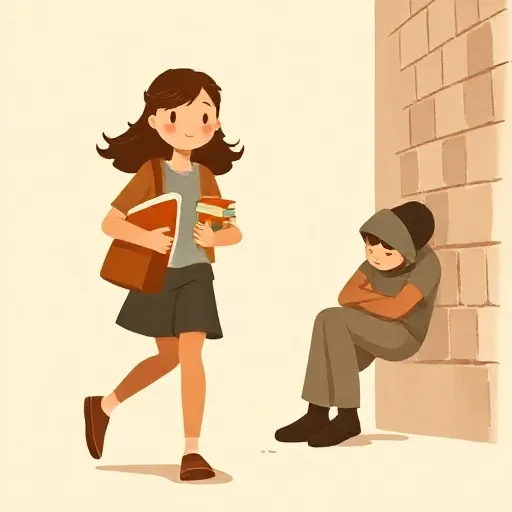
In a now‑famous 1973 study, psychologists John Darley and Daniel Batson asked seminary students (people training to become ministers) to prepare a short talk. Some were told to speak about job opportunities; others were told to speak about the parable of the Good Samaritan. Then each student was sent to another building to deliver the talk. Some were told they were late and had to hurry; others were told they had a few minutes to spare.
On the way, every student walked past a man slumped in a doorway, coughing and moaning.
The topic of the talk made almost no difference. But being in a hurry made a huge difference. Only 10% of those in a rush stopped to help, while 63% of those with time to spare did. The situation — a ticking clock — outweighed their character, their values, and even the story they had just been thinking about.
This study became a centerpiece of a challenge to virtue ethics, the view that morality is mainly about having stable character traits like compassion, honesty, and courage. Philosophers such as John Doris (born 1963) and Gilbert Harman (1938–2021) argued that most people don’t have broad, steady virtues. Instead, we have local traits: honest‑when‑in‑a‑good‑mood, compassionate‑unless‑late. If that’s right, then a moral theory built on the hope that we will all become deeply virtuous might be aiming at a target that human nature doesn’t really reach. Defenders of virtue ethics reply that hardly anyone claims most of us are already virtuous — virtue is a rare ideal to work toward, not a description of how we usually behave. Still, the hurry experiment makes us ask: how much of your kindness is you, and how much is just a slow afternoon?
Is Stealing Always Wrong? Depends Who You Ask

Experiments have also reached across borders to see whether moral intuitions are shared or scattered. In a 2008 study, Geoffrey Goodwin and John Darley gave American adults statements like “before the third month of pregnancy, abortion for any reason is morally permissible” and asked whether the statement was a fact, an opinion, or something in between. People treated some moral claims as more factual than matters of taste like “this ice cream is delicious,” but less factual than claims like “the earth goes around the sun.” And they were inconsistent: the same person could see one moral issue as a fact and another as an attitude.
Other cross‑cultural work has deepened the puzzle. The Mandarin word usually translated as “immoral” picks out behaviors seen as uncivilized rather than harmful. In some small‑scale societies, whether a side effect is judged intentional depends on the social rank of the person involved. Even the idea that there is a special category of “moral” rules — distinctive from social conventions — may not be present in every culture.
These findings unsettle a big assumption in philosophy. Many thinkers have claimed that moral realism — the view that moral claims describe real features of the world, like “the cat is on the mat” — captures how ordinary people naturally talk and think. But if ordinary people are all over the map, that starting point looks shaky. It doesn’t prove realism is false. But it does suggest that we can’t just point to “what everyone feels” and call the debate settled.
What It Means for You

So experiments have shown that finding a dime can make you more helpful, that your brain treats pushing and switch‑pulling as totally different problems, and that being late can turn a caring person into a passerby. You might wonder: does that mean our moral intuitions are useless?
Not at all. But it does mean we should be humble about them. A snap judgment that you feel with total confidence might be driven partly by your mood, the weather, or what you ate for breakfast — not just by the facts of the situation. If you know that, you can pause. When you’re about to call someone’s action “wrong on purpose,” you can ask whether the bad feeling is coloring how you see their intention. When you have to make a hard choice while rushed or fuming, you can step back and think again later.
Experimental philosophy doesn’t hand out a new rulebook. Instead, it holds up a mirror. The ancient Greek historian Herodotus told a story about a Persian emperor who was amazed that different cultures were horrified by different funeral practices. He concluded that “custom is king.” Experiments today are unpacking how those customs work inside our own heads. You still have to decide what’s right. But you can decide with your eyes a little wider open.
Think about it
- If finding a coin makes you more likely to help someone, does that make your helping less admirable — or does it just show how tiny nudges can bring out real kindness?
- Imagine a virtual‑reality game that trains your brain to feel more empathy when you face a tough choice. Would that make your decisions better, or would it just replace one gut feeling with another?
- If people in different parts of the world deeply disagree about whether it’s wrong to lie to protect a friend’s feelings, does that mean there is no single right answer — or could one side simply be mistaken?