Why a Dime, a Hurry, and a Whiff of Fart Spray Can Twist Your Morals
Would You Save 200 People or Take a Gamble? A Tiny Wording Trick
Imagine you are in charge of a country facing a deadly outbreak. A disease is expected to kill 600 people. You must pick one of two plans. Plan A will save exactly 200 lives. Plan B has a one‑third chance of saving all 600, and a two‑thirds chance of saving nobody. Most people choose Plan A. Now imagine instead that you are told: Plan C means 400 people will die. Plan D has a one‑third chance that nobody dies and a two‑thirds chance that all 600 die. Most people now pick Plan D. The outcomes are identical — 200 saved, 400 dead — yet the wording flips our choice.
This is a thought experiment, a short imaginary story that philosophers use to test moral theories. For centuries, they have relied on people’s gut reactions to such stories. Those reactions are supposed to work like data: a theory that clashes with widely shared reactions might have a problem. But if our reactions can be flipped by something as trivial as whether a plan is described as “saving lives” or “letting people die,” can we really trust them?
Psychologists Daniel Kahneman (1934–) and Amos Tversky (1937–1996) discovered this framing effect in 1981. The way a choice is presented — the frame — powerfully shapes what people think is right, even when the underlying facts are the same. Moral philosophers began to worry: are their favorite thought experiments just revealing how our brains are nudged, not deep moral truths?
Even Your Deepest Moral Feelings Can Be Nudged
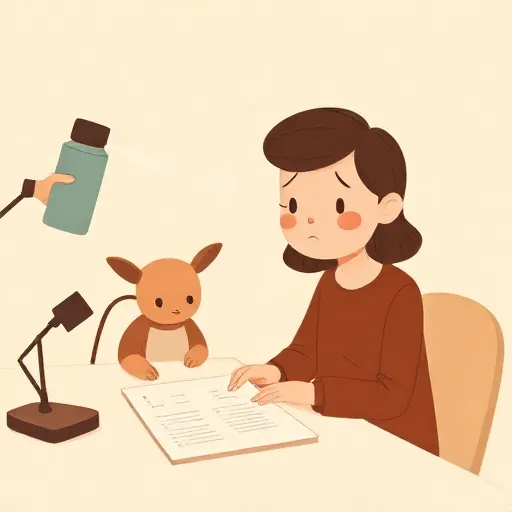
Framing is not the only invisible nudge. In one set of studies, psychologists presented classic moral dilemmas in different orders and found that people’s judgments changed depending on which story they read first. Even professional philosophers — experts trained to spot such things — showed the same order effects. In some cases, the philosophers were more easily shifted than non‑philosophers.
Environment matters too. Researchers reported that people judged actions as more wrong when they were near dirty pizza boxes and a faint fart‑like smell, or when no soap or hand sanitizer was around. Simply having a hand‑sanitizer dispenser in sight made moral judgments less harsh. In another study, hearing a funny video clip or an inspiring story nudged people’s moral reactions in opposite directions.
Culture also plays a role. Social psychologist Jonathan Haidt told people in different countries a story about a man who cooked and ate a chicken after doing something private and gross with it — but nobody was harmed. People from lower‑income backgrounds were far more likely to say the man should be punished than were wealthier, highly educated people. If philosophers are mostly from high‑income, highly educated groups, whose gut reactions should count?
These findings challenge the idea that our moral intuitions — the instant feelings of right and wrong that pop into our heads — are a reliable foundation for ethics. They seem to shift with tiny, ethically irrelevant pushes. So what about an even bigger question: if someone’s actions are completely determined by the laws of nature, can we still blame them?
Philosophers who say “no” are incompatibilists; they believe that determinism (the idea that everything that happens, including your choices, is the result of prior events and natural laws) is incompatible with moral responsibility. Compatibilists say responsibility and determinism can coexist. To find out what ordinary people think, researchers told subjects stories about a man named Bill who murders his family in a universe where every event is determined. When the story was vivid and concrete, most people said Bill was blameworthy — a compatibilist answer. But when the question was asked in the abstract — “Can a person be fully morally responsible in a deterministic universe?” — most said no. Our deepest intuitions about blame flip depending on how the story is told.
When Situations Take Over: The Good Samaritan and the Dime
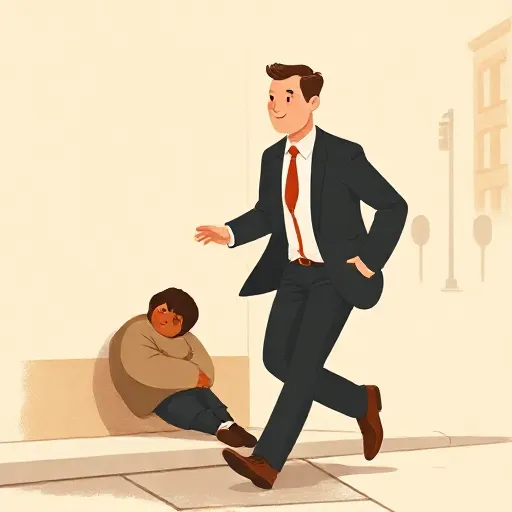
What about actions themselves? Could a good person be counted on to do the right thing no matter what? In the 1970s, psychologists set up a now‑classic experiment. Seminary students — people training to be religious leaders — were told to walk to another building to give a talk. Some were told they were running late; others were unhurried. Along the path, they passed a man slumped in a doorway, coughing and groaning. Only 10% of the hurried students stopped to help. Of the unhurried, 63% helped. The pressure of a schedule mattered more than their training or beliefs.
In another study, researchers planted dimes in the coin‑return slots of payphones. People who found a dime were 22 times more likely to help a woman who had dropped a pile of papers (88% helped, versus only 4% who found no dime). The famous obedience experiments by Stanley Milgram showed that ordinary people would deliver what they thought were painful electric shocks to a screaming victim, just because an authority figure told them to. And in the Stanford Prison Experiment, college students role‑playing as guards quickly began to humiliate and abuse those role‑playing as prisoners — so much so that the study was stopped early.
These studies and many others reveal a situationist pattern: seemingly minor features of a situation — a clock, a dime, a lab coat — can dramatically shape whether someone acts kindly or cruelly. The philosopher John Doris argued that if behavior varies this wildly with circumstances, we should be skeptical about the idea that people have stable character traits like honesty or compassion that will show up across different situations. This view is called character skepticism. (Skeptics don’t claim traits never exist — only that they are far less consistent than we imagine.) Walter Mischel (1930–2018), a leading psychologist, also challenged the idea that a person’s behavior is governed by broad, fixed traits.
Can You Really Be a Good Person All the Time?
Virtue ethics, a tradition stretching back to Aristotle (384–322 BCE), holds that being a moral person means developing excellent character — virtues like courage, generosity, and wisdom — through practice and good habits. Situationist findings seem to challenge this: if a hurry or a dime can override virtue, how can anyone really become good?
Virtue ethicists fight back. Some say the variation in behavior is not random; it is a sign of practical wisdom. A virtuous person decides differently depending on what each situation ethically requires. Sometimes you should stop and help; sometimes you really must keep your appointment. But this defense struggles with ethically irrelevant influences: it is hard to argue that finding a dime is a good reason to help, or that not finding one justifies walking by.
A more recent reply borrows from the science of expertise. Maybe virtue is a skill, like playing chess or the violin, built through thousands of hours of deliberate practice. If that is right, then truly virtuous people would be rare — just as chess masters are. That would fit with Aristotle’s view that virtue takes a lifetime of effort. But the expertise model raises new puzzles. Experts usually excel in narrow fields: a chess expert has a great memory for chess positions, not for baseball trivia. Being good at life, however, seems to require being good at everything. What would “moral practice” even look like? How do you practice compassion for 10,000 hours? And if natural talent matters — you cannot train a jockey into a football lineman — then becoming virtuous might require rare gifts. That could leave most people with only a fragile grip on decency, exactly the worry the situationists raised.
Why This Matters: Judging Others and Designing a Fairer World

Moral psychology does not hand us a tidy answer about what is right. But it gives us powerful reasons to be humble. If our strongest moral intuitions can be pushed around by a bad smell or the order of questions on a sheet of paper, we should not automatically trust our gut when we feel certain about a controversial issue. We need to slow down and ask whether something irrelevant is steering us.
The character debate carries a similar lesson. When a classmate does something cruel, our first impulse may be to label them a bad person. But social psychology suggests that the situation — the social pressures, the rush, the small frustrations — probably played a huge role. That does not excuse the action, but it might make us less quick to write someone off forever. It also suggests that if we want to build a more decent world, we should spend less time lecturing people about their character and more time designing environments that make it easy to do the right thing: not forcing people to choose in a panic, keeping public spaces clean and calm, and making sure nobody’s moral judgment is being silently nudged by a whiff of fart spray.
Think about it
- If you learned that a bad smell in the room made you judge a person more harshly, would you trust your judgment the same way next time? Why or why not?
- Imagine a friend who almost always shares their lunch — except on days when they are extremely hungry. Would you say your friend has a generous character, or does it depend too much on the situation?
- If we know that being in a hurry makes people less likely to help, should schools and families change how they schedule activities? What might that look like?