
Can You Wrong a Cat? The Surprising Fight Over Animal Morals
A Stray Cat and a Hard Question
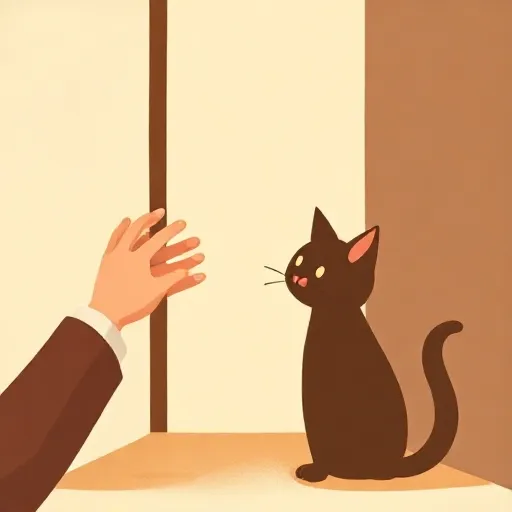
Imagine you are walking home and you see a stray cat. If you kick it, you know that’s cruel. But why exactly is it wrong? Is it wrong because the cat itself can be hurt, or only because kicking animals might make you a worse person? This question is about moral considerability — which beings can be genuinely wronged, not just treated badly by mistake. For centuries, many thinkers said only humans belong in the “moral club.” Others have pushed back hard, arguing that what really matters is suffering, not species membership. The fight is not over. It shapes everything from what you eat for lunch to how we treat wild animals.
The Speciesism Trap: Loving Only Humans
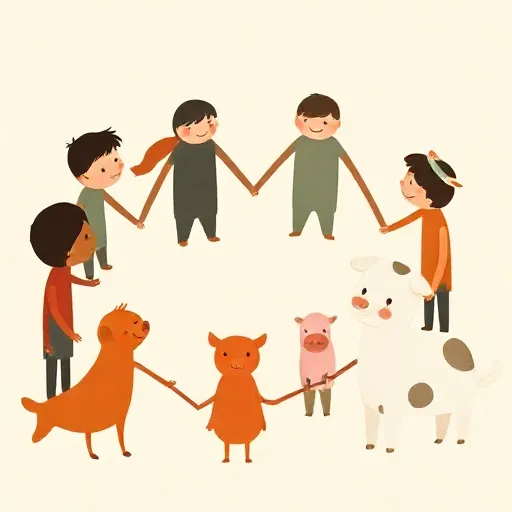
In the 1970s, British psychologist Richard Ryder coined a new word: speciesism. He thought it was a prejudice, like racism, where people favor their own group for no good reason. Philosopher Peter Singer (born 1946) made the idea famous. Singer argues that if a racist gives more weight to the interests of their own race, and a speciesist gives more weight to the interests of their own species, the pattern is identical. The boundary is just as arbitrary: having human DNA does not, by itself, make your pain matter more than a pig’s pain.
Speciesism can also be collective — built into laws, farms, and habits. Some thinkers point out that deciding who counts as “fully human” has a dark history, used to exclude certain people from moral concern. So the category “human” is not as clean as it seems. The real question is not what species are you? but what makes any being deserve moral treatment?
Are Humans Really Special? The Search for a Unique Spark
Many people believe humans are exceptional because of our minds. The German philosopher Immanuel Kant (1724–1804) argued that only persons — beings with reason and the ability to make moral choices — have inherent worth. A person is an “end in itself,” while animals are mere things we can use. More recently, Christine Korsgaard (born 1952) built on this idea. She says humans uniquely face the problem of normativity: we can step back from our desires and ask, “Is this a reason to act?” Non-human animals, she suggests, simply follow their instincts without that reflective distance.
But here’s the trouble. If personhood depends on rational, self-aware thought, then many humans don’t qualify — infants, people with severe brain injuries, or those in a coma. This is the problem of marginal cases. We still think these humans can be wronged, so reason alone can’t be the whole answer. Some philosophers, like Tom Regan (1938–2017), shift the focus. He says what matters is being a subject of a life — a creature who has experiences, beliefs, desires, and a life that can go better or worse for it. By that measure, many animals belong inside the moral circle.
Sentience: The Power to Suffer
Perhaps the most powerful challenge to human-only morality came from Jeremy Bentham, writing in 1789. He looked at the way slaves were treated and predicted a future where animal suffering would matter too. He wrote: “The question is not, Can they reason? nor, Can they talk? but, Can they suffer?” This is the sentience view: any being who can feel pain or pleasure has interests that must be counted.
Singer and other utilitarians argue that sentience is the only fair boundary. If a being can suffer, ignoring its pain is like ignoring a human’s pain — both are equally real. Even Korsgaard, a Kantian, agrees that an animal’s cry of pain is not just noise; it presents a reason to help. Science now suggests that far more animals than we used to think are sentient — not just mammals and birds, but fish, octopuses, and possibly some insects. Because we can’t be sure exactly where sentience begins, many philosophers urge a precautionary principle: when in doubt, treat the creature as if it can feel.
Rights vs. The Greater Good: Two Ways to Weigh Animal Claims
Knowing that animals matter morally doesn’t tell us exactly how to treat them. Two big frameworks clash. Animal rights thinkers, like Regan, say that many animals have a right to be treated as individuals with worth, not as tools. Any practice that treats them as a means — factory farming, painful experiments — violates that right, even if it would produce some benefit. Sue Donaldson and Will Kymlicka go further in their book Zoopolis, arguing that domesticated animals should be seen as co-citizens of our communities, with their own rights of residency and protection.
Utilitarians, in contrast, weigh all interests equally. If a painful medical experiment on a few animals could save millions of humans from agony, it might be justified — the total suffering is reduced. The same logic could, in principle, allow killing a happy animal for food if the animal lived well and was killed painlessly. Critics say this treats beings like replaceable containers of pleasure and fails to respect the individual. Defenders reply that in the real world, the vast suffering of factory farming can never be justified on balance, because the harm to animals far outweighs the minor inconvenience to humans who might eat differently.
The debate gets thorny when interests clash severely. Imagine an Indigenous family in the Arctic who depend on hunting seals to survive. A utilitarian might say the family’s crucial interest in life overrides the seal’s interest in not being killed, especially if the seal lacks a future-directed concept of its own life. An animal rights view would still see the killing as a violation but might accept it as a tragic necessity in extreme circumstances — while insisting that the wrongness remains and we must work to avoid such choices.
Why This Fight Matters Right Now

You might never kick a cat, but you make decisions about animals all the time. When you eat chicken, you are connected to a system that raises and kills billions of animals. When you visit a zoo, you rely on claims about what a good life for a wild animal looks like. Even caring for a pet raises questions: does your dog have a right to play freely, or is it okay to keep her inside for your convenience? The philosophical arguments here aren’t just for professors in armchairs. They are the invisible background for laws, food labels, and your own sense of what’s right. The same empathy that makes you pause at a stray cat’s hiss can be stretched outward, if you think it through.
Think about it
- If you learned that pigs can suffer just as much as dogs, would it still feel okay to eat bacon? What would have to change in your mind for the answer to shift?
- Imagine a chimpanzee who clearly plans for tomorrow and misses friends who have died. Should that chimpanzee be given a legal right not to be caged, even if it means slowing medical research that could save human lives?
- Suppose everyone agreed that all pain matters equally, no matter who feels it. What one thing in your daily life would become hardest to justify?