
Can a Model Settle Every Argument? The Mohists' Big Idea
The Mohists’ Big Idea: Models for Everything
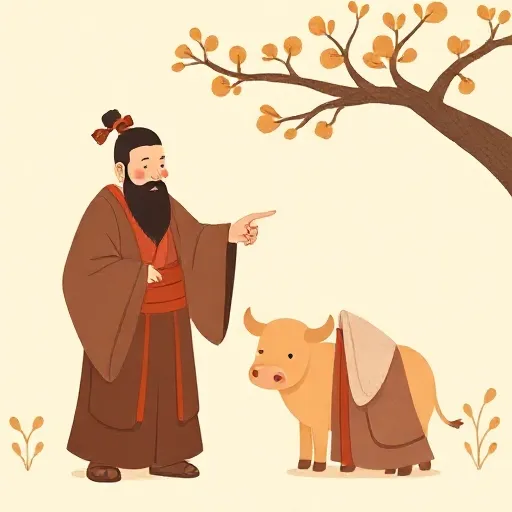
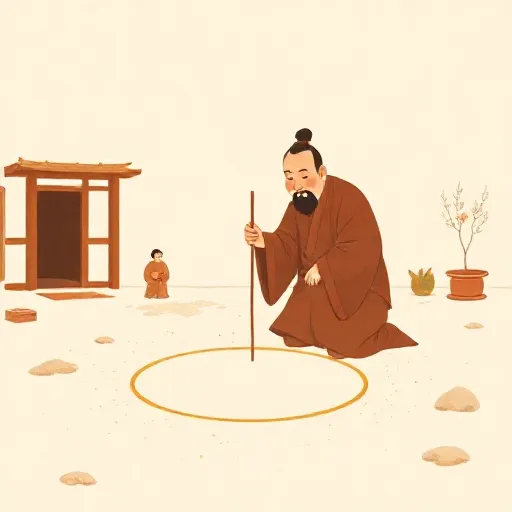
Imagine you’re a student in a dusty courtyard in China, more than two thousand years ago. Your teacher picks up a stick and draws a circle in the dirt. Then he sets a small wooden horse at the centre. “This,” he says, “is a fǎ—a model.” Models aren’t just for shapes, he explains. They’re how we decide what’s right and wrong, what’s true and false, even what a word means. If something matches the model, it’s shì—this, right. If it doesn’t, it’s fēi—not-this, wrong.
That teacher belonged to a group called the Mohists, followers of the thinker Mozi (5th century BCE). While early Mohists looked to the deeds of sage-kings and the will of Heaven for moral standards, the later Mohists (3rd century BCE) took a different turn. They wanted to build a complete system: ethics, language, knowledge, and debate all resting on the idea of models and matching. They wrote their ideas in terse “canons” and explanations, collected in books that became the Mò Biàn—“Mohist Dialectics.” Their goal was huge: to find objective standards that could unify society and end endless arguments. They almost succeeded. But one tricky puzzle—about robbers—showed them that models can only take you so far.
Can You Care for Everyone Without Playing Favorites?
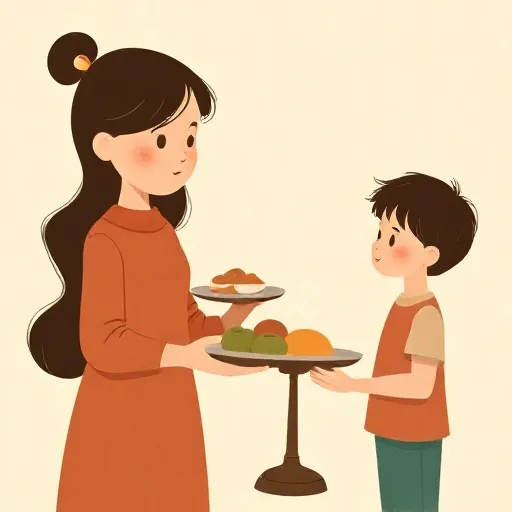
Mohists wanted a world where everyone’s welfare matters equally. They called this inclusive care (jiān ài)—the idea that we should care just as much about a stranger’s well‑being as we do about our own family’s. But they also knew that treating everyone exactly the same would be impractical. So they developed a code called relation ranking (lún liè). The closer your relationship to someone, the more you should help them. You still care equally, but you act differently. Morality (yì) was defined as benefit (lì)—whatever makes people happy—and a good society was one that promoted everyone’s benefit.
This sounds elegant until you start poking at it. If I must care equally about a robber and my grandmother, does that mean I shouldn’t want the robber punished? And if I spend more time helping my own family, am I really caring equally about everyone? The later Mohists tried to answer such challenges with weighing (quán), a kind of practical reasoning. When forced to choose between harms, you choose the lesser harm. A traveller captured by robbers who must lose a finger, an arm, or his life will give up his finger—that’s still choosing benefit, not harm. But the tension between equal care and unequal treatment remained a live debate for Mohist thinkers and their Confucian critics.
Words as Models: How We Know What We’re Talking About
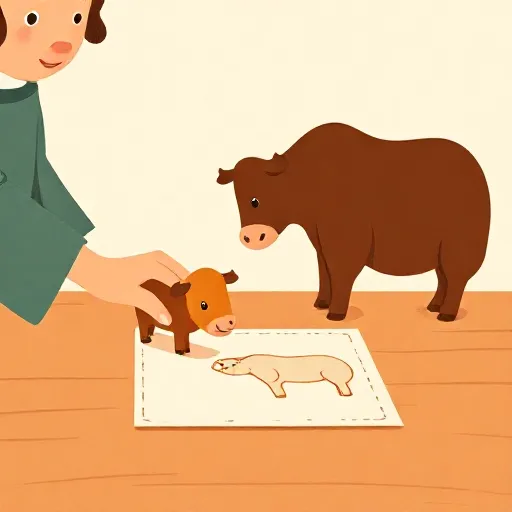
For the Mohists, language wasn’t about private mental pictures or ideas inside your head. It was social and practical. A general term, like “horse,” is a name for a kind (lèi). You learn to use it by being shown a fǎ—a model horse—and practicing picking out all the similar things. As long as you can match a thing to the model, you know what to call it. Communication itself is a process of “using what people understand to rectify what they don’t know”. When someone says “white,” you know they mean the same colour as other things you’ve learned to call white.
This model-free, no‑private‑ideas theory was remarkably naturalistic. It didn’t need mysterious meanings or essences. But it raised a hard question: which similarities count? The Mohists identified several kinds of “sameness” (tóng): being identical, being parts of a whole, being in the same place, and—most importantly—being “of a kind” by sharing an intrinsic similarity. They suggested that some similarities, like shape and appearance, are fixed by the world itself, not by human conventions. That made them realists about kinds: there’s a real difference between a horse and an ox, even if no human had ever named them. But they never fully explained how we know which features make something a horse-kind rather than an artificially grouped collection of items in a drawer.
The Robber Puzzle: When Language Refuses to Behave

The Mohists took debate (biàn, “distinguishing”) seriously. They thought that if you could carefully match things to models, you could settle any disagreement. They developed four techniques: analogy (comparing similar cases), paralleling (lining up sentences with the same structure and expecting them all to work the same way), pulling (asking “If you accept that, why can’t I say this?”), and pushing (extending what someone already accepted to a new case). All of them relied on analogical thinking—spotting patterns and extending kinds.
Then came the robber problem. Mohist communities condemned murder and executed robbers. Critics objected that robbers are people, so killing robbers is killing people, and they questioned how that could be acceptable if murder is wrong. The Mohists replied with a cluster of parallel sentences they thought everyone would accept:
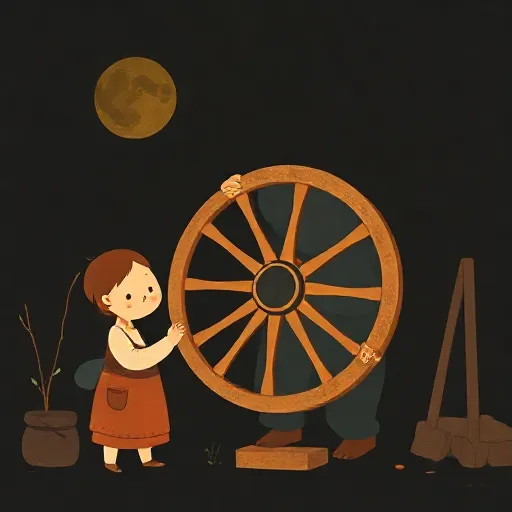
- Carts are wood, but riding a cart isn’t riding wood.
- A woman’s brother is a handsome man, but caring about her brother isn’t caring about a handsome man.
- Robbers are people, but killing robbers isn’t killing people.
They claimed these all belonged to a kind they called “this but not so”—where the first part is true (robbers are indeed people), but the second doesn’t follow in the expected way. The reason? The grounds (gù) that make “killing robbers” right or wrong are not the same as the grounds for “killing people.” Murder is the unjustified killing of innocents; executing a dangerous robber is seen as morally justified.
But here the Mohists hit a wall. They never gave a systematic, principled rule for when two parallel sentences really belong to the same kind. Critics could—and did—argue that the examples looked suspiciously convenient. Why isn’t caring about a handsome brother also caring about a handsome man? The Mohists simply insisted it was a different kind of case. Their deep commitment to a one‑name‑one‑thing picture of language made it hard for them to admit that the same action could truly fall under two different names at once. They wanted every phrase to pick out its own distinct chunk of reality, which led to the striking claim that killing robbers isn’t killing people at all.
Why This Still Matters in Your Dinner‑Table Arguments
The later Mohists were pioneers. They invented history’s first explicit form of indirect consequentialism—the idea that actions are right if they follow practices that best promote everyone’s welfare. They built a theory of language and knowledge that didn’t need mysterious inner meanings. They discovered that language and logic can’t be reduced to simple formal patterns. And they left us with a live question: when we argue by analogy, how do we know we’re drawing the right lines?
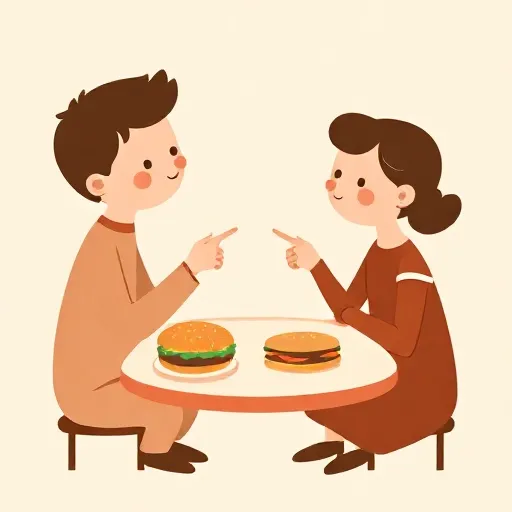
You do this all the time. You might argue, “If borrowing my sweater without asking is wrong, then borrowing my phone without asking is wrong too.” That’s paralleling. You expect the same structure to lead to the same judgment. But someone could retort, “A sweater is just clothing, but a phone has private messages—so it’s different.” Suddenly you’re in a Mohist debate: are the two cases really “of a kind,” or are there deeper grounds that split them apart? The Mohists never solved this puzzle, and neither have we. Every time you try to settle which similarities matter—is a hot dog a sandwich? is self‑defense murder?—you’re walking the same path those dusty‑courtyard thinkers walked, stick in hand, drawing circles in the dirt.
Think about it
- Can you think of a time when two situations seemed similar, but treating them the same way felt wrong? What hidden difference tipped the scales?
- If you had to design a model for a “fair punishment,” what would it look like? Would it match the Mohists’ idea of choosing the lesser harm?
- Suppose a friend says, “Stealing is always wrong.” Using Mohist methods, how might you try to find a case where stealing and not‑stealing are different kinds of things?```