Can We Ever Settle a Moral Argument for Good?
What Are We Really Fighting About?

Imagine you and a friend are arguing about whether eating meat is wrong. You think harming animals makes it clearly wrong; your friend insists that humans have always eaten meat and it’s perfectly fine. Each of you is certain the other is mistaken. But what exactly are you clashing over? A fact about the world, like the age of the Earth? Or something more like a clash of feelings or ways of living?
Philosophers call this question part of metaethics — the study of what moral talk really means. One big divide is between cognitivism and non-cognitivism. Cognitivists believe that moral sentences, like “Meat‑eating is wrong,” can be true or false. When you say it, you’re expressing a belief that purports to represent reality. Non‑cognitivists disagree: they think such sentences don’t state facts at all. Instead, they express a conative attitude — a feeling of dislike, a command, or a desire. On that view, saying “Meat‑eating is wrong” is more like shouting “Boo, meat‑eating!” than it is like reporting a discovery.
This disagreement about disagreement matters enormously. If moral convictions are beliefs, then when you and your friend disagree, you have incompatible beliefs — just as if one of you thought the Earth is round and the other thought it’s flat. Only one can be true. But if they are attitudes, then your clash is more like two people wanting incompatible things: you want a world without factory farming, while your friend wants the freedom to eat a burger. Both desires can exist without either being “wrong” the way a false belief is wrong.
A further twist comes from relativism. Some cognitivists are relativists: they think the truth of a moral sentence depends on the speaker’s culture or personal standards. If Jane says “Meat‑eating is wrong” and Eric says it’s permitted, a relativist might say Jane’s claim is true relative to her standards, while Eric’s is true relative to his. That makes their disagreement look less like a direct conflict of belief — and that bothers many philosophers, because it seems to turn a real argument into a mere difference of perspective. Realists, by contrast, insist that moral claims are absolutist: their truth doesn’t shift from speaker to speaker. When you and your friend argue, you really are contradicting each other. The challenge is to explain why, if that’s so, disagreement is so widespread.
Mackie’s Challenge: Is Morality Just a Way of Life?

The philosopher John Mackie (1917‑1981) thought the sheer variety of moral beliefs across cultures is a clue that there are no objective moral facts. He called his reasoning the argument from relativity. If you look at history and anthropology, you find societies that permitted infanticide, geronticide, polygamy, or slavery — practices others found abhorrent. Mackie argued that the best explanation for this diversity is not that most cultures are badly mistaken about moral reality, but that moral codes simply reflect different ways of life. As he put it, people approve of monogamy because they participate in a monogamous way of life, not the other way around.
Notice that Mackie did not say the variation directly proves there are no moral facts. Instead, he stressed that the explanation that requires no appeal to mysterious objective values is simpler and more plausible than one that says most people are looking at the same moral facts but seeing them through terribly distorted lenses. In the sciences, persistent disagreement often gets resolved when evidence improves. In ethics, many disagreements refuse to go away even after centuries of debate. That is why some philosophers focus on what they call radical disagreement — disagreement that would survive even if everyone were fully informed, perfectly rational, and free of bias. If radical moral disagreement exists, it’s much harder for realists to insist that objective moral truths are out there waiting to be discovered.
Realists push back in several ways. They note that many moral disputes are really disagreements about non‑moral facts. For example, people who oppose the death penalty often believe it doesn’t deter crime, while supporters believe it does. That’s a factual dispute, not necessarily a deep moral one. Realists also point out that self‑interest, prejudice, and lack of reflection can distort moral thinking — just as they can in science. David Brink (b. 1958) argued that if we applied systematic, reflective methods more carefully, much disagreement might vanish. And Derek Parfit (1942‑2017) suggested we shouldn’t draw quick antirealist conclusions because secular moral reasoning is relatively young; before the Enlightenment, religious frameworks dominated, perhaps slowing moral discovery. So the question remains: if we could somehow reach ideal conditions, would persistent disagreement fall away? No one knows for sure.
Why Smart People Disagree — and What It Does to Knowledge

Even if you’re optimistic about ideal conditions, you still have to deal with the fact that many apparently clear‑headed, well‑informed people disagree about hot‑button issues like the death penalty, euthanasia, and abortion. Some philosophers argue that this kind of peer disagreement threatens our moral knowledge right now.
Think about your own beliefs. Sarah McGrath (contemporary) proposed a simple principle: if someone you have no more reason to trust than yourself disagrees with you, then your belief can’t count as knowledge. If you and a peer — someone just as smart, with the same evidence and reasoning skills — reach opposite conclusions, it looks like neither of you really knows who is right. Some philosophers embrace conciliationism, the view that when you learn a peer disagrees with you, you should drop your belief or at least become much less confident. Applied to morality, this would mean that on any widely contested issue, nobody knows the answer. That’s a limited but real form of skepticism: you might still believe, but you aren’t justified in claiming knowledge.
Defenders of steadfastness reply that conciliationism is self‑defeating — if peers disagree about conciliationism itself, then you’d have to give it up. Moreover, there are plenty of moral claims almost nobody disagrees about, like “pain is bad” or “parents ought to care for their children.” If a few extreme skeptics reject even those, they’re such a tiny minority that we might not have to treat them as genuine peers. Still, the conciliationist can insist that the very existence of widespread, unresolved disagreement about many moral topics should make us humble.
A different argument goes further by focusing on safety. A belief is safe if, given the way you formed it, you couldn’t easily have ended up with a false belief. Suppose your moral upbringing in one culture led you to believe something true. But if you had grown up in a different culture using the same basic methods of moral reasoning — listening to parents and teachers, following your emotions — you might easily have formed a contradictory belief, even though the moral facts (if any) stayed the same. The fact that people using similar methods reach opposite conclusions suggests our moral beliefs might be true only by luck, which undermines knowledge. If that’s right, moral disagreement points toward a global skepticism: maybe none of our moral beliefs are safe enough to count as knowledge, even the ones everyone agrees on.
The Moral Twin Earth: When Words Create the Problem
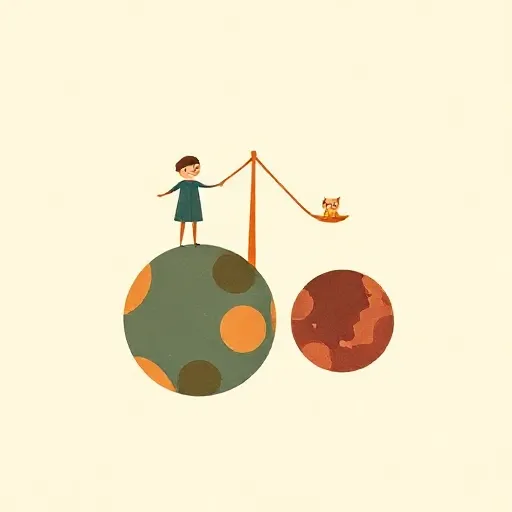
Disagreement doesn’t only raise questions about knowledge. It also stirs up trouble about the very meaning of moral words. Here, a famous thought experiment comes into play. Terrence Horgan and Mark Timmons, writing in the 1990s, imagined a planet they called Moral Twin Earth. Everything there is just like Earth, except for one detail: when the inhabitants use the word “right,” their talk is causally regulated by a different property than the one that regulates our use of the word. On our Earth, let’s say “right” is connected to the property of maximizing happiness (a consequentialist view). On Twin Earth, “right” is connected to the property of following strict moral rules regardless of consequences (a deontological view).
According to the causal theory of reference championed by Richard Boyd (b. 1942), a term refers to whatever property causally regulates its use. So on that theory, Earth’s “right” and Twin Earth’s “right” refer to different properties. If an Earthling says “Giving to charity is right” and a Twin Earthling says “No, giving to charity is wrong if it violates a duty,” they are not really disagreeing — each is making a claim about a different property. But that seems bizarre. Intuitively, if we met a Twin Earthling, we’d think we were having a genuine moral argument. Horgan and Timmons argued that any form of realism that relies on that kind of causal theory delivers the wrong result about when people are genuinely disagreeing. The pressure is then on realists to find a better theory of how moral terms get their meaning — one that allows people with very different practices to still be talking about the same thing.
This is no easy task. Over the years, philosophers have explored alternative theories, like conceptual role semantics or David Lewis’s idea of “reference magnetism.” The challenge isn’t just to handle one clever thought experiment; it’s to explain co‑reference in a way that doesn’t feel rigged only for morality. A satisfying account should work for other domains too, which is tough. The Moral Twin Earth debate shows how the puzzle of moral disagreement reaches all the way down into the words we use and how meaning works.
Why This Matters When You Argue With Your Friends

So what does all this mean for you? The next time you get into a heated debate about whether it’s fair to share your lunch, or whether a rule at school is unjust, you’re stepping into a conversation that has been running for centuries. When you and your friend disagree, you might assume there’s a fact of the matter to be discovered. Mackie’s argument challenges that assumption. The conciliationist warns you to hesitate when you’re sure you’re right. And the Moral Twin Earth scenario reminds you that even the meaning of “fair” isn’t as fixed as it feels.
Yet the very fact that the debate is unresolved is not a reason to give up. Many realists remain hopeful that with more reflection, better evidence, and less bias, moral convergence could increase — much as it did with slavery, which went from widely accepted to almost universally condemned. And even if you’re not sure objective moral facts exist, you still have to live with people who see the world differently. Understanding why moral disagreements run so deep can make you a more careful thinker and a better listener. The questions are real, and they’re yours as much as they were Mackie’s.
Think about it
- If you and your best friend have exactly the same information about eating meat but still disagree, does that mean there’s no right answer? Why or why not?
- Imagine a society where everyone believes stealing is perfectly okay. Does that make stealing okay in that society? What would someone who believes in objective moral facts say?
- If moral truths are like scientific truths, why do you think philosophers still haven’t settled the debate about the death penalty after hundreds of years?