Why Should You Care About a Stranger’s Hunger? Mozi Had an Answer.
Imagine a World Where Everyone Cares About Your Hunger

It’s a busy market in ancient China, around the year 450 BCE. You’re carrying a bowl of rice and vegetables. Sitting by the road is a stranger whose stomach growls. Do you share? Most people might look away. But a thinker named Mozi (say “Mo-dzuh,” lived around the 5th century BCE) asked: why should we care only about people we know? What if everyone made sure every stranger had enough to eat?
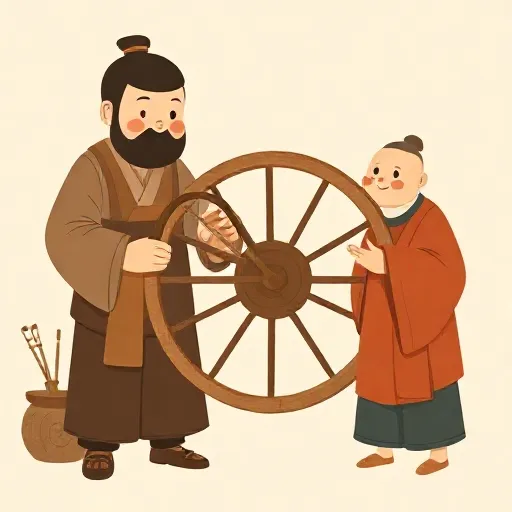
Mozi wasn’t a noble or a scholar from a fancy school. Some stories say he might have been a carpenter or a craftsman. He started asking tough questions about right and wrong — questions nobody in China had ever asked so directly. He and his followers, the Mohists, built one of the first big moral philosophies in history. Their central idea was both simple and huge: we should care about everyone’s welfare equally, just like we care about our own family. From that one idea, they created a whole system for judging actions, laws, and even governments.
Why Following Tradition Isn’t Enough: The Search for a Moral Compass

Before Mozi, most Chinese thinkers took their hints about right and wrong from li — a set of ancient customs and rituals. If you followed the proper ceremonies, you were doing the right thing. Mozi worried that this wasn’t enough. Different places had wildly different traditions. He pointed to a far-off tribe where, when the eldest son was born, the family ate the baby to bring good luck to the younger brothers. That was their custom. But almost anyone would say it’s wrong. So just because something is old or traditional doesn’t make it truly right.
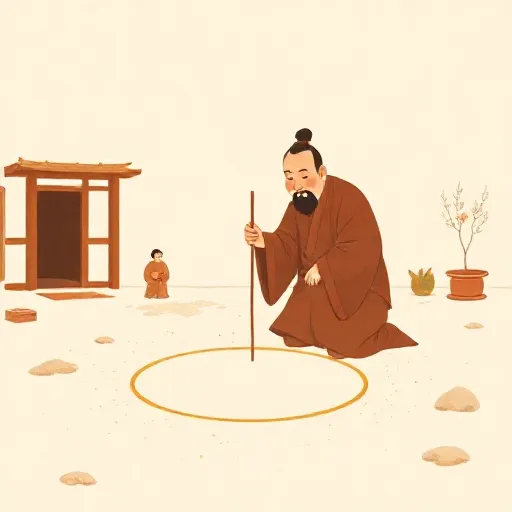
The Mohists wanted objective moral standards — rules that work no matter what your family or village happens to believe. They called these standards fa, which means “models” or “patterns.” Think of a compass (the drawing tool) a carpenter uses. A compass doesn’t care who you are. It tells you what’s round and what’s not, every time. Mozi said morality needs the same kind of tool.
So where do we find a moral compass that everyone can trust? Mozi looked to Tian — a Chinese word often translated as “Heaven,” which meant the sky and also a kind of divine force that ordered nature. He argued that Heaven acts like an ideally fair and wise ruler: it gives life and sunlight to everyone, good and bad people alike. Heaven cares about everyone equally. So we can use Heaven’s intentions as the ultimate fa — the model that tells us what is truly right.
Caring for Everyone, No Exceptions: The Heart of Mohist Ethics
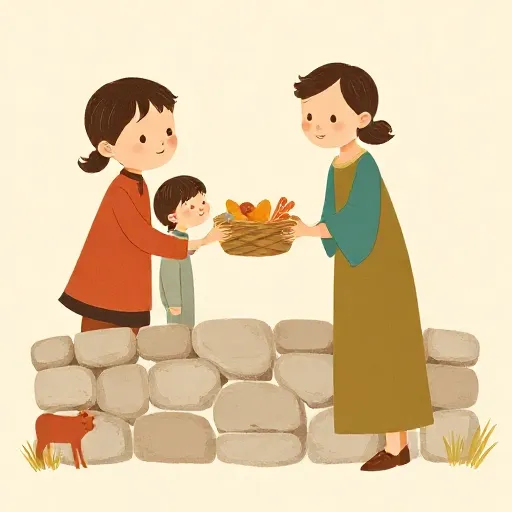
If Heaven cares about everyone without showing favorites, then we should too. The Mohists named this attitude jian ai — inclusive care. They meant a steady, even concern for every person’s well-being, whether they are your brother or a total stranger.
That didn’t mean you had to treat everyone exactly the same. You still have special duties as a son, a father, or a ruler. But at the level of caring — of wanting people to be safe, fed, and happy — Mozi said, “One would be for others as for oneself.” In practice, that mostly means helping those you interact with and never harming or ignoring anyone’s needs.
The Mohists backed up inclusive care with a second idea: benefit (in Chinese, li, a different word from the ritual li). Actions, laws, and whole ways of life are good if they produce benefit for all the world — material wealth, a large and healthy population, and social order (a peaceful, well-run community where people help one another). Something is wrong if it brings harm to people. The benevolent person, they said, spends their life “seeking to promote the world’s benefit and eliminate harm.”
Not everyone cheered. The Confucian thinker Mencius (372–289 BCE) was horrified. He thought inclusive care meant you’d stop loving your own father more than a stranger, which he saw as unnatural. Later Mohists clarified: you can care equally but still benefit different people differently. Love without partiality; help according to your roles and relationships.
The Mohists also had to answer a practical challenge: isn’t caring for everyone equally just too hard? They argued it’s easier than it sounds, especially if leaders set a good example. Besides, people naturally tend to return kindness. If you help your neighbors, they’ll help you. Mozi even asked: if you had to leave your family in someone else’s care, wouldn’t you pick the person who helps absolutely everyone, not just their own? Most of us would. So deep down, we already see inclusive care as the better way.
The Mohists’ Test: How to Know If an Idea Is Good
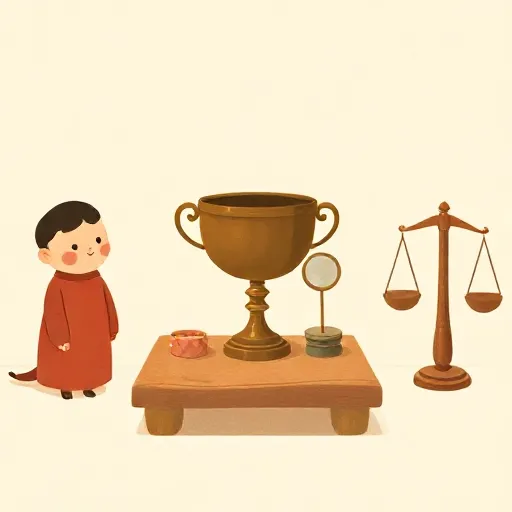
The Mohists didn’t just talk about big ideals. They developed a tough-minded checklist for testing any idea, policy, or teaching. They called it the three fa (three models). To judge whether something counts as right, you check it against:
- Its root — does it match what the ancient sage-kings (legendary wise rulers) did?
- Its source — do people actually see and hear it in real life?
- Its use — when you put it into practice, does it produce benefit for the state, the clan, and ordinary people?
You can see these tests at work in their arguments about ghosts. The Mohists argued that ghosts and spirits who punish bad people and reward good people really exist. Why? First, the sage-kings honored ghosts (the root). Second, countless stories say people have seen them (the source). Third, teaching that ghosts exist makes people afraid to do wrong, which brings social order (the use). And here’s the shocking part: Mozi once suggested that even if ghosts didn’t really exist, we should still behave as if they do, because believing in them prevents crime. The third test — use — could sometimes outweigh the others.
That move shows how deeply practical the Mohists were. They applied the same logic to their other doctrines. Fancy funerals and long mourning rituals? They fail the use test: they waste money that could feed the living. Grand musical shows for rulers? Same thing — the resources could be diverted to food and clothing. Fatalism (believing everything is destined) fails all three tests. It doesn’t match the sages’ deeds, it can’t be observed, and it makes people stop trying to improve their world. So it’s wrong.
You might already spot a problem: the three tests can clash. Maybe a sage-king did something that, if we copied it today, would not produce the most benefit. And using “benefit” to decide what’s true — like whether ghosts are real — can make us believe useful fictions. But the Mohists thought that’s okay, because the whole point of thinking about right and wrong is to find a good way of living, a dao, not to collect dry facts.
What We Can Still Learn from Mozi’s Vision

Mozi’s philosophy disappeared as a separate school over 2,000 years ago, but his big questions never went away. Think about your own life: when you see news of a famine on the other side of the world, or a child in your school who never has lunch, how much do you owe them? The Mohists believed you should care just as much about that faraway hunger as you care about your own. That’s demanding — maybe impossible. But it forces you to give a reason for drawing the line anywhere else.
The Mohists didn’t get everything right. They were so focused on basic needs like food and safety that they had little room for music, art, or fancy celebrations. Many people felt their sober, frugal way of life was just too gloomy. Also, their political vision — where everyone “identifies upward” with a virtuous ruler — could easily turn into an authoritarian nightmare if the ruler stopped being good. And critics still push back: is it really fair to ask every person to care equally, or should we only require a basic minimum of concern for strangers while letting love grow thicker with closeness?
Still, the Mohists’ core insight is powerful. They saw that any decent moral system needs to be impartial — it can’t just protect the people who happen to share your customs, your family, or your passport. And they demanded concrete, real-world ways to test whether a rule actually helps people. In a world still wrestling with poverty, inequality, and endless conflict, Mozi’s old compass keeps pointing toward a question we haven’t finished answering: how wide must your circle of care be?
Think about it
- If you had a button that would make everyone in the world care about each other equally, would you push it? What might go wrong?
- Mozi argued that expensive parties and concerts waste resources that could feed hungry people. Do you think some art or celebration is wrong if it could have helped others survive? Where would you draw the line?
- Should a government leader care as much about citizens of another country as about their own people? Why or why not?